The vaccine provided 89 percent protection against S. sonnei infection compared with the placebo. Vaccinated participants also experienced less severe symptoms and lower levels of bacterial shedding. The vaccine is being developed as drug resistance among Shigella continues to increase.
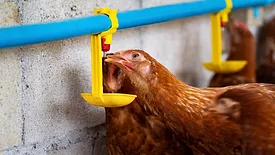
Elevated levels of certain metals and the presence of commonly used disinfectants were found to inactivate Salmonella vaccines administered to poultry via drinking water.
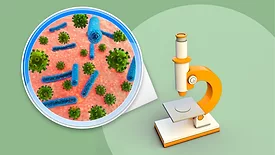
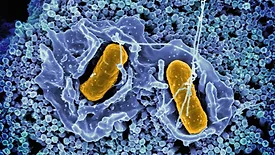
Through the One Health lens, a scientific review summarized current knowledge on Salmonella biofilms, the importance of non-antibiotic interventions given the rise of antimicrobial resistance (AMR), emerging alternative strategies with potential for real-world use, and challenges and needs moving forward.
Although the estimated cost per disease incident ranged from $341 USD in Africa to $2,194 in Europe, the total economic burden of invasive non-typhoidal Salmonella was highest in Africa—especially sub-Saharan Africa—due to its prevalence and overall impact to public health in the region.
This episode of Food Safety Five discusses a UK proposed ban on Bisphenol A (BPA) in food contact materials, as well as two studies with global relevance: a successful clinical trial for a novel Salmonella vaccine and research demonstrating how nanoplastics enter the edible parts of crops.
The Trivalent Salmonella Conjugate Vaccine (TSCV), which simultaneously addresses typhoid fever and foodborne illness caused by non-typhoidal Salmonella enterica, elicited strong immune response in 100 percent of participants in the randomized, placebo-controlled clinical trial.
Scientists have discovered antibodies that can neutralize a wide range of norovirus strains, laying the groundwork for a broadly effective vaccine. Historically, development of a norovirus vaccine has been hindered by the virus’ many genetic variants and frequent mutation.
USDA has announced the availability of financial investments to combat the ongoing highly pathogenic avian influenza H5N1 outbreak, including $500 million for farm biosecurity and $100 million for the development of chicken vaccines and other therapeutics.
Field studies led by Wageningen University have demonstrated the efficacy of two vaccines in reducing mortality in poultry infected with the Highly Pathogenic Avian Influenza (HPAI) H5N1 virus, although it is too early to draw accurate conclusions about transmission.
A rodent study using real-world non-typhoidal Salmonella strains, conducted by University of Florida Institute of Food and Agricultural Sciences (UF/IFAS) researchers, has shown the potential of a developing vaccine that is based in a novel, nontraditional delivery method.