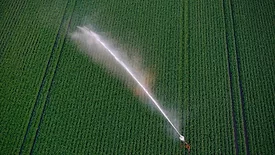
Following the historically large cyclosporiasis outbreak linked to lettuce that swept the U.S. this summer, FAO highlighted the importance of pre-harvest water safety, sanitation, and hygiene to prevent microbial contamination of food in a new fact sheet resource.
This episode of Food Safety Five highlights new research on cold storage practices for fresh-cut produce, food safety perspectives among small-scale produce growers exempt from FDA's FSMA Produce Safety Rule, and water management strategies that reduce arsenic in rice.
In low-moisture food manufacturing, keeping your facility dry is key environmental control, yet many facilities treat water in their environment with a level of complacency that does not match its impact. What is needed is a more disciplined mindset—one that treats water with the same seriousness applied to other high-risk materials, such as glass.
The Arkansas-based study showed that repeated mid-season soil aeration events significantly reduced arsenic concentrations in rice grain without increasing cadmium levels, providing field-scale evidence that water management can help mitigate arsenic accumulation.
The Center for Produce Safety-funded project aims to generate practical guidance for produce growers, including improved sampling approaches to determine whether groundwater is influenced by surface water, and immediately actionable recommendations for mitigating microbial contamination and biofilms in irrigation systems.
Elevated levels of certain metals and the presence of commonly used disinfectants were found to inactivate Salmonella vaccines administered to poultry via drinking water.
FAO and WHO recently published a report identifying and prioritizing chemical contaminants that pose a food safety risk due to their presence in sources of water used in agri-food systems.
A two-year study of Southeastern U.S. watersheds confirmed that surface water harbors complex, clinically relevant Salmonella populations that differ from food animal datasets—revealing critical gaps in understanding environmental Salmonella transmission and the need for robust One Health surveillance systems.
FAO published a report that encourages the application of risk-based tools to ensure the safety of water used in production and processing in fisheries and aquaculture operations.
A new study assessed the efficacy of a commercial lytic bacteriophage cocktail as a preharvest agricultural water treatment against Salmonella Infantis, and found modest but consistent pathogen reductions across diverse water conditions.