Food Safety
search
Ask Food Safety AI
cart
facebook twitter linkedin
  • Sign In
  • Create Account
  • Sign Out
  • My Account
Food Safety
  • NEWS
    • Latest News
    • White Papers
  • PRODUCTS
  • TOPICS
    • Contamination Control
    • Food Types
    • Management
    • Process Control
    • Regulatory
    • Sanitation
    • Supply Chain
    • Testing and Analysis
  • PODCAST
  • EXCLUSIVES
    • Food Safety Five Newsreel
    • eBooks
    • FSM Distinguished Service Award
    • Interactive Product Spotlights
    • Videos
  • BUYER'S GUIDE
  • MORE
    • ENEWSLETTER >
      • Archive Issues
      • Subscribe to eNews
    • Store
    • Sponsor Insights
    • ASK FSM AI
  • WEBINARS
  • FOOD SAFETY SUMMIT
  • EMAG
    • eMagazine
    • Archive Issues
    • Editorial Advisory Board
    • Contact
    • Advertise
  • SIGN UP!
NewsContamination ControlSanitationSupply ChainMicrobiologicalCleaners/SanitizersGrowers/GAPs

Study Suggests Potential Utility of Bacteriophage as Supplemental Preharvest Agricultural Water Treatment
By Food Safety Magazine Editorial Team
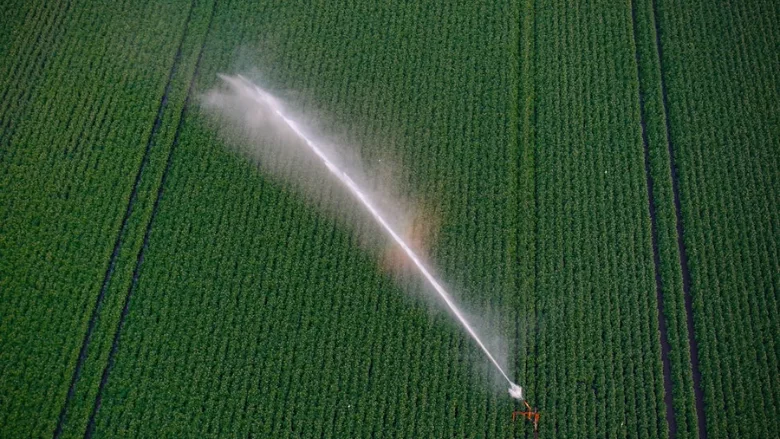
sprinkler watering field
Image credit: Ruud Peter Boelens via Pexels
October 20, 2025

Contaminated irrigation water is a significant route by which foodborne pathogens are introduced to produce. In this context, a new study assessed the efficacy of a commercial preharvest water treatment, specifically, the SalmoFresh lytic bacteriophage cocktail, against Salmonella Infantis.

For their study, the researchers used a controlled test agricultural water (TAW) matrix at 6.5 and 8.4 pH and 4–100 nephelometric turbidity units (NTU), as well as natural pond water (both autoclaved and nonsterile) at temperatures of 12 °C and 32 °C. Both water setups were inoculated with nalidixic acid-resistant S. Infantis at 4 to 6-log colony forming units per milliliter (CFU/mL) and treated with SalmoFresh at 7 or 8-log plaque-forming units (PFU)/mL. Phage treatment times ranged between five and 30 minutes.

In TAW, a consistent 1-log CFU/mL reduction was observed after 5 minutes of treatment with 8-log PFU/mL, regardless of pH or turbidity. In pond water, significant reductions occurred only at the higher phage concentration (8-log PFU/mL), with mean reductions of up to 1.7-log CFU/mL after 30 minutes at 32 °C. Lower temperatures yielded slightly reduced efficacy, likely due to decreased bacterial metabolic activity.

The U.S. Environmental Protection Agency (EPA)/U.S. Food and Drug Administration (FDA) protocol requires a 3-log CFU/mL reduction within 5 minutes for antimicrobial approval, of which the maximum reduction achieved by SalmoFresh fell short in the study. Comparatively, chemical sanitizers such as chlorine and peracetic acid (PAA) have demonstrated greater than or equal to 3-log reductions under similar conditions. However, the phage treatments showed resilience across varying water qualities, including high coliform counts and organic matter, suggesting potential utility as a supplemental treatment.

Previous research supports a hurdle approach, combining phages with chemical sanitizers to enhance efficacy.

The study marks the first application of a lytic phage cocktail for preharvest water treatment, demonstrating modest but consistent reductions of S. Infantis across diverse water conditions. Although not meeting regulatory thresholds alone, phages may complement chemical sanitizers in integrated water safety strategies. Further research is required to optimize phage application methods and assess efficacy against different pathogens.

The U.S. Department of Agriculture’s Agricultural Research Service (USDA-ARS) supported the study, which was conducted by researchers affiliated with USDA-ARS, the University of Delaware, Texas State University, Alabama A&M, the University of Maryland, and Intralytix Inc. (the owner of SalmoFresh). The findings were published in the Journal of Food Protection.

Looking for quick answers on food safety topics?
Try Ask FSM, our new smart AI search tool.
Ask FSM →


KEYWORDS: bacteriophage Salmonella study water safety water use

Share This Story

Fsm purple logo 200x200

The Food Safety Magazine editorial team comprises Bailee Henderson, Digital Editor ✉; Adrienne Blume, M.A., Editorial Director; and Stacy Atchison, Publisher.

Recommended Content

JOIN TODAY
to unlock your recommendations.

Already have an account? Sign In

  • people holding baby chicks

    Serovar Differences Matter: Utility of Deep Serotyping in Broiler Production and Processing

    This article discusses the significance of Salmonella in...
    Contamination Control
    By: Nikki Shariat Ph.D.
  • woman washing hands

    Building a Culture of Hygiene in the Food Processing Plant

    Everyone entering a food processing facility needs to...
    Personal Hygiene/Handwashing
    By: Richard F. Stier, M.S.
  • graphical representation of earth over dirt

    Climate Change and Emerging Risks to Food Safety: Building Climate Resilience

    This article examines the multifaceted threats to food...
    International
    By: Maria Cristina Tirado Ph.D., D.V.M. and Shamini Albert Raj M.A.
Manage My Account
  • eMagazine Subscription
  • Subscribe to eNewsletter
  • Manage My Preferences
  • Website Registration
  • Subscription Customer Service

More Videos

Sponsored Content

Sponsored Content is a special paid section where industry companies provide high quality, objective, non-commercial content around topics of interest to the Food Safety Magazine audience. All Sponsored Content is supplied by the advertising company and any opinions expressed in this article are those of the author and not necessarily reflect the views of Food Safety Magazine or its parent company, BNP Media. Interested in participating in our Sponsored Content section? Contact your local rep!

close
  • Salmonella bacteria
    Sponsored byThermoFisher

    Food Microbiology Testing Methods: Salmonella species

  • a diagram explaining indicator organisms
    Sponsored byHygiena

    How Proactive Listeria Testing Helps Prevent Six- and Seven-Figure Recalls

  • woman grocery shopping
    Sponsored byCorbion

    Designing Safety Into Every Bite: Proactive Risk Mitigation for Refrigerated Foods

Popular Stories

baby eating bottle

Infant Botulism Spike Exceeds 100 Cases, Extent of ByHeart's Involvement Unclear

NRTE breaded stuffed chicken

USDA Indefinitely Delays Enforcement of Salmonella as Adulterant in Raw Breaded, Stuffed Chicken

digital map of europe

EU Publishes Food Fraud Tool Mapping Thousands of Cases Since 2016

Events

December 11, 2025

How to Develop and Implement an Effective Food Defense Strategy

Live: December 11, 2025 at 2:00 pm EDT: From this webinar, attendees will learn common areas where companies encounter challenges in their food defense strategies and how to address them.

May 11, 2026

The Food Safety Summit

Stay informed on the latest food safety trends, innovations, emerging challenges, and expert analysis. Leave the Summit with actionable insights ready to drive measurable improvements in your organization. Do not miss this opportunity to learn from experts about contamination control, food safety culture, regulations, sanitation, supply chain traceability, and so much more.

View All

Products

Global Food Safety Microbial Interventions and Molecular Advancements

Global Food Safety Microbial Interventions and Molecular Advancements

See More Products

Related Articles

  • large overhead sprinkler spraying water on crops

    EPA Approves First Antimicrobial Treatment of Foodborne Pathogens in Preharvest Agricultural Water

    See More
  • FDA and EPA Announce New Testing Protocol for Preharvest Ag Water Antimicrobial Treatment

    See More
  • crops being watered at sunrise

    Sanitizer-Treated Irrigation Water Has Antimicrobial Benefits in Crop Fields, Study Suggests

    See More

Related Products

See More Products
  • 9781498721776.jpg

    Handbook of Food Processing: Food Safety, Quality, and Manufacturing Processes

  • 1444333348.jpg

    Handbook of Food Safety Engineering

  • Food-Forensics-3D.jpg

    Food Forensics Handbook Practice, Instrumentation, Case Studies

See More Products

Related Directories

  • Pureline Solutions

    We are the experts in the manufacture, generation, and application of chlorine dioxide. PureLine specializes in designing and implementing chlorine dioxide solutions utilizing our broad line of proved chlorine dioxide generators and pre-cursor chemicals. In locations across the nation and around the world, PureLine’s patented and proven high purity chlorine dioxide generation equipment is enhancing the safety, reliability, efficiency, and cost-effectiveness of the water treatment process.
×

Never miss the latest news and trends driving the food safety industry

eNewsletter | Website | eMagazine

JOIN TODAY!
  • RESOURCES
    • Advertise
    • Contact Us
    • Directories
    • Store
    • Want More
  • SIGN UP TODAY
    • Create Account
    • eMagazine
    • eNewsletter
    • Customer Service
    • Manage Preferences
  • SERVICES
    • Marketing Services
    • Reprints
    • Market Research
    • List Rental
    • Survey/Respondent Access
  • STAY CONNECTED
    • LinkedIn
    • Facebook
    • Instagram
    • X (Twitter)
  • PRIVACY
    • PRIVACY POLICY
    • TERMS & CONDITIONS
    • DO NOT SELL MY PERSONAL INFORMATION
    • PRIVACY REQUEST
    • ACCESSIBILITY

Copyright ©2025. All Rights Reserved BNP Media.

Design, CMS, Hosting & Web Development :: ePublishing