Food Safety
search
Ask Food Safety AI
cart
facebook twitter linkedin instagram youtube
  • Sign In
  • Create Account
  • Sign Out
  • My Account
Food Safety
  • NEWS
    • Latest News
    • White Papers
  • PRODUCTS
  • TOPICS
    • Contamination Control
    • Food Types
    • Management
    • Process Control
    • Regulatory
    • Sanitation
    • Supply Chain
    • Testing and Analysis
  • PODCAST
  • EXCLUSIVES
    • Food Safety Five Newsreel
    • eBooks
    • FSM Distinguished Service Award
    • Interactive Product Spotlights
    • Videos
  • BUYER'S GUIDE
  • MORE
    • NEWSLETTERS >
      • Archive Issues
      • Subscribe to eNews
    • Store
    • Sponsor Insights
    • ASK FSM AI
  • WEBINARS
  • FOOD SAFETY SUMMIT
  • EMAG
    • eMagazine
    • Archive Issues
    • Editorial Advisory Board
    • Contact
    • Advertise
  • SIGN UP!
NewsContamination ControlFood TypeMicrobiologicalMeat/Poultry

UK FSA Estimates Chicken Meat Causes More than 80 Percent of Human Campylobacteriosis Cases
By Food Safety Magazine Editorial Team
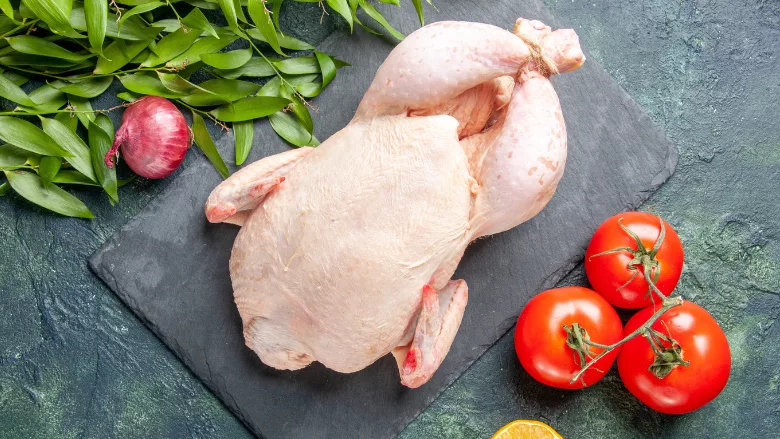
raw whole chicken
Image credit: mdjaff via Freepik
March 17, 2026

A UK-wide genomics study has found increasing antimicrobial resistance (AMR) in Campylobacter isolates from human infections, alongside continued evidence that chicken meat is the dominant source of illness.

The research, conducted by the UK Food Standards Agency (FSA) in collaboration with the University of Oxford, the Moredun Institute, and the Quadram Institute, was funded by the national Pathogen Surveillance in Agriculture, Food, and the Environment (PATH-SAFE) program.

Campylobacter isolates from human cases and agri-food sources were analyzed using whole genome sequencing (WGS) to characterize resistance patterns and transmission pathways. Human clinical isolates were collected between April 2019 and December 2024, and agri-food, animal, and environmental isolates were retrieved from long-term storage collections held by the project’s participating university institutions.

Fluoroquinolone and Tetracycline Resistance Increased

The researchers reported that resistance to fluoroquinolones and tetracyclines in Campylobacter jejuni isolates from humans has risen since UK FSA’s previous study in 2015–2018. Fluoroquinolone resistance increased from 35.8 percent to 55.2 percent in 2024, while tetracycline resistance rose from 32.6 percent to 48.2 percent.

Macrolide and aminoglycoside resistance remained comparatively low among human isolates, and multidrug resistance was rare.

However, co-resistance to both fluoroquinolones and tetracyclines has also increased over time, with 42.5 percent of C. jejuni isolates in 2024 predicted to be resistant to both antimicrobial classes. Concerningly, three clonal complexes commonly found only in poultry (ST-353, ST-354, and ST-464) showed resistance levels approaching 100 percent.

Further research is needed to understand the persistence of these highly resistant, poultry-associated lineages, especially since antimicrobial stewardship on farms has continued to improve significantly over time.

Looking for quick answers on food safety topics?
Try Ask FSM, our new smart AI search tool.
Ask FSM →

Aside from poultry, AMR prevalence was generally low among isolates from ruminants and wild birds, with less than 5 percent resistance to fluoroquinolones and tetracycline. The findings suggest these sources pose a relatively low risk for AMR Campylobacter infections in humans. However, the detection of livestock-associated resistant strains in wild birds highlighted the potential for environmental spillover and the need for continued biosecurity controls.

Chicken Remains Primary Source of Infection

Source attribution modeling, which used machine learning and genomic data, predicted that more than 80 percent of human campylobacteriosis cases (including C. jejuni and C. coli infections) originated from chicken; respectively, 86.7 percent and 79.7 percent of human C. jejuni and C. coli cases were predicted to come from chicken meat. This is consistent with the findings of global source attribution models from 25 studies published between 2001 and 2017, which estimate 60–80 percent of human campylobacteriosis is derived from chicken meat.

However, the present study was not able to determine specific transmission routes, such as undercooked poultry versus cross-contamination.

Other sources, including cattle, sheep, wild birds, and backyard chickens, were also found to carry Campylobacter strains capable of causing human illness, although their overall contribution appeared to be lower than that of chicken meat. Still, the contribution from ruminants is also considerable (predicted to cause 11.5 percent of C. jejuni infections and 17.5 percent of C. coli infections), shown to be particularly important in rural or agricultural regions in previous studies.

Public Health and Disease Surveillance Implications

The study aimed to address gaps in surveillance by including underrepresented sources such as wild birds and free-range poultry, and to support a “One Health” approach to understanding Campylobacter transmission across humans, animals, and the environment.

Overall, FSA suggests that incorporation of WGS and artificial intelligence (AI)-based attribution frameworks into public health surveillance could support more targeted control measures across the food production chain.

Campylobacter remains the leading cause of bacterial gastroenteritis in the UK, with an estimated annual economic burden exceeding £700 million. To address this important public health threat, the researchers concluded that continued monitoring of AMR trends and improved understanding of transmission pathways are critical for informing intervention strategies.


KEYWORDS: AMR Campylobacter chicken foodborne illness FSA Quadram Institute study UK whole genome sequencing

Share This Story

Fsm purple logo 200x200

The Food Safety Magazine editorial team comprises Bailee Henderson, Digital Editor ✉ and Adrienne Blume, M.A., Editorial Director.

Recommended Content

JOIN TODAY
to unlock your recommendations.

Already have an account? Sign In

  • people holding baby chicks

    Serovar Differences Matter: Utility of Deep Serotyping in Broiler Production and Processing

    This article discusses the significance of Salmonella in...
    Contamination Control
    By: Nikki Shariat Ph.D.
  • woman washing hands

    Building a Culture of Hygiene in the Food Processing Plant

    Everyone entering a food processing facility needs to...
    Training
    By: Richard F. Stier, M.S.
  • graphical representation of earth over dirt

    Climate Change and Emerging Risks to Food Safety: Building Climate Resilience

    This article examines the multifaceted threats to food...
    Risk Assessment
    By: Maria Cristina Tirado Ph.D., D.V.M. and Shamini Albert Raj M.A.
Manage My Account
  • eMagazine Subscription
  • Subscribe to Newsletters
  • Manage My Preferences
  • Website Registration
  • Subscription Customer Service

More Videos

Sponsored Content

Sponsored Content is a special paid section where industry companies provide high quality, objective, non-commercial content around topics of interest to the Food Safety Magazine audience. All Sponsored Content is supplied by the advertising company and any opinions expressed in this article are those of the author and not necessarily reflect the views of Food Safety Magazine or its parent company, BNP Media. Interested in participating in our Sponsored Content section? Contact your local rep!

close
  • The image shows a variety of fresh produce packaged in plastic trays and wrap.
    Sponsored byWaters Corporation

    PFAS-Free Food Packaging by August 2026

  • This image displays a multi-stage water filtration system designed to remove contaminants from drinking water.
    Sponsored byWaterdrop Filter

    The 4.0 ppt Era: Future-Proofing Your Food Supply Chain Against "Forever Chemicals"

  • The image displays a bottling plant production line, commonly used in the beverage industry for filling and packaging soft drinks.
    Sponsored byBIOIONIX

    Sustainability with ROI: A Beverage Producer Case Study in Water Savings

Popular Stories

recalled Pâté en Croûte products from France

Fatal Listeriosis Outbreak in France Linked to RTE Meats

ensuring ready-to-eat food safety eBook

eBook | Ensuring Ready-to-Eat Food Safety from Processing to Retail

RAW FARM-brand raw cheddar cheese product

Multistate E. coli Outbreak Likely Caused by Raw Cheese, but Manufacturer Refuses to Recall

Events

March 26, 2026

Continuous Pathogen Control: Enhancing Sanitation and Environmental Monitoring in Food Processing

Live: March 26, 2026, at 2:00 pm EST: This session explores the role of continuous airborne pathogen control technology in supporting sanitation and environmental monitoring programs within food processing environments.

March 31, 2026

Regulatory Risk, Ingredient Safety, and GRAS: What Companies Need to Act on Now

Live: March 31, 2026, at 11:00 am EDT: From this webinar, attendees will recognize patterns in food policy affecting dietary guidelines, UPFs, state legislative actions, and expected GRAS reform.

April 8, 2026

Foreign Material Contamination: Why In-Line Reinspection Isn't Enough

Live: April 8, 2026, at 11:00 am EDT: From this webinar, attendees will learn why reinspecting with in-line equipment is not sufficient when it comes to potential foreign material contamination.

View All

Products

Global Food Safety Microbial Interventions and Molecular Advancements

Global Food Safety Microbial Interventions and Molecular Advancements

See More Products

Related Articles

  • illustration of a hand choosing four out of five star rating on a tablet

    More Than 80 Percent of Codex Member Countries Satisfied With Codex Texts, Survey Shows

    See More
  • cocktail glass with greenish beverage and cannabis leaf design on the top

    Based on New Evidence, UK FSA Advises Consuming No More Than 10 mg CBD per Day From Foods

    See More
  • woman milking a goat

    CDC Estimates Human Brucella Infections Could be Four Times Higher Than Previously Thought

    See More

Related Products

See More Products
  • 9781498721776.jpg

    Handbook of Food Processing: Food Safety, Quality, and Manufacturing Processes

  • 1444333348.jpg

    Handbook of Food Safety Engineering

  • food safety.jpg

    Food Safety Contaminants and Risk Assessment

See More Products

Related Directories

  • MULTIVAC Inc.

    MULTIVAC is a family-owned packaging and processing company, which operates globally with more than 80 countires with over 7,000 employees worldwide. Our US headquarters is located in Kansas City, Missouri, and is complemented by five Regional Customer Support Centers, in Denville NJ, Irvine CA, Lisle, IL, Charlotte NC, and Dallas-Fort Worth TX.
  • Praesidio Consulting LLC

    Expert regulatory consulting based upon 25+ years FSIS experience. We specialize in HACCP and related food safety plans, facility design and sanitation program consultation, non-compliance management and appeals, enforcement action response, retention and recall management, and expert witness consultation for litigation cases.
×

Never miss the latest news and trends driving the food safety industry

Newsletters | Website | eMagazine

JOIN TODAY!
  • RESOURCES
    • Advertise
    • Contact Us
    • Directories
    • Store
    • Want More
  • SIGN UP TODAY
    • Create Account
    • eMagazine
    • Newsletters
    • Customer Service
    • Manage Preferences
  • SERVICES
    • Marketing Services
    • Reprints
    • Market Research
    • List Rental
    • Survey/Respondent Access
  • STAY CONNECTED
    • LinkedIn
    • Facebook
    • Instagram
    • X (Twitter)
  • PRIVACY
    • PRIVACY POLICY
    • TERMS & CONDITIONS
    • DO NOT SELL MY PERSONAL INFORMATION
    • PRIVACY REQUEST
    • ACCESSIBILITY

Copyright ©2026. All Rights Reserved BNP Media, Inc. and BNP Media II, LLC.

Design, CMS, Hosting & Web Development :: ePublishing