Food Safety
search
Ask Food Safety AI
cart
facebook twitter linkedin instagram youtube
  • Sign In
  • Create Account
  • Sign Out
  • My Account
Food Safety
  • NEWS
    • Latest News
    • White Papers
  • PRODUCTS
  • TOPICS
    • Contamination Control
    • Food Types
    • Management
    • Process Control
    • Regulatory
    • Sanitation
    • Supply Chain
    • Testing and Analysis
  • PODCAST
  • EXCLUSIVES
    • Food Safety Five Newsreel
    • eBooks
    • FSM Distinguished Service Award
    • Interactive Product Spotlights
    • Videos
  • BUYER'S GUIDE
  • MORE
    • NEWSLETTERS >
      • Archive Issues
      • Subscribe to eNews
    • Store
    • Sponsor Insights
    • ASK FSM AI
  • WEBINARS
  • FOOD SAFETY SUMMIT
  • EMAG
    • eMagazine
    • Archive Issues
    • Editorial Advisory Board
    • Contact
    • Advertise
  • SIGN UP!
NewsContamination ControlFood TypeInternationalRisk AssessmentMicrobiological ControlProduceReady-to-eatRefrigerated/FrozenSeafood

FAO/WHO Developing Risk Assessment Models for Listeria in Four Food Commodity Groups

By Bailee Henderson
diced cantaloupe next to half of cantaloupe melon

Image credit: azerbaijan_stockers via Freepik

January 22, 2025

The development of formal risk assessment models for Listeria monocytogenes in four food categories has been summarized in a recent report from the Food and Agriculture Organization of the United Nations/World Health Organization (FAO/WHO) Joint Expert Meeting on Microbiological Risk Assessment (JEMRA).

During the October 2022 meeting upon which the report is based, JEMRA discussed risk assessment models for L. monocytogenes in leafy greens, cantaloupe, frozen vegetables, and ready-to-eat (RTE) seafood. As a next step, the models will be programmed, tested, and reviewed.

JEMRA agreed that the models should consider all stages from pre-harvest to consumption, and that factors like pathogen introduction to raw materials during primary production, affected by the environment and production practices, as well as cross-contamination throughout all production stages, should be assessed. Whole genome sequencing (WGS) and other -omics data on L. monocytogenes may inform risk assessment, and additional data from different pathogen sampling and testing schemes may be useful to informing risk assessment.

The experts also decided that the models should adapt the dose-response framework from existing models, which account for the variability in pathogen virulence and consumer susceptibility common to all food commodities. The different sub-modules of the models that describe the relevant stages of a food chain can be used to evaluate the impact of the stages on the risk in “what-if” scenarios. Additionally, an uncertainty and sensitivity analysis should be performed to identify which model inputs and assumptions have the greatest impact on the model outputs (such as dose and risk for the consumer), which will help identify the relevant “what-if” scenarios and data needs.

Leafy Greens

For leafy greens, relevant stages to be represented in the risk assessment were identified, including growth (i.e., field, controlled environment, hydroponics), harvesting, cooling, washing, sanitizing, cutting, packaging, multiple transportation steps, display at retail, and consumer practices. Production activities like irrigation, fertilization, and other on-farm management practices have an impact on the occurrence of L. monocytogenes and could be modeled in a pre-harvest module. Season has been recognized as an important factor driving the microbial kinetics in soil and on leaves, and JEMRA supports its inclusion in a model, with the ability to alter environmental inputs in “what-if” scenarios. Cut RTE and whole leafy greens should both be addressed and share a common primary production model.

Additionally, the model should be structured to measure the effectiveness of the prevention of contamination by soil/irrigation water, the efficacy of washing with or without sanitizers, the prevention of cross-contamination events along the production chain, the application of good hygiene practices during processing, the efficacy of sampling schemes, and the impact of different consumer practices related to handling and storage. It should also consider the possibility of cross-contamination at processing facilities and in consumers’ homes, and should have the flexibility to assess the impact of climate change.

Frozen Vegetables

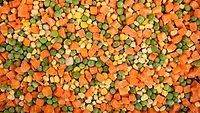
The main factors driving the risk of L. monocytogenes contamination of non-RTE frozen vegetables were identified post-blanching, in the stages of processing and consumer handling. Relevant stages to be represented in the risk assessment include cleaning, washing, blanching, freezing, packaging, display at retail, consumer practices such as defrosting and cooking, and common practices relating to non-intended use. The risk assessment should be structured to measure the effectiveness of blanching or other inactivation steps pre- or post-packaging, the prevention of contamination post-blanching, and the efficacy of sampling schemes at the end of processing.

Looking for quick answers on food safety topics?
Try Ask FSM, our new smart AI search tool.
Ask FSM →

Cantaloupe

The risk assessment model for L. monocytogenes in cut and whole RTE cantaloupe should span primary production to consumption, with relevant stages being growing, harvesting, cooling, washing, sanitizing, dicing, display at retail, consumer practices, and transportation. The model should also be flexible to consider the impact of on-farm practices, weather and climate changes, and market practices. Important cross-contamination points were identified at pre-harvest (e.g., irrigation water, soil, fertilizer), processing (e.g. pooling of fruits from other producers, food contact surfaces/equipment and/or dicing), retail (market practices), and at the consumer level (contamination from rind to flesh during slicing/dicing).

The risk assessment should be structured to measure the effectiveness of the prevention of contamination during pre-harvest (e.g. soil, irrigation), the application of on-farm preventive measures (e.g., cantaloupes grown on soil barriers), the effect of processing stages (e.g., cleaning/washing, sanitization, and removal of bruised parts), and the impact of consumers. Finally, the effect of the time/temperature profiles throughout the food supply chain (e.g., processing, transport, retail, and consumer homes) should be included in the risk assessment.

RTE Seafood

Hot- and cold-smoked fish and gravad fish were proposed as a representative food category for the RTE seafood model, but the model should be flexible to accommodate other RTE fish products, such as sashimi and ceviche, in the future.

Primary production (harvest and farming) to consumption stages should be considered. Relevant stages to be represented in the risk assessment were identified as growth (i.e., open sea, aquaculture), harvesting, evisceration and head cutting, filleting, different smoking steps, gravad fish steps, freezing, slicing, packaging, multiple transportation steps, and retail and consumer handling. Lactic acid bacteria cultures for the biocontrol of L. monocytogenes should be evaluated in the risk assessment. It should also consider raw materials coming in with different levels of contamination, accounting for the effect of time/temperature profiles throughout the supply chain.

WGS data, when available, could be used to assess dominant strains at different production stages in order to inform cross-contamination modules.


KEYWORDS: FAO frozen vegetables JEMRA leafy greens listeria melons report Smoked fish WHO

Share This Story

Baileehendersonmay23

Bailee Henderson is the Digital Editor of Food Safety Magazine, where she covers industry-relevant current events, regulatory affairs, and scientific developments. She also produces the Food Safety Five Newsreel. Notably, Bailee's coverage for Food Safety Magazine has been featured in national televised news segments including CBS Sunday Morning and MSNBC's Rachel Maddow Show. She can be reached at hendersonb@bnpmedia.com.

Recommended Content

JOIN TODAY
to unlock your recommendations.

Already have an account? Sign In

  • people holding baby chicks

    Serovar Differences Matter: Utility of Deep Serotyping in Broiler Production and Processing

    This article discusses the significance of Salmonella in...
    Meat/Poultry
    By: Nikki Shariat Ph.D.
  • woman washing hands

    Building a Culture of Hygiene in the Food Processing Plant

    Everyone entering a food processing facility needs to...
    Training
    By: Richard F. Stier, M.S.
  • graphical representation of earth over dirt

    Climate Change and Emerging Risks to Food Safety: Building Climate Resilience

    This article examines the multifaceted threats to food...
    Best Practices
    By: Maria Cristina Tirado Ph.D., D.V.M. and Shamini Albert Raj M.A.
Manage My Account
  • eMagazine Subscription
  • Subscribe to Newsletters
  • Manage My Preferences
  • Website Registration
  • Subscription Customer Service

More Videos

Sponsored Content

Sponsored Content is a special paid section where industry companies provide high quality, objective, non-commercial content around topics of interest to the Food Safety Magazine audience. All Sponsored Content is supplied by the advertising company and any opinions expressed in this article are those of the author and not necessarily reflect the views of Food Safety Magazine or its parent company, BNP Media. Interested in participating in our Sponsored Content section? Contact your local rep!

close
  • This image depicts a healthcare professional managing a large volume of paperwork and transitioning to a digital workflow.
    Sponsored bySafetyChain

    The Invisible Plant Tax Starts with Your Records

  • Salmon on rice cracker
    Sponsored byThermoFisher

    Food Microbiology Testing Methods: Listeria species

  • The image displays a person selecting packaged fresh chicken meat from a supermarket display cooler.
    Sponsored byCorbion

    Developing a Future-Proof Food Safety Strategy for Meat and Poultry Products

Popular Stories

food factory inspector looking at cipboard checking machinery

FDA Launches BRIDGE Project to Modernize Food Facility Inspections

cheddar cheese wedge on a fork

FDA Finds E. coli in Raw Farm Cheese Matching a Second Outbreak

pallets of shell eggs

FDA to Hold Town Halls on Food Traceability Rule Implementation


Events

May 6, 2026

Allergen Uncertainty: Risk Assessment, Reference Doses, and Codex Management Guidance

Live: May 6, 2026 at 2:00 pm EDT: Attendees will gain insight into the importance of preparing for the industry's shift from detection-based methods to risk-based allergen management.

May 11, 2026

The Food Safety Summit

Stay informed on the latest food safety trends, innovations, emerging challenges, and expert analysis. Leave the Summit with actionable insights ready to drive measurable improvements in your organization. Do not miss this opportunity to learn from experts about contamination control, food safety culture, regulations, sanitation, supply chain traceability, and so much more.

May 12, 2026

Leveraging AI for Food Safety: From Strategy to Impact

Live Streaming from Food Safety Summit: This dynamic workshop brings together leaders from industry, academia, and government to demonstrate how AI can be practically applied in food safety—from data strategy to daily execution.

View All

Products

Global Food Safety Microbial Interventions and Molecular Advancements

Global Food Safety Microbial Interventions and Molecular Advancements

See More Products

Related Articles

  • baby bottle and formula

    FAO/WHO Call for Experts to Support Microbiological Risk Assessment for Infant Formula

    See More
  • frozen vegetables

    JERMA Develops Four New Risk Assessment Models for Listeria

    See More
  • greek salad

    Review Identifies Gaps in Existing Quantitative Risk Assessment Models for Listeria on Produce

    See More

Related Products

See More Products
  • food safety.jpg

    Food Safety Contaminants and Risk Assessment

  • 9781138070912.jpg

    Trends in Food Safety and Protection

  • 9781498721776.jpg

    Handbook of Food Processing: Food Safety, Quality, and Manufacturing Processes

See More Products

Related Directories

  • Magnattack

    Specialists in foreign metal fragment control and magnetic separation for diverse industries, ranging from food and beverage processing to pharmaceuticals, plastics recycling, and chemical production. Magnattack offer powerful magnetic separation solutions and specialized services, including magnet validations and plant risk assessments.
  • Cognituv

    Cognituv delivers evidence-based, intelligent IoT-enabled UV-C disinfection solutions, partnering with facility managers with our proven process to elevate hygiene and improve quality. Our USA-made products focus on reducing risk and improving efficiency for enhanced sustainable operations.
  • Saldesia "Goddess of Food Safety"

    Saldesia is a distributor of Food Safety products and solutions. We are focused on supplying the Quality, Production, Safety and Sanitation departments. Product lines include Color Coded, Metal Detectable, Antimicrobial Flooring & Mats, Workwear, Footwear, Spray Nozzles, and more!
×

Never miss the latest news and trends driving the food safety industry

Newsletters | Website | eMagazine

JOIN TODAY!
  • RESOURCES
    • Advertise
    • Contact Us
    • Directories
    • Store
    • Want More
  • SIGN UP TODAY
    • Create Account
    • eMagazine
    • Newsletters
    • Customer Service
    • Manage Preferences
  • SERVICES
    • Marketing Services
    • Reprints
    • Market Research
    • List Rental
    • Survey/Respondent Access
  • STAY CONNECTED
    • LinkedIn
    • Facebook
    • Instagram
    • X (Twitter)
  • PRIVACY
    • PRIVACY POLICY
    • TERMS & CONDITIONS
    • DO NOT SELL MY PERSONAL INFORMATION
    • PRIVACY REQUEST
    • ACCESSIBILITY

Copyright ©2026. All Rights Reserved BNP Media, Inc. and BNP Media II, LLC.

Design, CMS, Hosting & Web Development :: ePublishing