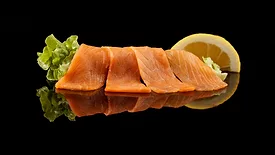
A recent study found that Listeria monocytogenes from multispecies biofilms exhibits higher growth in ready-to-eat (RTE) cold-smoked salmon than L. monocytogenes from single-species biofilms. Additionally, L. monocytogenes contamination from the multi-species biofilm surpassed EU regulatory limits after 15 days of storage.
In 2024, UKHSA investigated seven listeriosis outbreaks across England and Wales, linked to various food products including smoked fish, chocolate and strawberry mousse, garlic sausage and pre-packed sandwiches.
A recent report from the FAO/WHO Joint Expert Meeting on Microbiological Risk Assessment (JEMRA) summarizes the development of formal risk assessment models for Listeria monocytogenes in leafy greens, cantaloupe, frozen vegetables, and ready-to-eat (RTE) seafood.
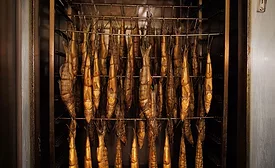
This article explores the science behind the controls required to ensure consistent, safe production of both hot and cold smoked fish, using generated wood smoke and liquid smoke, and focusing on two of the most relevant hazards—non-proteolytic Clostridium botulinum and Listeriamonocytogenes.