Food Safety
search
Ask Food Safety AI
cart
facebook twitter linkedin
  • Sign In
  • Create Account
  • Sign Out
  • My Account
Food Safety
  • NEWS
    • Latest News
    • White Papers
  • PRODUCTS
  • TOPICS
    • Contamination Control
    • Food Types
    • Management
    • Process Control
    • Regulatory
    • Sanitation
    • Supply Chain
    • Testing and Analysis
  • PODCAST
  • EXCLUSIVES
    • Food Safety Five Newsreel
    • eBooks
    • FSM Distinguished Service Award
    • Interactive Product Spotlights
    • Videos
  • BUYER'S GUIDE
  • MORE
    • ENEWSLETTER >
      • Archive Issues
      • Subscribe to eNews
    • Store
    • Sponsor Insights
    • ASK FSM AI
  • WEBINARS
  • FOOD SAFETY SUMMIT
  • EMAG
    • eMagazine
    • Archive Issues
    • Editorial Advisory Board
    • Contact
    • Advertise
  • SIGN UP!
NewsContamination ControlManagementRegulatoryInternationalChemicalInternational Standards/Harmonization

Swedish Survey Raises Concerns About Toddlers’ Dietary Exposure to BPA, PFAS, Lead

By Food Safety Magazine Editorial Team
a toddler eating

Image credit: Freepik

February 26, 2025

A survey of Swedish toddlers conducted by the Swedish Food Agency (Livsmedelsverket) has found high levels of some toxic substances—such as per- and polyfluoroalkyl substances (PFAS), bisphenol A (BPA), and lead—in the children’s bodies, presumably from dietary exposure. The survey was carried out as part of the Riksmaten Young Children dietary study, conducted from 2021–2023, which collected information on the eating habits of infants, toddlers, and children.

For the Riksmaten study, more than 1,800 families across Sweden recorded what their children ate over the span of two days, and nearly 600 children provided blood and/or urine samples. The study focused on kids between the ages of one-and-a-half and four. The samples were analyzed for toxic substances found in foods, like heavy metals and environmental contaminants. Sample collection and analyses were carried out in collaboration with the Swedish Environmental Protection Agency's health-related environmental monitoring.

Most of the substances for which the samples were analyzed were present in the children at low enough levels as to not pose a health concern, consistent with previous Swedish studies, according to the Swedish Food Agency. However, a proportion of the children had higher levels of PFAS or lead in their bodies than is desirable.

Additionally, the Swedish Food Agency reported that the levels of BPA in urine samples were cause for concern and suggest that humans are ingesting too much BPA, consistent with the opinion of the European Food Safety Authority (EFSA). In December 2024, EFSA officially adopted a ban on the use of BPA in food contact materials, following an April 2023 reassessment of the health risks posed by dietary exposure that led the agency to lower the tolerable daily intake (TDI) for the chemical by 20,000 times.

Looking for quick answers on food safety topics?
Try Ask FSM, our new smart AI search tool.
Ask FSM →


KEYWORDS: BPA exposure science heavy metals lead Livsmedelsverket PFAS study Sweden

Share This Story

Fsm purple logo 200x200

The Food Safety Magazine editorial team comprises Bailee Henderson, Digital Editor ✉; Adrienne Blume, M.A., Editorial Director; and Stacy Atchison, Publisher.

Recommended Content

JOIN TODAY
to unlock your recommendations.

Already have an account? Sign In

  • people holding baby chicks

    Serovar Differences Matter: Utility of Deep Serotyping in Broiler Production and Processing

    This article discusses the significance of Salmonella in...
    Meat/Poultry
    By: Nikki Shariat Ph.D.
  • woman washing hands

    Building a Culture of Hygiene in the Food Processing Plant

    Everyone entering a food processing facility needs to...
    Personal Hygiene/Handwashing
    By: Richard F. Stier, M.S.
  • graphical representation of earth over dirt

    Climate Change and Emerging Risks to Food Safety: Building Climate Resilience

    This article examines the multifaceted threats to food...
    Risk Assessment
    By: Maria Cristina Tirado Ph.D., D.V.M. and Shamini Albert Raj M.A.
Manage My Account
  • eMagazine Subscription
  • Subscribe to eNewsletter
  • Manage My Preferences
  • Website Registration
  • Subscription Customer Service

More Videos

Sponsored Content

Sponsored Content is a special paid section where industry companies provide high quality, objective, non-commercial content around topics of interest to the Food Safety Magazine audience. All Sponsored Content is supplied by the advertising company and any opinions expressed in this article are those of the author and not necessarily reflect the views of Food Safety Magazine or its parent company, BNP Media. Interested in participating in our Sponsored Content section? Contact your local rep!

close
  • Salmonella bacteria
    Sponsored byThermoFisher

    Food Microbiology Testing Methods: Salmonella species

  • a diagram explaining indicator organisms
    Sponsored byHygiena

    How Proactive Listeria Testing Helps Prevent Six- and Seven-Figure Recalls

  • woman grocery shopping
    Sponsored byCorbion

    Designing Safety Into Every Bite: Proactive Risk Mitigation for Refrigerated Foods

Popular Stories

baby eating bottle

Infant Botulism Spike Exceeds 100 Cases, Extent of ByHeart's Involvement Unclear

NRTE breaded stuffed chicken

USDA Indefinitely Delays Enforcement of Salmonella as Adulterant in Raw Breaded, Stuffed Chicken

digital map of europe

EU Publishes Food Fraud Tool Mapping Thousands of Cases Since 2016

Events

December 11, 2025

How to Develop and Implement an Effective Food Defense Strategy

Live: December 11, 2025 at 2:00 pm EDT: From this webinar, attendees will learn common areas where companies encounter challenges in their food defense strategies and how to address them.

May 11, 2026

The Food Safety Summit

Stay informed on the latest food safety trends, innovations, emerging challenges, and expert analysis. Leave the Summit with actionable insights ready to drive measurable improvements in your organization. Do not miss this opportunity to learn from experts about contamination control, food safety culture, regulations, sanitation, supply chain traceability, and so much more.

View All

Products

Global Food Safety Microbial Interventions and Molecular Advancements

Global Food Safety Microbial Interventions and Molecular Advancements

See More Products

Related Articles

  • raw fish filets on pile of coarse salt

    Swedish Food Basket Survey Shows Exposure to PFAS, Dioxins, Salt Decreasing

    See More
  • someone lowering their fork into a plate of freshwater fish

    WHO Classifies Two Major PFAS as Carcinogenic to Humans, Underlines Risk of Dietary Exposure

    See More
  • scoop and tub of protein powder

    Consumer Reports Voices Concern About Lead in Protein Powder, Urges FDA to Set Enforceable Limits

    See More

Related Products

See More Products
  • Food-Forensics-3D.jpg

    Food Forensics Handbook Practice, Instrumentation, Case Studies

  • food safety.jpg

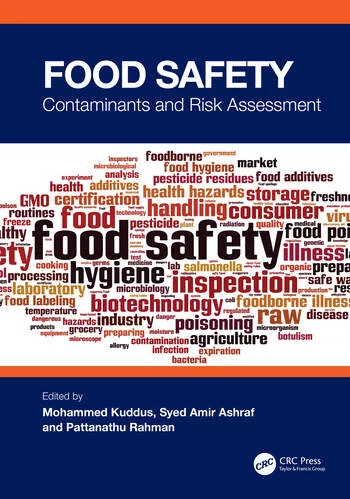
    Food Safety Contaminants and Risk Assessment

  • 1118474600.jpg

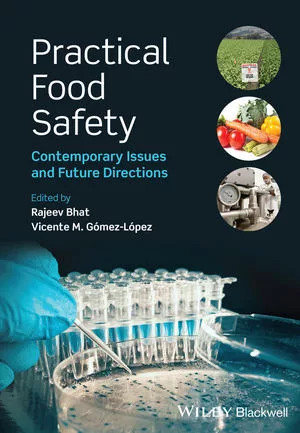
    Practical Food Safety: Contemporary Issues and Future Directions

See More Products

Related Directories

  • BluePrint Automation (BPA)

    BluePrint Automation is a world leader in end of line packaging automation, with a core focus on flexible (bags, SUP’s, flow wraps) and naked products. With an innovative team BPA designs, develops and manufactures primary and secondary packaging solutions for QSR, food service and retail products. You make it, we pack it!
  • Perfex Corp.

    Perfex is the leading manufacturer of professional-grade cleaning tools for pharmaceutical and food manufacturing environments. Reliable and quality materials to address todays hygienic concerns, these are the goals we strive for every day. Our TruCLEAN mopping systems lead the critical cleaning industry with autoclave compatible materials, built for cleanroom standards.
  • Fayette Industrial

    At Fayette, we understand that cleanliness in your meat, poultry, pork, or ready-to-eat facility isn't just about passing inspections—it's about protecting your entire business. Our specialized contract sanitation services are tailored to your specific processing environment with rigorous pathogen prevention protocols and audit preparation that exceed regulatory standards.
×

Never miss the latest news and trends driving the food safety industry

eNewsletter | Website | eMagazine

JOIN TODAY!
  • RESOURCES
    • Advertise
    • Contact Us
    • Directories
    • Store
    • Want More
  • SIGN UP TODAY
    • Create Account
    • eMagazine
    • eNewsletter
    • Customer Service
    • Manage Preferences
  • SERVICES
    • Marketing Services
    • Reprints
    • Market Research
    • List Rental
    • Survey/Respondent Access
  • STAY CONNECTED
    • LinkedIn
    • Facebook
    • Instagram
    • X (Twitter)
  • PRIVACY
    • PRIVACY POLICY
    • TERMS & CONDITIONS
    • DO NOT SELL MY PERSONAL INFORMATION
    • PRIVACY REQUEST
    • ACCESSIBILITY

Copyright ©2025. All Rights Reserved BNP Media.

Design, CMS, Hosting & Web Development :: ePublishing