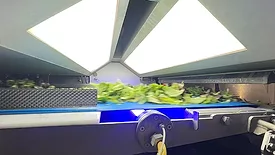
The new COMPASS optical sorter from Key Technology combines high-performance foreign material contamination detection and removal with gentle, hygienic product handling to help processors enhance food safety and operational efficiency.
The third installment of the second FDA-Stop Foodborne Illness Food Safety Culture Webinar Series, titled, “Measure the Power of Declared Values,” will be held on December 17.
The Food Safety Outreach Program is a grant program in which USDA-NIFA provides funding for food safety training and education for small and mid-sized producers and processors affected by the Food Safety Modernization Act (FSMA).
The Federal Food Administration Act would create an entirely original, independent federal food agency, moving responsibility for oversight of the nation’s food supply from FDA to a new Federal Food Administration.
Tetra Pak has unveiled the first-ever use of its paper-based barrier technology for a juice packaging application by García Carrión. The Tetra Brik Aseptic Slim Leaf carton comprises 92 percent renewable materials and reduces carbon footprint by 43 percent.
Newly integrated corrective and preventive action (CAPA) workflows help food and beverage manufacturers identify, address, and prevent non-conformances.
Responsible for representing scientific interests within the UK Food Standards Agency (FSA), Dr. Ian Young is also Professor of Medicine at Queen’s University in Belfast.
The enhanced iHeat Tubing and Tube Bundle product line is designed for industrial process lines, analyzer sample lines, and critical fluid transfer applications.
Rockwell Automation Inc.’s Manufacturing Execution System (MES) solutions unify manufacturers’ IT and OT operations and lay the foundation for production automation.
As screening of Ukraine for entry into the EU continues, the country has implemented a system similar to the European Rapid Alert System for Food and Feed (RASFF). Additionally, evaluation of Ukraine’s food safety policy for EU alignment has progressed.