In a retrospective analysis of two Listeria monocytogenes outbreaks linked to packaged salads, CDC epidemiologists underline key learnings and suggest proactive measures for industry.
Considering the infant botulism outbreak linked to ByHeart Whole Nutrition Infant Formula, during which product was found on store shelves weeks after the recall was announced, FDA issued a letter to industry describing firms’ legal obligations in the case of a recall, as well as warning letters to four major retailers (Walmart, Target, Kroger, and Albertsons).
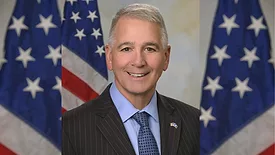
Previously serving as the Surgeon General of Louisiana and a U.S. Representative for the state of Louisiana, Ralph Abraham, M.D., D.V.M. has practiced both family and veterinary medicine throughout his career.
Researchers with the Connecticut Agricultural Experiment Station have demonstrated that the use of iron-fortified hemp biochar made from agricultural waste can significantly reduce the amount of toxic PFAS “forever chemicals” taken up by food crops grown in contaminated soil.
The European Food Safety Authority (EFSA) has published guidelines for reporting whole genome sequencing (WGS) data in compliance with Regulation (EU) 2025/179, which requires Member States to conduct WGS on the isolates of five important pathogens during the investigations of foodborne illness outbreaks and sets data-sharing parameters.
In 2026, Penn State University will host a series of three-day, in-person short courses designed for food safety and quality assurance professionals, food inspectors, plant managers, sanitarians, and food engineers, overing food microbiology, food science fundamentals, sanitation, and FSMA compliance.
Set to open in spring 2026 in Georgia, the Wolf’s Customer Experience Center will serve as a collaborative space for research, product development, and customer engagement, supporting WTI’s focus on food safety, quality, and naturally derived ingredient technologies.
WITT Gas has introduced its latest generation of MEM+ gas mixers, now featuring enhanced connectivity options and advanced control capabilities to optimize process efficiency and maintain safety during the mixing of non-flammable gases in thermal processing environments.
The Food Production Solutions Association (FPSA) will introduce two leadership development programs in 2026 aimed at addressing workforce gaps in the food production and manufacturing sectors.
The Compact Integrated Xenon Lamp (CIXL) from XENON Corporation is a fully integrated, plug-and-play system that delivers pulsed light—a technology that provides food processors with a non-chemical method for pathogen control on food contact materials and food packaging.