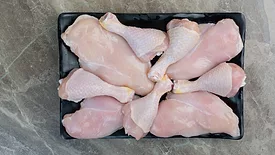
Following the withdrawal of the previously proposed strategy for reducing Salmonella in poultry, USDA-FSIS will host a public meeting on January 14 to advance work on a new approach, facilitating a discussion on “practical strategies” that “reflect both public health goals and industry realities.”
The Institute of Food Technologists’ (IFT’s) peer-reviewed Journal of Food Science has released its free-to-read Special Issue on Health, Safety, and Sustainability of Aquatic Foods.
As a result of the ongoing Cell-Cultivated Products sandbox program, the UK Food Standards Agency (FSA) has published the first of several guidances on the food safety and hygiene of cell-cultured food production; specifically, on HACCP and other applicable requirements under UK regulations for lab-grown meat.
The nationwide infant botulism outbreak associated with ByHeart infant formula has grown to 39 cases in 18 states. All 39 infants were hospitalized; no deaths have been reported.
The sampling and testing project will support the National Antimicrobial Resistance Monitoring System (NARMS) by identifying trends and emerging risks from drug-resistant foodborne bacteria. Findings will be used to create a model that can help predict and address antimicrobial resistance (AMR) mitigation strategies.
As of December 2, laboratory-confirmed cases in the ongoing Salmonella outbreak linked to pistachios has reached 155, and CFIA now requires importers and manufacturers of Iranian pistachios to hold and test their products for Salmonella before they can be sold.
Posted to the Unified Agenda in September, FDA’s developing proposed rule to tighten Generally Recognized as Safe (GRAS) oversight has been sent to the White House for review—the final step before publication.
As part of the EU authorization procedure for a new food additive application, EFSA conducted a risk assessment for jagua (genipin-glycine) blue, which concluded no safety concern and established an acceptable daily intake (ADI). The fruit-derived food dye is already permitted in the U.S.
This episode of Food Safety Five discusses a farm-to-fork quantitative microbial risk assessment (QMRA) for Listeria monocytogenes in cantaloupe, a study demonstrating the efficacy of antimicrobial peptides for reducing Salmonella in poultry, and the adoption of new international standards at the 48th session of the Codex Alimentarius Commission.
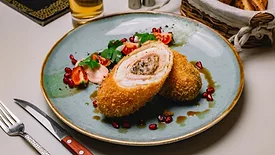
After withdrawing its previously proposed regulatory framework for Salmonella in raw poultry in April, USDA-FSIS is indefinitely delaying verification activities for Salmonella in not-ready-to-eat, breaded and stuffed chicken products, and is reconsidering its strategy to reduce Salmonella in poultry with an exploratory public meeting in January.
 RSS
RSS