Food Safety
search
Ask Food Safety AI
cart
facebook twitter linkedin instagram youtube
  • Sign In
  • Create Account
  • Sign Out
  • My Account
Food Safety
  • NEWS
    • Latest News
    • Sponsored Insights
    • Sponsored White Papers
  • PRODUCTS
  • TOPICS
    • Contamination Control
    • Food Types
    • Management
    • Process Control
    • Regulatory
    • Sanitation
    • Supply Chain
    • Testing and Analysis
  • PODCAST
  • EXCLUSIVES
    • Food Safety Five Newsreel
    • eBooks
    • FSM Distinguished Service Award
    • Interactive Product Spotlights
    • Videos
  • BUYER'S GUIDE
  • MORE
    • NEWSLETTERS >
      • Archive Issues
      • Subscribe to eNews
    • Store
    • ASK FSM AI
  • WEBINARS
  • FOOD SAFETY SUMMIT
  • EMAG
    • eMagazine
    • Archive Issues
    • Editorial Advisory Board
    • Contact
    • Advertise
  • SIGN UP!
NewsContamination ControlSanitationMicrobiological ControlBiofilm Control

Another Study Suggests Plastic Particles Strengthen E. coli Biofilms; Researchers Underline Drinking Water Safety Implications
By Food Safety Magazine Editorial Team
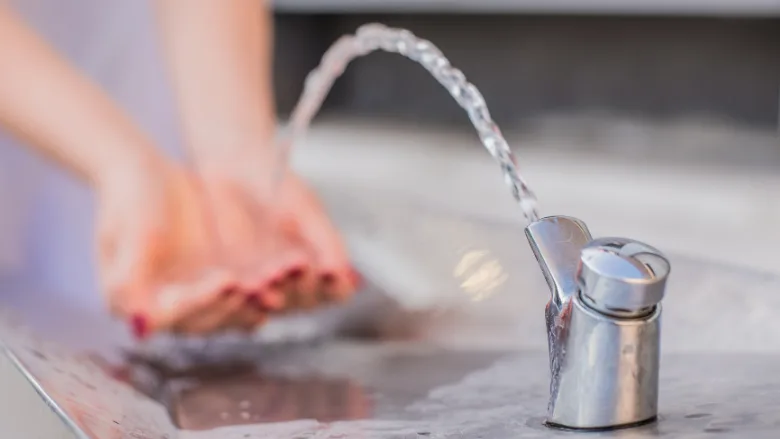
hands catching water from drinking fountain
Image credit: Dragana_Gordic via Magnific
July 21, 2026

Micro- and nanoplastics may help pathogenic bacteria survive elimination efforts, allowing them to persist in drinking water systems, according to a new study published in Water Research.

Specifically, researchers found that nanoplastics can strengthen bacterial biofilms that grow on the inside of drinking water pipes and other water infrastructure. These biofilms became more resistant to chlorine disinfection, potentially making pathogenic bacteria more difficult to eradicate from water treatment and distribution systems.

Micro- and nanoplastics are already a growing public health concern due to dietary exposure via food and water, the extent and health impacts of which are not yet fully understood. The latest study suggests these plastic particles may indirectly affect human health by influencing how pathogens like Escherichia coli behave in water systems.

"It is very important to better understand the adverse effects of the nanoplastics on human health, and not just in humans but also in the environment, which indirectly influences human health," said Jingqiu Liao, Ph.D., Assistant Professor of Civil and Environmental Engineering at Virginia Tech and an author of the study. "The nanoplastics can make the antimicrobial-resistant pathogens better survive, which could be harmful to the environment and would have public health implications."

The study was authored by researchers from Virginia Tech, Rice University, the Chinese Academy of Sciences, the Swiss Federal Institute of Aquatic Science and Technology, and Zhejiang University.

Nanoplastics Strengthened E. coli, Pseudomonas Biofilms

Biofilms are communities of bacteria that attach to surfaces and surround themselves with a protective matrix known as extracellular polymeric substances (EPS). These microbial communities that develop inside drinking water distribution systems can harbor opportunistic pathogens and make them more difficult to eliminate.

To understand how nanoplastics influence biofilm dynamics, the researchers exposed dual-species biofilms comprising E. coli and Pseudomonas aeruginosa to positively and negatively charged polystyrene nanoplastics at environmentally relevant concentrations ranging from 100–1,000 nanograms per liter (ng/L). Positively charged nanoplastics produced the strongest effects.

Looking for quick answers on food safety topics?
Try Ask FSM, our new smart AI search tool.
Ask FSM →

The researchers found that nanoplastics entered bacterial cells and increased oxidative stress, raising reactive oxygen species (ROS) levels by approximately 2.2-fold. This stress activated dormant bacteriophages, or viruses that infect bacteria, triggering partial lysis of E. coli cells and releasing intracellular material into the surrounding biofilm.

At the same time, transcriptomic and proteomic analyses showed that nanoplastics activated bacterial stress responses, stimulated bacteriophage replication, and enhanced quorum sensing—the chemical communication system bacteria use to coordinate group behavior. As bacteria "talked" to one another, they secreted larger amounts of EPS, producing thicker, denser, and more protective biofilms.

The researchers also observed activation of bacterial antiviral defense systems in response to prophages, which are bacteriophages that insert their own genomes into the DNA of bacterial hosts and destroy the bacterial cells they inhabit while producing large numbers of new virus particles. To defend against these prophages, bacteria deploy Clustered Regularly Interspaced Short Palindromic Repeats (CRISPR) of DNA or RNA.

Together, these processes increased extracellular DNA within the biofilm, improved its mechanical strength by approximately 1.5-fold, and significantly increased resistance to chlorine disinfection. Metagenomic analysis of pipeline biofilms suggested these bacterium–phage interactions also promoted more resilient, multi-species biofilm communities.

The authors concluded that stronger, more disinfectant-resistant biofilms could create new challenges for drinking water treatment and distribution systems by making biofilms more difficult to eradicate from infrastructure surfaces.

Future research is necessary to identify the molecular processes that drive the responses of complex biofilms containing multiple microbial species to plastic particles, as well as to understand the role of particle size (i.e., microplastics vs. nanoplastics) on bacterium–phage dynamics.

Findings Build on Emerging Evidence Linking Plastics to Microbial Risks

The new findings add to a growing body of research suggesting that microplastics and nanoplastics can alter bacterial behavior in ways that increase microbial persistence, antimicrobial resistance (AMR), and virulence.

For example, a 2025 study out of Boston University found that microplastics increased AMR and biofilm formation in E. coli, raising concerns that plastic pollution could contribute to the spread of AMR among foodborne pathogens.

Researchers at the University of Illinois Urbana-Champaign have reported similar findings for nanoplastics. One study found that charged nanoplastics altered the growth, viability, physiological stress responses, virulence, and biofilm formation of pathogenic E. coli. Another study showed that nanoplastics increased Salmonella virulence, promoted biofilm formation, and exacerbated AMR, with greater nanoplastic concentrations producing stronger effects.

Taken together, these studies suggest that plastic particles may influence microbial communities through multiple biological pathways, potentially increasing the persistence of pathogenic bacteria in both food matrices and water systems.


 

KEYWORDS: disinfection E. coli microplastics pollution study water water safety

Share This Story

Fsm purple logo 200x200

The Food Safety Magazine editorial team comprises Bailee Henderson, Director of Content Strategy and news editor ✉, and Adrienne Blume, M.A., Director of Editorial and Industry Engagement.

Recommended Content

JOIN TODAY
to unlock your recommendations.

Already have an account? Sign In

  • people holding baby chicks

    Serovar Differences Matter: Utility of Deep Serotyping in Broiler Production and Processing

    This article discusses the significance of Salmonella in...
    Microbiological Control
    By: Nikki Shariat Ph.D.
  • woman washing hands

    Building a Culture of Hygiene in the Food Processing Plant

    Everyone entering a food processing facility needs to...
    Facilities
    By: Richard F. Stier, M.S.
  • graphical representation of earth over dirt

    Climate Change and Emerging Risks to Food Safety: Building Climate Resilience

    This article examines the multifaceted threats to food...
    Contamination Control
    By: Maria Cristina Tirado Ph.D., D.V.M. and Shamini Albert Raj M.A.
Manage My Account
  • eMagazine Subscription
  • Subscribe to Newsletters
  • Manage My Preferences
  • Website Registration
  • Subscription Customer Service

More Videos

Sponsored Content

Sponsored Content is a special paid section where industry companies provide high quality, objective, non-commercial content around topics of interest to the Food Safety Magazine audience. All Sponsored Content is supplied by the advertising company and any opinions expressed in this article are those of the author and not necessarily reflect the views of Food Safety Magazine or its parent company, BNP Media. Interested in participating in our Sponsored Content section? Contact your local rep!

close
  • an automated industrial production line used in a modern food factory
    Sponsored byIFC

    A Formula for Food Processing Pest Management

  • fly
    Sponsored byOrkin Commercial

    Fly Control in Food Processing Facilities: Managing Seasonal Food Safety Risks

  • Darkling Beetle
    Sponsored byElanco Animal Health

    Integrated Pest Management: Protecting Poultry Operations as Seasons Change

Popular Stories

taco bell storefront

FDA Says a Taco Bell Iceberg Lettuce Supplier is Source of Five-State Cyclosporiasis Outbreak

Cyclospora cayetanensis oocyst

Cyclospora Cases Climb, But Actual Number Unclear as CDC Reporting Lags Behind States

bowl of chopped fresh produce salad ingredients

How the U.S. Cyclospora Outbreak Reflects a Strained National Foodborne Illness Surveillance System

building a skilled workforce ebook

Events

August 6, 2026

Beyond Sanitation: Understanding the Hidden System Conditions That Allow Pathogens to Persist

Live: August 6, 2026 at 2:00 pm EDT: Attend this webinar to learn strategies for strengthening environmental control programs through a layered approach to pathogen management.

August 11, 2026

Beyond Sanitization: Reducing Contamination Risk Without Raising Operating Cost

Live: August 11, 2026 at 2:00 pm EDT: Attend this webinar to learn why ambient air is the largest and most overlooked contamination zone in food processing, and what it costs you between scheduled cleans.

August 25, 2026

Don’t Wing It: Bird Control for Food Processing Facilities

Live: August 25, 2026 at 2:00 pm EDT: This webinar will cover why managing bird activity should be a priority for your business, the complexities involved in effective bird control, and proactive strategies to help protect your facility.

View All

Products

Global Food Safety Microbial Interventions and Molecular Advancements

Global Food Safety Microbial Interventions and Molecular Advancements

See More Products

Related Articles

  • mussels

    Australian Study Suggests Plastic Pollution in Seafood

    See More
  • man cupping hands beneath running water from outdoor pump

    WHO Reviews Relevance of Different Pathogens to Drinking Water Safety

    See More
  • doctor talking to patient

    Study Suggests Foodborne E. coli is Underrecognized Cause of UTIs

    See More

Related Products

See More Products
  • 1119053595.jpg

    Food Safety for the 21st Century: Managing HACCP and Food Safety throughout the Global Supply Chain, 2E

  • food safety.jpg

    Food Safety Contaminants and Risk Assessment

  • 9781498721776.jpg

    Handbook of Food Processing: Food Safety, Quality, and Manufacturing Processes

See More Products

Events

View AllSubmit An Event
  • December 4, 2025

    Beyond Detection: How Integrated PCR Diagnostics Strengthen Food Safety in RTE Manufacturing

    On Demand: From this webinar, attendees will learn best practices for prevention of FM contamination at the corporate and plant levels.
View AllSubmit An Event

Related Directories

  • BioSafe Systems

    BioSafe Systems is a leading U.S. manufacturer of peroxyacetic acid (PAA)-based solutions, delivering trusted food safety, water treatment, and processing solutions through clean chemistry and automated equipment. Our proven products help growers and processors control pathogens such as E. coli and Salmonella, reduce microbial risk, and improve efficiency across the fresh produce supply chain.
  • Anatek Labs Inc.

    Anatek Labs, Inc is a full-service environmental testing laboratory, with locations in Moscow, ID and Spokane, Yakima and Wenatchee, WA. Some of our services include testing for pesticides, food pathogens, wastewater/soils, microbiology, compost, hazardous waste, PFC-PFAS, drinking water and more. Please visit our website for all tests and pricing.
  • Serim Research Corp.

    Serim® Research is a leading manufacturer of specialized test strips for multiple industries including food safety and healthcare. Our tests for measuring chlorine and QAC sanitizing solutions are preferred by many customers including national restaurants, food production and processing companies. We also manufacture tests for residual glucose, water quality
×

Never miss the latest news and trends driving the food safety industry

Newsletters | Website | eMagazine

JOIN TODAY!
  • RESOURCES
    • Advertise
    • Contact Us
    • Directories
    • Store
    • Want More
  • SIGN UP TODAY
    • Create Account
    • eMagazine
    • Newsletters
    • Customer Service
    • Manage Preferences
  • SERVICES
    • Marketing Services
    • Reprints
    • Market Research
    • List Rental
    • Survey/Respondent Access
  • STAY CONNECTED
    • LinkedIn
    • Facebook
    • Instagram
    • X (Twitter)
  • PRIVACY
    • PRIVACY POLICY
    • TERMS & CONDITIONS
    • DO NOT SELL MY PERSONAL INFORMATION
    • PRIVACY REQUEST
    • ACCESSIBILITY

Copyright ©2026. All Rights Reserved BNP Media, Inc. and BNP Media II, LLC.

Design, CMS, Hosting & Web Development :: ePublishing