EFSA: Current Studies May Overestimate Microplastics Transferring From FCMs Into Food
A comprehensive literature review conducted by the European Food Safety Authority (EFSA) Food Contact Materials Working Group has shed light on the release of micro- and nanoplastics from food contact materials (FCMs), revealing both evidence of particle transfer and significant gaps in current research methodologies.
The review analyzed more than 100 studies published between 2015 and January 2025. While most studies focused on microplastics, data on nanoplastics were scarce. The majority of research used water or aqueous simulants to test particle release, with mineral water being the most frequently studied matrix. Real food matrices were rarely examined. Overall, there is no sufficient basis to estimate micro- and nanoplastics exposure from FCM during their uses.
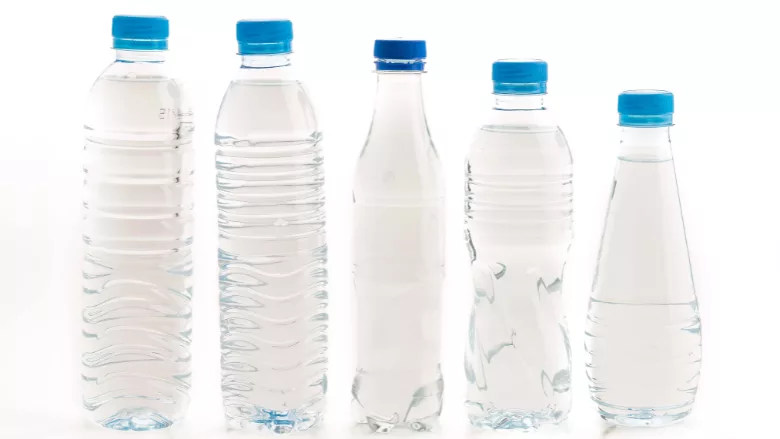
The researchers found that microplastic release from FCMs is primarily driven by mechanical stress (e.g., abrasion, friction, and fiber shedding) rather than chemical diffusion. Rigid plastic items like water bottles, cups, and tea bags were most commonly tested, with studies showing that repeated opening and closing of bottle caps can generate tens of thousands of particles. However, many of these particles remain trapped at the cap-neck interface and do not transfer to the water.
Tea bags made of synthetic materials also showed evidence of microplastic shedding, though earlier reports of billions of particles per bag have been revised downward. More reliable estimates are in the range of 122,300–222,800 total particles greater than one micrometer (µm) and 5,800–20,400 for identified microplastics per tea bag. Some studies estimate that consumers could consume 10–20 microplastic fibers per serving of tea from bags made of PE, nylon, PET, or PL.
Despite the volume of research, the review highlights widespread methodological shortcomings throughout the studies. These include inconsistent sample preparation, unreliable analytical techniques, and a lack of validated protocols for nanoparticle detection. For example, electron microscopy—commonly used to observe nanoplastics—can produce misleading results due to artefacts formed during sample drying.
Studies on packaged foods were largely limited to bottled water, and few traced micro- and nanoplastics contamination across the full food production chain. Mass-based measurements of particle release were rare, and size reporting often lacked dimensional information, complicating exposure assessments.
The review concludes, that while there is clear evidence of microplastic release from FCMs, the actual quantities are likely lower than many studies suggest. Nanoplastics data remain insufficient, and current evidence does not support reliable exposure estimates.
To address these gaps, EFSA recommends that future research focus on:
- Validated test protocols and recovery standards
- Improved analytical methods for particles less than 1 µm
- Accurate identification and quantification of micro- and nanoplastics
- Testing with non-polar foods and simulants
- Expanded studies using real food matrices
- Dietary exposure assessments contextualized against other sources.
A follow-up review is proposed within five years to incorporate emerging data and methodological advancements. The Food Contact Materials Working Group will continue monitoring developments to determine if this timeline should be adjusted.
Looking for quick answers on food safety topics?
Try Ask FSM, our new smart AI search tool.
Ask FSM →