Food Safety
search
Ask Food Safety AI
cart
facebook twitter linkedin instagram youtube
  • Sign In
  • Create Account
  • Sign Out
  • My Account
Food Safety
  • NEWS
    • Latest News
    • White Papers
  • PRODUCTS
  • TOPICS
    • Contamination Control
    • Food Types
    • Management
    • Process Control
    • Regulatory
    • Sanitation
    • Supply Chain
    • Testing and Analysis
  • PODCAST
  • EXCLUSIVES
    • Food Safety Five Newsreel
    • eBooks
    • FSM Distinguished Service Award
    • Interactive Product Spotlights
    • Videos
  • BUYER'S GUIDE
  • MORE
    • NEWSLETTERS >
      • Archive Issues
      • Subscribe to eNews
    • Store
    • Sponsor Insights
    • ASK FSM AI
  • WEBINARS
  • FOOD SAFETY SUMMIT
  • EMAG
    • eMagazine
    • Archive Issues
    • Editorial Advisory Board
    • Contact
    • Advertise
  • SIGN UP!
NewsContamination ControlFood TypeSanitationSupply ChainTesting & AnalysisMicrobiologicalEnvironmental MonitoringEnvironmental TestingMicrobiologicalProduceGrowers/GAPs

Study Demonstrates Effective Listeria Environmental Monitoring in Hydroponic Produce Facility
By Food Safety Magazine Editorial Team
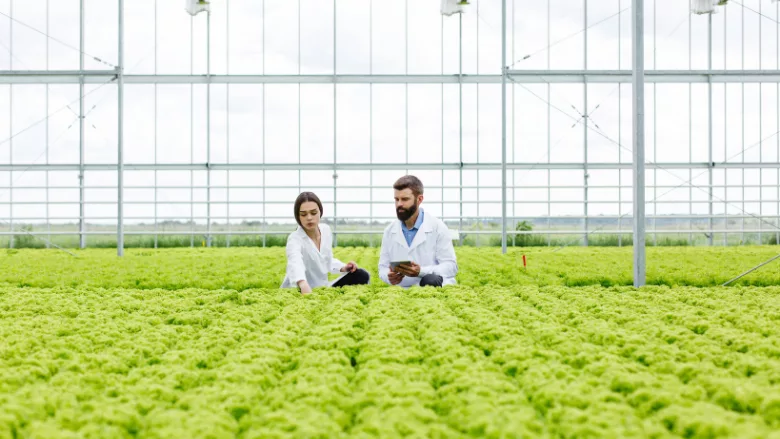
researchers in an indoor hydroponic growing facility
Image credit: freepic.diller via Freepik
February 26, 2026

A new study evaluating the presence of Listeria monocytogenes in a controlled environment agriculture (CEA) operation provided insights into potential contamination risks and effective environmental monitoring and sanitation approaches.

The project was conducted by researchers with the Spanish National Research Council (CEBAS-CSIC) and published in Food Control.

The findings confirmed the critical importance of environmental monitoring for detecting potential microbiological contamination risks, informing appropriate intervention measures, and confirming the effectiveness of corrective actions. 

Study Design

For the study, the researchers collected a total of 156 environmental samples from a commercial hydroponic pak choi growing operation. Samples were collected on three occasions over a period of eight months, focusing on food-contact surfaces, non-food-contact surfaces, and crop water sources (i.e., irrigation community water, nutrient solution, and drainage solution).

L. monocytogenes was only detected in two of the 156 samples, both of which were collected during the first sampling occasion.

Boot Covers Prove to be Useful Swabbing Tool for Environmental Monitoring

One L. monocytogenes-positive sample was collected from boot covers worn by personnel walking through pre-harvest, harvest, and post-harvest zones, demonstrating the effectiveness of using boot covers as a swab tool to evaluate cleaning and sanitation. The presence of L. monocytogenes on boot covers, despite no direct contact with the crop, highlights the potential for cross-contamination between operational areas.

The other positive sample came from the drainage nutrient solution, indicating a potential contamination risk to the crop. Water samples were passed through a modified Moore Swab filtration system—an approach the researchers recommend.

Looking for quick answers on food safety topics?
Try Ask FSM, our new smart AI search tool.
Ask FSM →

Sampling Showed Cleaning and Sanitation Approach was Effective

The cleaning and sanitation strategy implemented after the first sampling occasion proved effective, as no L. monocytogenes was detected in samples collected during the latter two sampling occasions, despite an increased number of samples.  The first sampling occasion occurred on the last day after 11 months of production, while the second sampling occasion occurred on the first day after a month-long production break, during which intensive cleaning and sanitation were conducted. The cleaning practices for the harvesting equipment focused on removing all visible debris via scrubbing and pressurized water prior to sanitation to prevent bacterial transfer during operations.

Minimal Dispersal of Contamination from Puddle Throughout Facility

The researchers also conducted an experiment using L. innocua to simulate contamination transfer from a puddle throughout a CEA facility via boots and wheels. In the boot trials, one hour after inoculation, levels of viable L. innocua on the boot and initial floor surfaces were low but comparable at 1.80 and 1.70 log colony-forming units per square centimeter (CFU/cm2), respectively. One hour post-inoculation in the wheel trials, a significant decrease in viable L. innocua was observed from the wheel surface (2.68 log CFU/cm2) to the first floor point (1.02 log CFU/cm2). At 24 hours post-inoculation, L. innocua counts were below the limit of detection at all floor points for both boot and wheel trials. Overall, the transfer of contamination from a puddle and its contribution to the dispersion of L. innocua were minimal under the studied environmental conditions.


KEYWORDS: Controlled Environment Agriculture indoor farming listeria Spain study

Share This Story

Fsm purple logo 200x200

The Food Safety Magazine editorial team comprises Bailee Henderson, Digital Editor ✉; Adrienne Blume, M.A., Editorial Director; and Stacy Atchison, Publisher.

Recommended Content

JOIN TODAY
to unlock your recommendations.

Already have an account? Sign In

  • people holding baby chicks

    Serovar Differences Matter: Utility of Deep Serotyping in Broiler Production and Processing

    This article discusses the significance of Salmonella in...
    Testing & Analysis
    By: Nikki Shariat Ph.D.
  • woman washing hands

    Building a Culture of Hygiene in the Food Processing Plant

    Everyone entering a food processing facility needs to...
    Management
    By: Richard F. Stier, M.S.
  • graphical representation of earth over dirt

    Climate Change and Emerging Risks to Food Safety: Building Climate Resilience

    This article examines the multifaceted threats to food...
    Best Practices
    By: Maria Cristina Tirado Ph.D., D.V.M. and Shamini Albert Raj M.A.
Manage My Account
  • eMagazine Subscription
  • Subscribe to Newsletters
  • Manage My Preferences
  • Website Registration
  • Subscription Customer Service

More Videos

Sponsored Content

Sponsored Content is a special paid section where industry companies provide high quality, objective, non-commercial content around topics of interest to the Food Safety Magazine audience. All Sponsored Content is supplied by the advertising company and any opinions expressed in this article are those of the author and not necessarily reflect the views of Food Safety Magazine or its parent company, BNP Media. Interested in participating in our Sponsored Content section? Contact your local rep!

close
  • factory
    Sponsored byIFC

    A Clean Break to Reset the Environment with Chlorine Dioxide

  • Salmonella bacteria
    Sponsored byThermoFisher

    Food Microbiology Testing Methods: Salmonella species

  • a diagram explaining indicator organisms
    Sponsored byHygiena

    How Proactive Listeria Testing Helps Prevent Six- and Seven-Figure Recalls

Popular Stories

man working in a cheese warehouse smiling at camera holding laptop

FDA Announces FSMA 204 Stakeholder Engagement Initiative, Releases Guidance

Processed chips snacks and candies

RFK Jr. Highlights FDA’s Focus on GRAS Rule, But Makes No Promises

test swab and tube

Study Shows How Swab Storage Time, Temperature Affect Allergen Detection

Events

March 3, 2026

FDA/USDA Regulatory Updates: Food Safety Work Plans for 2026

Live: March 3, 2026 at 2:00 pm EST: In this high-level, exclusive webinar, FDA Deputy Commissioner for Human Foods Kyle Diamantas and USDA Under Secretary for Food Safety Mindy Brashears, Ph.D. will share their agencies' regulatory priorities and work plans for 2026 and beyond.

May 11, 2026

The Food Safety Summit

Stay informed on the latest food safety trends, innovations, emerging challenges, and expert analysis. Leave the Summit with actionable insights ready to drive measurable improvements in your organization. Do not miss this opportunity to learn from experts about contamination control, food safety culture, regulations, sanitation, supply chain traceability, and so much more.

View All

Products

Global Food Safety Microbial Interventions and Molecular Advancements

Global Food Safety Microbial Interventions and Molecular Advancements

See More Products

Related Articles

  • many rod-shaped bacteria

    Study Demonstrates Listeria’s Ability to Colonize, Survive in Preexisting Multispecies Biofilms

    See More
  • cut fruit salad up close

    CPS-Funded Study Provides Insight Into Listeria Contamination in Produce Processing Plants

    See More
  • a man inspecting a bacteria culture on agar plate

    Study Compares Culture-Based and Alternative Environmental Monitoring Methods for Listeria

    See More

Related Products

See More Products
  • 9781138070912.jpg

    Trends in Food Safety and Protection

  • 1119237963.jpg

    Food Safety in China: Science, Technology, Management and Regulation

  • Food-Forensics-3D.jpg

    Food Forensics Handbook Practice, Instrumentation, Case Studies

See More Products

Events

View AllSubmit An Event
  • May 1, 2025

    Avoiding Sanitation Pitfalls: Challenges and Opportunities for Your Environmental Monitoring Program

    On Demand: During this webinar, attendees will learn environmental sanitation pitfalls to avoid, and how to ensure biological safety inside your plant
View AllSubmit An Event

Related Directories

  • CDG Environmental

    CDG Solution 3000TM is a ready-to-use liquid chlorine dioxide product designed to control microorganisms over a wide spectrum of applications. Compared to traditional anti-microbials, CDG Solution 3000TM offers ease of application, safety in handling, and superior effectiveness. CDG Solution 3000 is a patented, EPA approved hard-surface disinfectant.
  • AEMTEK Laboratories

    ISO 17025 accredited third-party laboratory focused on accuracy, turnaround times, customer service, and knowledgeable staff. AEMTEK specializes in product testing, environmental monitoring, shelf-life studies, process validation, research, training, and consulting services. For over 20 years, AEMTEK has provided clients with holistic solutions to ensure food safety.
  • QualiTru Sampling Systems

    Since 1983, QualiTru Sampling Systems® (formerly QMI) has been the leader in the science of aseptic liquid sampling with innovative, easy-to-use, versatile and cost‑effective sampling systems that help the dairy, beverage and liquid food industries produce safe, quality products across the U.S. and in over 30 countries worldwide.
×

Never miss the latest news and trends driving the food safety industry

Newsletters | Website | eMagazine

JOIN TODAY!
  • RESOURCES
    • Advertise
    • Contact Us
    • Directories
    • Store
    • Want More
  • SIGN UP TODAY
    • Create Account
    • eMagazine
    • Newsletters
    • Customer Service
    • Manage Preferences
  • SERVICES
    • Marketing Services
    • Reprints
    • Market Research
    • List Rental
    • Survey/Respondent Access
  • STAY CONNECTED
    • LinkedIn
    • Facebook
    • Instagram
    • X (Twitter)
  • PRIVACY
    • PRIVACY POLICY
    • TERMS & CONDITIONS
    • DO NOT SELL MY PERSONAL INFORMATION
    • PRIVACY REQUEST
    • ACCESSIBILITY

Copyright ©2026. All Rights Reserved BNP Media.

Design, CMS, Hosting & Web Development :: ePublishing