Food Safety
search
Ask Food Safety AI
cart
facebook twitter linkedin
  • Sign In
  • Create Account
  • Sign Out
  • My Account
Food Safety
  • NEWS
    • Latest News
    • White Papers
  • PRODUCTS
  • TOPICS
    • Contamination Control
    • Food Types
    • Management
    • Process Control
    • Regulatory
    • Sanitation
    • Supply Chain
    • Testing and Analysis
  • PODCAST
  • EXCLUSIVES
    • Food Safety Five Newsreel
    • eBooks
    • FSM Distinguished Service Award
    • Interactive Product Spotlights
    • Videos
  • BUYER'S GUIDE
  • MORE
    • ENEWSLETTER >
      • Archive Issues
      • Subscribe to eNews
    • Store
    • Sponsor Insights
    • ASK FSM AI
  • WEBINARS
  • FOOD SAFETY SUMMIT
  • EMAG
    • eMagazine
    • Archive Issues
    • Editorial Advisory Board
    • Contact
    • Advertise
  • SIGN UP!
NewsContamination ControlFood TypeChemicalMicrobiologicalMeat/Poultry

Canadian Chicken Study Finds Resistance to Important Antibiotics in Salmonella, Campylobacter
By Bailee Henderson
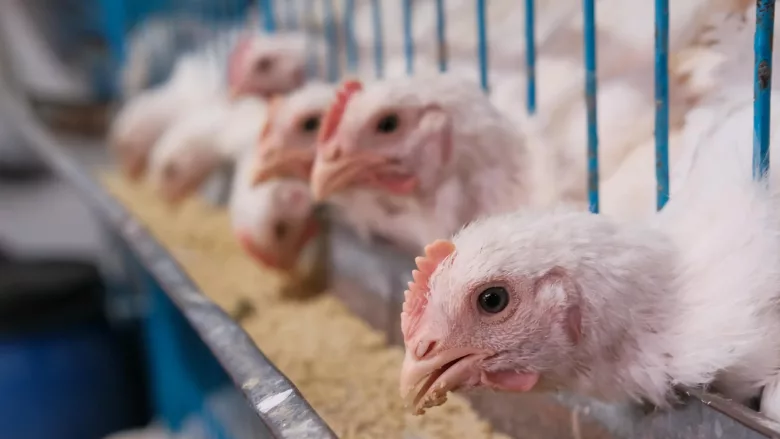
young broilers eating feed in cage commercial farm

Image credit: Towfiqu barbhuiya via Pexels

March 21, 2025

Resistance to critically important antibiotics is widespread among Salmonella and Campylobacter in Canadian chickens, a recent study found. Published in PLOS One, the study was conducted by researchers from the Public Health Agency of Canada (PHAC), the University of Montreal, and the Canadian Food Inspection Agency (CFIA).

Antimicrobial resistance (AMR) is a major threat to global public health, and its emergence in foodborne bacterial pathogens is complicated by the overuse of antibiotics in food animal production.

Since 2002, PHAC’s Canadian Integrated Program for Antimicrobial Resistance Surveillance (CIPARS) has been monitoring AMR in food animals, and has demonstrated the widespread dissemination of drug-resistant Salmonella and Campylobacter in Canadian chickens. In 2014, the Chicken Farmers of Canada adopted a strategy to eliminate the preventive use of Category I antimicrobial classes (i.e., cephalosporins and fluoroquinolones), and in 2018, eliminated the use of Category II high-importance antibiotics (i.e., aminoglycosides, macrolides, lincosamides, penicillins, streptogramins, and trimethoprim/sulfamethoxazole).

To understand the present status of AMR among foodborne pathogens in Canadian broiler chickens along the production continuum, a cross-sectional study was conducted between 2018 and 2021 to evaluate the national prevalence of AMR in Salmonella, Campylobacter, and Escherichia coli. Cecal samples were collected from healthy, spent broiler breeders at slaughter (across 290 flocks), and from slaughtered broiler chickens (across 24 slaughter plants). Fecal samples were collected from farm broiler chickens (across 132 flocks per year). Samples were tested for the presence of foodborne pathogens and for antimicrobial susceptibility.

E. coli was recovered from 95.6–97.4 percent of the samples across the three production stages. Salmonella-positive samples ranged from 10.7 percent in broiler breeders and 46.4 percent in farm broilers. The rate of Campylobacter-positive samples ranged from 22.3 percent in slaughtered broiler chickens to 73.2 percent in broiler breeders. In all, C. jejuni was the predominant Campylobacter species found across the three poultry production stages, but the proportion of C. coli was substantially higher in broiler breeders than in broilers at the farm and slaughter plant levels. Meanwhile, Salmonella serovars differed between the three production stages, but S. Kentucky was the most predominant.

Overall, the findings indicated the persistence of bacteria in the poultry production chain that are resistant to very important Category I antimicrobials—fluoroquinolones and third-generation cephalosporins—with AMR levels ranging from very low (as low as 2.4 percent in E. coli) to high (up to 24 percent in Campylobacter). Multidrug resistance (MDR) in E. coli isolates ranged from 7.5 percent in broiler breeders to 21.8 percent and 22.1 percent in slaughtered and farm broilers, respectively. However, MDR in Salmonella (2.4–3.7 percent) and Campylobacter (0.2–1.1 percent) remained low, and resistance to colistin and meropenem was rarely or not detected.

Resistance to ciprofloxacin (a fluoroquinolone) was found in approximately 20–24 percent of Campylobacter isolates across the three poultry production stages, the highest being in farm broilers. Additionally, tetracycline resistance was prevalent in Campylobacter isolates across all three production stages, but was significantly higher in slaughtered broiler chickens (44.9 percent) than in broiler breeders (30.7 percent) or farm broilers (30.8 percent).

Looking for quick answers on food safety topics?
Try Ask FSM, our new smart AI search tool.
Ask FSM →

For Salmonella, broiler breeders had the highest resistance to most antimicrobials tested, with higher levels of resistance detected for ampicillin and tetracycline. Fully antibiotic-susceptible Salmonella was lowest in broiler breeders (16 percent) compared to farm and slaughtered broiler chickens (both 42 percent). High to very high levels of tetracycline resistance were found (51.9 percent–77.4 percent), and low to moderate levels of resistance to ceftriaxone were detected across all production phases (5.7–11.3 percent). For last-resort drug colistin, one resistant Salmonella isolate was recovered from a broiler breeder, and three were isolated from slaughtered broilers.  

E. coli isolates showed low-level resistance to ceftriaxone, and occasional E. coli isolates were non-susceptible to ciprofloxacin.

A positive observation was the low prevalence of ceftriaxone-resistant E. coli across all three production stages (less than 10 percent), suggesting that the 2014 ban on the preventative use of cephalosporins in broiler chickens may be effective. Salmonella isolates had similarly low levels of resistance to Category I antimicrobials.

Interestingly, the study found E. coli, Salmonella, and Campylobacter in broiler breeders that were resistant to antimicrobials at levels lower (in the case of E. coli) or higher (in the case of Salmonella) than those found in farm and slaughtered broiler chickens. The researchers hypothesize that the higher levels of resistance in E. coli in broiler breeders could be due to their antimicrobial exposures and shorter lifespans. For Salmonella, vertical transmission of AMR genes has been observed in the literature, and the persistence of certain serovars in breeders that are tetracycline-resistant may have contributed to the levels of AMR in Salmonella from farm and slaughtered broilers.

The study’s authors include Hiddecel Medrano, M.P.H.; Sarah Hill, Ph.D.; Martine Boulianne, D.V.M., Ph.D.; Teresa Cereno, D.V.M.; Anne E. Deckert, Ph.D.; Audrey Charlebois, Ph.D.; Sheryl P. Gow, D.V.M., Ph.D.; Kathryn McDonald, M.P.H.; Richard J. Reid-Smith, D.V.Sc., D.V.M.; and Agnes Agunos, D.V.M., Ph.D., D.A.C.P.V.


KEYWORDS: AMR Campylobacter Canada chicken E. coli Salmonella study

Share This Story

Baileehendersonmay23

Bailee Henderson is the Digital Editor of Food Safety Magazine. She can be reached at hendersonb@bnpmedia.com.

Recommended Content

JOIN TODAY
to unlock your recommendations.

Already have an account? Sign In

  • people holding baby chicks

    Serovar Differences Matter: Utility of Deep Serotyping in Broiler Production and Processing

    This article discusses the significance of Salmonella in...
    Contamination Control
    By: Nikki Shariat Ph.D.
  • woman washing hands

    Building a Culture of Hygiene in the Food Processing Plant

    Everyone entering a food processing facility needs to...
    Facilities
    By: Richard F. Stier, M.S.
  • graphical representation of earth over dirt

    Climate Change and Emerging Risks to Food Safety: Building Climate Resilience

    This article examines the multifaceted threats to food...
    Contamination Control
    By: Maria Cristina Tirado Ph.D., D.V.M. and Shamini Albert Raj M.A.
Manage My Account
  • eMagazine Subscription
  • Subscribe to eNewsletter
  • Manage My Preferences
  • Website Registration
  • Subscription Customer Service

More Videos

Sponsored Content

Sponsored Content is a special paid section where industry companies provide high quality, objective, non-commercial content around topics of interest to the Food Safety Magazine audience. All Sponsored Content is supplied by the advertising company and any opinions expressed in this article are those of the author and not necessarily reflect the views of Food Safety Magazine or its parent company, BNP Media. Interested in participating in our Sponsored Content section? Contact your local rep!

close
  • Salmonella bacteria
    Sponsored byThermoFisher

    Food Microbiology Testing Methods: Salmonella species

  • a diagram explaining indicator organisms
    Sponsored byHygiena

    How Proactive Listeria Testing Helps Prevent Six- and Seven-Figure Recalls

  • woman grocery shopping
    Sponsored byCorbion

    Designing Safety Into Every Bite: Proactive Risk Mitigation for Refrigerated Foods

Popular Stories

NRTE breaded stuffed chicken

USDA Indefinitely Delays Enforcement of Salmonella as Adulterant in Raw Breaded, Stuffed Chicken

non-conforming product

How to Handle Non-Conforming Product

spoonfuls of food ingredients

FDA’s Developing Rule to Tighten GRAS Oversight Moves to White House

Events

December 11, 2025

How to Develop and Implement an Effective Food Defense Strategy

Live: December 11, 2025 at 2:00 pm EDT: From this webinar, attendees will learn common areas where companies encounter challenges in their food defense strategies and how to address them.

May 11, 2026

The Food Safety Summit

Stay informed on the latest food safety trends, innovations, emerging challenges, and expert analysis. Leave the Summit with actionable insights ready to drive measurable improvements in your organization. Do not miss this opportunity to learn from experts about contamination control, food safety culture, regulations, sanitation, supply chain traceability, and so much more.

View All

Products

Global Food Safety Microbial Interventions and Molecular Advancements

Global Food Safety Microbial Interventions and Molecular Advancements

See More Products

Related Articles

  • raw beef chicken and pork

    Salmonella in Chicken Increasingly Resistant to Critical Antibiotics, USDA-FSIS Reports

    See More
  • Salmonella

    Salmonella and Campylobacter Bacteria Still Resistant to Antibiotics Used in Humans and Animals

    See More
  • chickens on a farm

    Concerning Resistance to Key Antibiotics Seen in Foodborne Pathogens in EU Food Animals

    See More

Related Products

See More Products
  • 9781138070912.jpg

    Trends in Food Safety and Protection

  • 1119237963.jpg

    Food Safety in China: Science, Technology, Management and Regulation

  • food-safety-making.jpg

    Food Safety: Making Foods Safe and Free From Pathogens

See More Products

Related Directories

  • WTI Inc.

    Protect people. Protect products. Incorporate WTI’s ingredients to ensure that your food remains safe, reliable, and of the highest quality from production to consumption. WTI produces naturally-derived vinegar antimicrobials, lemon-based phosphate alternatives, and conventional solutions that improve food quality, enhance yield, produce cleaner labels, keep food safe, and extend shelf-life.
×

Never miss the latest news and trends driving the food safety industry

eNewsletter | Website | eMagazine

JOIN TODAY!
  • RESOURCES
    • Advertise
    • Contact Us
    • Directories
    • Store
    • Want More
  • SIGN UP TODAY
    • Create Account
    • eMagazine
    • eNewsletter
    • Customer Service
    • Manage Preferences
  • SERVICES
    • Marketing Services
    • Reprints
    • Market Research
    • List Rental
    • Survey/Respondent Access
  • STAY CONNECTED
    • LinkedIn
    • Facebook
    • Instagram
    • X (Twitter)
  • PRIVACY
    • PRIVACY POLICY
    • TERMS & CONDITIONS
    • DO NOT SELL MY PERSONAL INFORMATION
    • PRIVACY REQUEST
    • ACCESSIBILITY

Copyright ©2025. All Rights Reserved BNP Media.

Design, CMS, Hosting & Web Development :: ePublishing