CDC has announced that the Escherichia coli outbreak linked to yellow onions distributed by Taylor Farms and served at McDonald’s restaurants to be over, and FDA has closed its investigation. However, the outbreak strain was not confirmed in any product or environmental samples.
The European Food Safety Authority (EFSA) is seeking stakeholder input on a new draft guidance regarding the characterization and risk assessment of microorganisms used in foods.
University of Florida (UF) researchers have discovered that a toxin produced by Campylobacter jejuni can accelerate the spread of colon cancer in the human body.
The U.S. Food and Drug Administration (FDA) has issued a draft guidance for industry regarding the requirement to notify the agency in the case of a permanent discontinuance or an interruption of the manufacture of an infant formula product.
The U.S. Department of Agriculture’s Food Safety and Inspection Service (USDA-FSIS) has announced changes to its leadership team with a new Agency Administrator and Assistant Administrator in the Office of Investigation, Enforcement, and Audit.
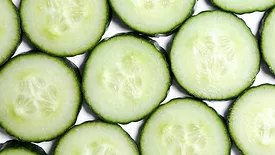
A Salmonella Typhimurium outbreak linked to Mexican-grown cucumbers has caused 68 illnesses and 18 hospitalizations in 19 states. A recall has been initiated by distributor SunFed Produce LLC.
The Dutch National Institute for Public Health and the Environment has proposed a standardized approach for calculating the burden of disease for chemicals in food, calling it “not easy.”
A letter written to the U.S. Food and Drug Administration (FDA) by 23 members of Congress urges the agency to ban from food use red dye 3, a controversial synthetic colorant that is potentially harmful to human health.
A survey of municipal drinking water in the U.S. has revealed the pervasive presence of a little-understood contaminant, chloronitramide anion. The researchers call for urgent research into its toxicity—especially considering its structural similarity to other toxic compounds.