After consumer groups petitioned the U.S. Department of Agriculture (USDA) to remove Lunchables from the National School Lunch Program due to toxic contaminants in September 2024, Kraft Heinz, the makers of Lunchables, voluntarily decided to pull its meal kits from the program.
The U.S. Department of Agriculture (USDA) has awarded grants to two Florida State University (FSU) professors for projects focused on food safety innovation—specifically, on the use of artificial intelligence (AI) to mitigate foodborne antimicrobial resistance, and for the development of a new Salmonella assay.
A Purdue University professor has been awarded $10 million in funding from the U.S. Agency for International Development (USAID) to extend the work of the Feed the Future Innovation Lab for Food Safety (FSIL) for another five years.
In this episode of Food Safety Matters, we speak to Johanna Velez, Vice President of Quality Assurance for Monin Americas, about how she encourages modernization, solves non-conformances, upholds an “Excellent” food safety rating, and reinforces a culture of continuous improvement and collaboration. Bob Ferguson also discusses his latest “Food Safety Insights” column on processors' adoption of testing technologies at the international level.
A recent study of salmon sold at Seattle, Washington grocery stores and sushi restaurants found 18 percent of samples to be mislabeled overall, with one-third of “wild-caught” salmon sold at sushi establishments being mislabeled.
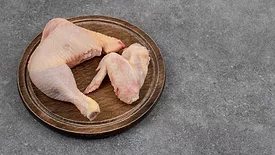
The U.S. Department of Agriculture’s Food Safety and Inspection Service (USDA-FSIS) will hold two virtual public meetings in December on its Salmonella Framework for Raw Poultry Products proposed rule. Registration is open.
Eagle Product Inspection’s new Short Retracting Nose Reject is a hygienic solution for removing non-conforming products from the line in food processors’ raw applications.