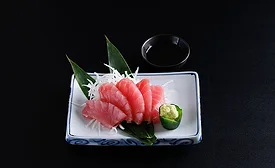
This article focuses on frozen and fresh tuna used in sushi and sashimi applications and, as such, describes processing as it pertains to Big Eye, Yellowfin, and Bluefin tuna.
Modern investments in applied food safety research infrastructure are essential to bridge the gap between scientific discovery and real-world implementation.
Given the headlines coming out of 2025, it would be reasonable to expect a shift in recall patterns in the food industry. Yet, looking past the headlines and into the numbers, 2025 remained remarkably consistent with the past decade of recall trends, in terms of count and cause.
In this episode of Food Safety Matters, we speak to exposure scientist and toxicologist Dr. Alex LeBeau about the generation, interpretation, and responsible communication of food contaminant testing data—a conversation raised by recent reports on arsenic in candy from Florida officials.
Cruise ships are self-contained, complex ecosystems where pathogens like norovirus present a heightened risk to passengers. Highly contagious, environmentally persistent, and operationally disruptive, norovirus has long been the single greatest food safety challenge facing the cruise industry.
Retailers and foodservice operators can protect major accounts by treating complaints not as normal operating conditions, but as intelligence—pinpointing true root causes, building supplier capability, and driving complaint volume as close to zero as possible.
This article examines the importance of data culture—including data leadership, data literacy, data governance, data strategy, data access, and data communication—for supporting risk-based food safety systems.
Sprinkles may seem like a minor decorative detail on a birthday cake or holiday cookie, but they sit at the intersection of several fast-moving regulatory concerns: the phaseout of certain FD&C dyes, the clean label movement, allergen management, and GMO transparency.
 RSS
RSS

.webp?height=168&t=1691503719&width=275 "FoodSafetyMattersFinal-900x550-(002).jpg")