Boar’s Head has reopened its Jarratt, Virginia production facility, which was closed after being implicated in a fatal listeriosis outbreak in 2024. The company says the plant, which had exhibited serious food safety and hygiene violations, has undergone renovations and enhancements.
Preventive maintenance, which involves a great deal of documentation and recordkeeping, can be considered as the most complex and detailed of the essential prerequisite programs.
The researchers found that advanced, multi-step disinfection treatment significantly reduces the antibiotic resistance (AMR)-related food safety risks of wastewater reused for irrigation, while biological treated water remains a potential source of resistant bacteria contamination.
New research has demonstrated that certain plant-based compounds (i.e., curcumin, berberine, quercetin, and capsaicin) can enhance the antimicrobial effect of blue light treatment against Listeria monocytogenes on food and disrupt its biofilm-forming abilities.
The Alliance for Advanced Sanitation has launched an industry-wide survey to capture the current state of innovation, manufacturing, and workforce needs across the global food supply chain.
Nofima recently reported on a successful “Seek and Destroy” process carried out by a smoked salmon producer implicated in a listeriosis outbreak, which demonstrated the importance of hygienic design and WGS, and the limitations of standard cleaning and sampling.
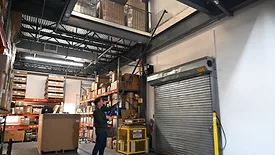
VAC-DIV2-CAMKIT is a remote, extended-reach, high-resolution inspection camera for overhead cleaning and inspection in industries where dust control is critical, such as food processing.
Through the One Health lens, a scientific review summarized current knowledge on Salmonella biofilms, the importance of non-antibiotic interventions given the rise of antimicrobial resistance (AMR), emerging alternative strategies with potential for real-world use, and challenges and needs moving forward.
The European Commission has published a revised guidance document on monitoring and shelf-life studies for Listeria monocytogenes in ready-to-eat (RTE) foods in compliance with recent amendments to Regulation (EU) 2073/2005 on the microbiological criteria for foods.
The top ten food safety research projects that excited Food Safety Magazine’s audience the most in 2025 covered Listeria monocytogenes (especially related to biofilms), microplastics, Escherichia coli, antimicrobial resistance (AMR), avian influenza in dairy, microbial threats in irrigation water, and food allergens.
 RSS
RSS