This episode of Food Safety Five discusses new research on avocado oil authenticity in processed foods, the effects of nanoplastics on bacterial biofilms in drinking water systems, factors influencing Listeria monocytogenes persistence on plastic food contact surfaces, and stress-adaptation traits that may help E. coli persist from farm to fork.
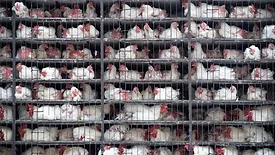
Transport cages are recognized as a potential source of cross-contamination in poultry slaughterhouses. The optimal washing water temperature and detergent concentration completely eliminated detectable Salmonella while greatly reducing indicator organisms. The identified parameters may improve food safety and operational efficiency.
Modern food facilities are spaces where small structural gaps around utilities and loading areas can create hidden rodent pathways, making exclusion and digital monitoring necessary.
Intended for professional sanitarians, food safety leaders, hygienic design specialists, and managers working in low-moisture food manufacturing, the event will take place October 26–27, 2026 in Beloit, Wisconsin.
The findings suggest that pathogen persistence on plastic food contact surfaces is governed by the combined effects of material composition, engineered surface topography, and microbial ecology rather than any single factor.
A new hypothesis suggests Listeria monocytogenes persists by colonizing nutrient-rich voids left behind when Gram-negative bacterial biofilms disperse. If the theory is validated, the authors suggest shifting food safety strategies toward managing biofilm ecology and ecological succession, rather than focusing solely on pathogen detection.
In this bonus episode of Food Safety Matters, we speak to Elanco Poultry Food Safety’s Dr. Alissa Welsher about why fly pressures increase during warmer months, the risks flies can pose within poultry operations, and how producers can proactively address flies through integrated pest management (IPM) strategies.
Adding to a growing body of evidence that micro- and nanoplastics may enhance the virulence and persistence of pathogens in food and the environment, a new study found that nanoplastics may strengthen E. coli biofilms in drinking water systems and increase resistance to chlorine treatment.
The co-occurrence of biofilm formation, acid tolerance, and antimicrobial resistance genes in E. coli isolatedfrom irrigation water, soil, and crops could complicate downstream microbial control efforts in produce production systems.
In low-moisture food manufacturing, keeping your facility dry is key environmental control, yet many facilities treat water in their environment with a level of complacency that does not match its impact. What is needed is a more disciplined mindset—one that treats water with the same seriousness applied to other high-risk materials, such as glass.
 RSS
RSS



.webp?height=168&t=1691503719&width=275 "FoodSafetyMattersFinal-900x550-(002).jpg")