Sanitation Controls Practitioner Program: A Comprehensive Guide to Mastering Food Safety
The Sanitation Controls Practitioner Program empowers food producers to refine their sanitation practices to withstand even the strictest audits and inspections
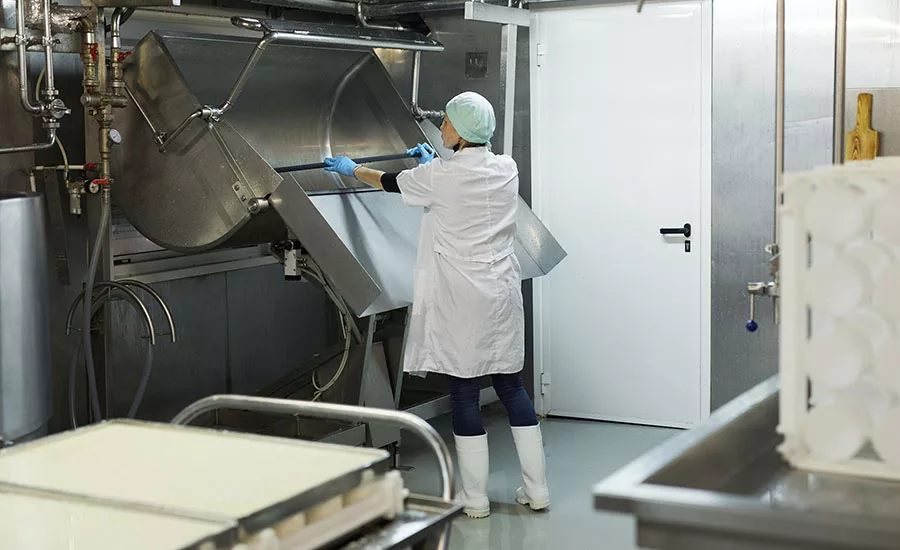
In the dynamic world of food production, ensuring safety is paramount. Food producers face immense pressure to deliver products on time, manage staff, track markets, and uphold rigorous food safety standards. To navigate these challenges effectively, a robust sanitation program is not just a regulatory requirement but also a cornerstone of consumer trust and business success.1 The Sanitation Controls Practitioner Program (SCPP)2 was designed with a "do-it-yourself" philosophy, empowering food producers to refine their sanitation practices to withstand even the strictest audits and inspections. This program aims to support participants until they become experts in sanitation controls, catering to busy schedules and providing access to technical support.
Drawing on extensive research, industry conversations, and insights from focus groups and job task analysis, the SCPP identifies critical job tasks related to sanitation. This article, inspired by the SCPP's comprehensive approach, will delve into the three pillars of an effective sanitation program: cleaning, monitoring and verification, and sanitizing.
Effective cleaning hinges on balancing four key factors, easily remembered by the acronym "CHAT":
- Chemical concentration
- Heat
- Agitation (mechanical force)
- Time (contact time)
These variables must be adjusted based on the specific type of soil, the surface being cleaned, and the cleaning method (manual or automated). For example, manual cleaning at lower temperatures typically requires more agitation.
Choosing the Right Detergent
Detergents are categorized by their chemical properties and effectiveness against different soil types:3
- Alkaline cleaners are most effective on organic soils, which come from living things that produce carbon, such as proteins, fats, oils, and carbohydrates (sugars, starches). Today, many degreasing agents are alkaline.
- Acid cleaners work best on inorganic soils, which usually come from non-living materials like hard water stains, inorganic salts, concrete, rust, mineral deposits, and rubber films. They may require neutralizing after use to prevent surface damage.
- Enzyme-based cleaners use biological catalysts (proteins) to break down and digest organic waste, stains, odors, and mold. For example, amylase breaks down carbohydrates, while lipase breaks down fats and oils. Sometimes, deposits like milkstone or beerstone contain both organic and inorganic compounds, requiring alternating alkaline and acid washes. Always consult with your chemical supplier to determine the best available chemicals for your specific process and facility.
Cleaning Tools and Visual Inspection
Cleaning tools should be of hygienic design, meaning they are easy to disassemble and can withstand exposure to strong chemicals without degrading. Color-coding tools can also be beneficial, especially in facilities handling allergens or for distinguishing between food contact and non-food contact tools.
Looking for quick answers on food safety topics?
Try Ask FSM, our new smart AI search tool.
Ask FSM →
Once cleaning is complete, a visual inspection of the food contact surface for visible contaminants is a minimum requirement. This involves looking for sheen, buildup, or grime using a flashlight (white or UV light). For best practice, a person other than the one who performed the cleaning should conduct the visual inspection to eliminate bias.
Sanitation Standard Operating Procedures (SSOPs)
SSOPs are written documents that meticulously outline the procedures, programs, and records required to keep an environment and equipment clean and sanitary. They are crucial for tracking details within your sanitation program. A "gold standard" SSOP should include:
- Purpose: Why the procedure is performed
- Frequency: How often it is performed
- Responsible individual: The trained person accountable for performing the procedure
- Process/procedure steps: Detailed steps for execution
- Monitoring activities: How to ensure the procedure is happening as intended
- Corrective actions: What to do if something goes wrong
- Verification: Who confirms that the procedure occurred as intended
- Records: How data from the procedure will be documented.
When writing SSOPs, it is vital to strike a balance: provide sufficient detail for operators to follow procedures clearly, but avoid unnecessary text that could distract from the procedure. Common areas that require SSOPs in a food facility include general cleaning, receiving, storage, processing, and personnel hygiene.
Pillar 2: Trust, But Verify—Monitoring and Verification of Cleaning
After cleaning, the next critical step is to verify its effectiveness. Monitoring refers to planned observations or measurements to determine if an established food safety control procedure is under control. Verification involves activities, other than monitoring, that confirm your sanitation practices are working correctly and the system is operating as intended.
ATP Testing (Adenosine Triphosphate)
ATP is an energy molecule found in all living and once-living cells including food residues, bacteria, mold, and other microorganisms. Its detection on a surface or in water indicates the presence of biological matter that might not be visible to the naked eye. ATP testing works on the principle of bioluminescence: the quantity of light generated by a reaction is directly proportional to the amount of ATP present. An ATP monitoring device reports this as Relative Light Units (RLU); a higher RLU indicates a dirtier surface.
Benefits of ATP testing:
- Gathers data for verification of cleaning and sanitizing.
- Helps identify equipment parts that are difficult to clean.
- Assists in establishing cleaning frequency cycles for equipment or processing areas.
Important considerations for ATP testing:
- When to swab: ATP swabbing is preferred after cleaning, not sanitizing, as sanitizer chemicals can interfere with results.
- Hygienic zoning: Focus swabbing efforts on Zone 1 (direct food contact surfaces) and hard-to-clean areas.
- Interpretation: "High" or "just right" RLU readings are relative and depend on facility factors (e.g., a cheese processing facility might have higher baseline readings than a shelf-stable juice production facility).
- Limitations: ATP testing is a simple, quick indicator of cleanliness, but it does not directly correlate to microbial load. It is not a required step for sanitation programs but is a valuable tool for data collection. ATP meters can range from $550 to over $3,500, with individual swabs costing around $2.60 each, emphasizing the need for a robust swabbing regimen.
Protein Swabbing
Protein swabs detect protein residues on surfaces, including potential allergenic proteins. While allergen-specific tests are the "gold standard" for allergen management, general protein swabs can complement them by increasing the data collected, thereby decreasing the risk of undetected allergen cross-contact.
- How it works: Protein tests react to all sorts of proteins (not just allergenic ones). They provide semi-quantitative results: green typically means clean, while darker purple indicates more protein.
- Benefits: Protein swabs are portable, rapid, and cost-effective.
- Limitations: They are usually not specific for particular allergenic proteins, so they are not a substitute for allergen-specific tests.
For testing the presence of pathogenic bacteria on a surface post-sanitization, sponge swabs (or similar microbial swabbing methods) can be used. This type of testing is typically done by a third-party organization.
Pillar 3: The Critical Step—Effective Sanitization
Sanitization is the crucial final step in preventing contamination. A sanitizer is an agent that reduces the number of disease-causing (pathogenic) organisms on an inanimate food contact surface to safe levels, typically defined as a 99.999 percent reduction of specific test bacteria within a specified time.
The steps of cleaning and sanitizing include:
- Scrape the surface to remove physical debris
- Clean using an appropriate detergent
- Rinse the surface with clean water
- Sanitize using the appropriate sanitizer
- Air dry or rinse, depending on the sanitizer label instructions.
Sanitization vs. Disinfection
It is important to understand the difference. While sanitizing significantly reduces microorganisms, disinfection is a more potent process that destroys all infectious microorganisms, including those that are harder to eliminate, such as non-enveloped viruses and biofilm-forming bacteria. Disinfection is often relevant for medical purposes or specific pathogen control.
Types of Chemical Sanitizers
The U.S. Food and Drug Administration (FDA) approves various chemical sanitizers for use as no-rinse, food contact surface sanitizers:
- Chlorine-based sanitizers (e.g., hypochlorites):
- Pros: Commonly used, broad-spectrum germicide, active at low temperatures, relatively cheap, leaves minimal residue. Its effectiveness is pH dependent.
- Cons: Corrosive to many metal surfaces (especially at higher temperatures), can cause skin irritation and mucous membrane damage, potential for trihalomethane (THM) formation. Highly concentrated chlorine gas (Cl2) can form at low pH (below 4.0), which is deadly.
- Chlorine dioxide (ClO2):
- Pros: Considered more environmentally friendly, 2.5 times the oxidizing power of chlorine, effective at lower concentrations.
- Cons: Worker safety and toxicity concerns (concentrated gases can be explosive), rapid decomposition requiring onsite generation.
- Quaternary ammonium compounds (QACs):
- Pros: Active and stable over a broad temperature range, possess some detergency (less affected by light soil), leave a residual antimicrobial film (an advantage in some applications), generally more active against Gram-positive bacteria. Low toxicity and safety risks under recommended usage.
- Cons: Activity is significantly decreased by heavy soil, higher activity at alkaline pH, lower solubility with large carbon chains, incompatibility with certain detergents, can cause foaming in CIP systems.
- Acid-anionic sanitizers:
- Pros: Surface active, dual function (acid rinse and sanitization), low use pH, detergency, stability, low odor, non-corrosive.
- Cons: Relatively high cost, narrow pH range of activity (pH 2–3), low activity on molds and yeasts, excessive foaming in CIP systems, incompatibility with cationic surfactant detergents.
- Peroxyacetic acid (PAA):
- Pros: Good germicidal properties, relatively stable at use strengths, absence of foam and phosphates, low corrosiveness, tolerance to hard water, favorable biodegradability, useful in removing biofilms, highly active against both Gram-positive and Gram-negative microorganisms.
- Cons: Pungent odor, concentrated product is highly toxic, potent irritant, and powerful oxidizer. Activity is dramatically affected by pH (reduced above pH 7–8).
Factors Affecting Sanitizer Effectiveness
Factors that can affect the effectiveness of sanitizers include physical, chemical, and biological factors, as outlined below.
- Physical factors
- Surface characteristics: Surfaces must be thoroughly cleaned and rinsed, and free of cracks, pits, crevices, or biofilms, as these can harbor microorganisms and prevent sanitizer contact.
- Exposure time: Longer contact time generally leads to more effective sanitization.
- Temperature: Higher temperatures generally increase microbial kill, but avoid excessively high temperatures (above 55 °C/131 °F) due to corrosiveness.
- Organic material residue: Improper cleaning leaves residue that dramatically reduces sanitizer activity.
- Chemical factors
- pH: Sanitizer effectiveness is dramatically affected by the solution's pH.
- Concentration: Activity increases with concentration up to a point, but using concentrations above recommendations does not sanitize better and can be corrosive. Always follow the manufacturer's label instructions.
- Water properties: Impurities in water can affect certain sanitizers.
- Inactivators: Organic and/or inorganic substances (e.g., detergent residue) can chemically react with sanitizers, forming non-germicidal products.
- Biological factors
- Microbiological load: High microbial loads can affect sanitizer activity.
- Microorganism type: Spores are more resistant than vegetative cells; different sanitizers have varying effectiveness against Gram-positive/Gram-negative bacteria, yeasts, molds, fungi, and viruses.
Regulatory Compliance and Monitoring
All sanitizers used in a production setting must be registered with the U.S. Environmental Protection Agency (EPA) as antimicrobial pesticides. When used on food contact surfaces or in direct contact with foods, they must also be FDA-approved. The sanitizer label is a crucial tool, providing the registration number, intended use, target organisms, and application instructions. For example, when using bleach, ensure it is germicidal, free of fragrances/thickeners, and EPA approved.
Monitoring Sanitizer Concentrations
It is critical to monitor sanitizer concentrations before use to ensure they are at the proper level for effectiveness, as concentrations can shift due to external factors like temperature or time.
- Test strips: Provide a quick, relatively simple, and inexpensive check, but they are inconsistent and not very accurate for determining exact concentrations.
- Titration kits: Offer a more reliable and accurate method for measuring sanitizer concentration (in ppm). However, they involve more technical instructions and can be prone to human error in determining color changes. Always check expiration dates for titration chemicals and test strips.
Finally, meticulous recordkeeping using sanitation monitoring logs is essential to document the process, track cleaning and sanitizing activities, note corrective actions, and record who performed and verified the procedures.
Takeaway
A comprehensive sanitation program, built on the pillars of thorough cleaning, diligent monitoring and verification, and precise sanitizing, is fundamental to food safety. By empowering food producers with the knowledge and practical skills to master these controls, programs like the SCPP help ensure the safety and integrity of food products, protecting consumers and fostering trust in the food supply chain.4 Continuously refining these practices, supported by expert guidance and robust data, positions food businesses for long-term success and compliance.
To learn more about the SCPP program, visit: https://www.ifpti.org/sanitation-control-practitioner-program-scpp.
References
- U.S. Food and Drug Administration (FDA). "Sanitation Controls for Human Food." FSMA Final Rule for Preventive Controls for Human Food. 2020. https://www.fda.gov/food/food-safety-modernization-act-fsma/fsma-final-rule-preventive-controls-human-food#:~:text=packaged%20food%20products.-,Sanitation%20controls,-are%20procedures%2C%20practices.
- International Food Protection Training Institute (IFPTI). "Sanitation Controls Practitioner Program." https://www.ifpti.org/sanitation-control-practitioner-program-scpp.
- Schmidt, R.H. Basic Elements of Equipment Cleaning and Sanitizing in Food Processing and Handling Operations. University of Florida IFAS Extension. December 2018. https://edis.ifas.ufl.edu/publication/FS077.
- Codex Alimentarius Commission. General Principles of Food Hygiene (CXC 1-1969). Food and Agriculture Organization of the United Nations (FAO) and World Health Organization (WHO). https://openknowledge.fao.org/server/api/core/bitstreams/6866dc55-d2c0-48dd-a528-a4d634f1b0b4/content.