Study Finds Differences Between Beef, Pork Microbial Contamination During Processing
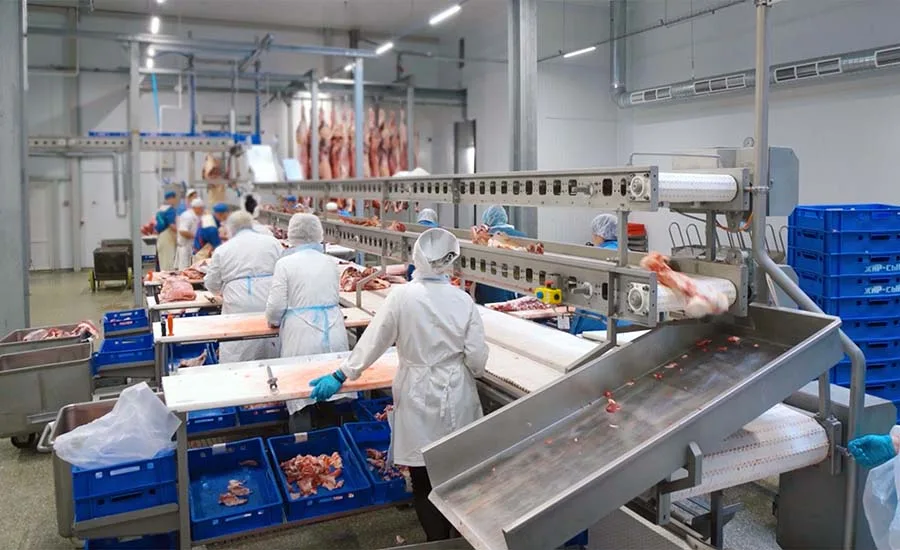
A new study found that microbial contamination of beef and pork produced at the same meat processing facility differed significantly, despite similar bacterial loads on incoming chilled carcasses and the use of the same processing equipment and sanitation procedures. The findings suggested that equipment surfaces were major contributors to microbial contamination during meat fabrication, highlighting the potential need for species-specific cleaning and sanitation strategies.
The study, published in Food Research International, was conducted by researchers from Agriculture and Agri-Food Canada, Alberta Agriculture and Irrigation, and the University of Lethbridge.
To identify sources of bacterial contamination during beef and pork fabrication, the researchers examined microbial populations on chilled carcasses, primal cuts, trimmings, and food contact surfaces at a federally inspected meat processing facility in Alberta, Canada.
Over ten weeks, the researchers collected 395 samples from eight sampling sites during routine beef and pork production. The sampled equipment included conveyor belts, stainless steel shelves, cutting tables, knives, and protective mesh gloves. Beef and pork were processed on different days using the same equipment, which was cleaned and sanitized according to the facility's established procedures.
Pork Processing Associated With Higher Bacterial Loads
Although incoming chilled beef and pork carcasses had similar total aerobic counts (TAC), averaging 2.19 and 2.26 log colony forming units (CFU) per 1,000 square centimeters (cm²), respectively, bacterial loads increased significantly during pork fabrication but not beef fabrication.
Specifically, TAC on pork primal cuts and trimmings were approximately 1 log higher than on chilled pork carcasses. Additionally, bacterial counts on all equipment surfaces except knives were 0.5–0.7 log units higher during pork processing than during beef processing.
The researchers also observed more frequent recovery of Enterobacteriaceae and coliforms during pork processing. Enterobacteriaceae were recovered from 39 percent of pork production samples, compared to 23.5 percent of beef production samples. Similarly, coliforms were detected in 28.7 percent and 18.5 percent of pork and beef samples, respectively.
Looking for quick answers on food safety topics?
Try Ask FSM, our new smart AI search tool.
Ask FSM →
Of the 395 samples, only 11 yielded quantifiable Escherichia coli, including eight from pork processing and three from beef processing. During pork production, mesh gloves and knives were identified as significant sources of E. coli contamination.
Equipment Surfaces Influenced Microbial Communities
Using 16S ribosomal RNA gene sequencing, the researchers also characterized microbial communities across carcasses, meat products, and processing equipment.
The analysis revealed significant differences in microbial community composition between beef and pork carcasses, meat products, and fixed equipment, but not personal equipment, such as knives and gloves.
Microbial communities on meat products and fixed equipment also varied significantly between sampling times, whereas those on chilled carcasses and personal equipment remained relatively consistent. According to the researchers, these findings suggested that fixed equipment surfaces were major contributors to differences in the microbial communities found on beef and pork.
Overall, Pseudomonas and Acinetobacter were the most abundant bacterial genera identified. During beef processing, equipment surfaces were identified as sources of Brevundimonas, Clostridium, Macrococcus, Pseudomonas, and Stenotrophomonas. During pork processing, equipment-associated contamination involved Acinetobacter, Peptostreptococcus, Pseudomonas, Stenotrophomonas, and Trueperella.
Notably, Acinetobacter accounted for 44.4 percent and 34.1 percent of microbial communities on conveyor belts and stainless steel shelves, respectively, during pork processing. Pseudomonas accounted for 66.8 percent of the microbial community on mesh gloves used during pork fabrication.
Findings Suggest Need for Species-Specific Sanitation Strategies
The researchers suggested that differences in the physical characteristics of beef and pork, including meat texture and surface properties, could potentially explain the higher bacterial loads observed on equipment during pork fabrication. However, they emphasized that further research would be necessary to determine the underlying causes.
The findings highlighted the importance of considering meat species, equipment type, and temporal changes in microbial communities when developing cleaning and sanitation strategies for meat processing facilities.