Food Safety
search
Ask Food Safety AI
cart
facebook twitter linkedin instagram youtube
  • Sign In
  • Create Account
  • Sign Out
  • My Account
Food Safety
  • NEWS
    • Latest News
    • White Papers
  • PRODUCTS
  • TOPICS
    • Contamination Control
    • Food Types
    • Management
    • Process Control
    • Regulatory
    • Sanitation
    • Supply Chain
    • Testing and Analysis
  • PODCAST
  • EXCLUSIVES
    • Food Safety Five Newsreel
    • eBooks
    • FSM Distinguished Service Award
    • Interactive Product Spotlights
    • Videos
  • BUYER'S GUIDE
  • MORE
    • NEWSLETTERS >
      • Archive Issues
      • Subscribe to eNews
    • Store
    • Sponsor Insights
    • ASK FSM AI
  • WEBINARS
  • FOOD SAFETY SUMMIT
  • EMAG
    • eMagazine
    • Archive Issues
    • Editorial Advisory Board
    • Contact
    • Advertise
  • SIGN UP!
NewsContamination ControlProcess ControlSanitationMicrobiologicalIntervention ControlsCleaners/Sanitizers

Study Shows Ability of Some Essential Oils to Kill Drug-Resistant Campylobacter from Poultry
By Food Safety Magazine Editorial Team
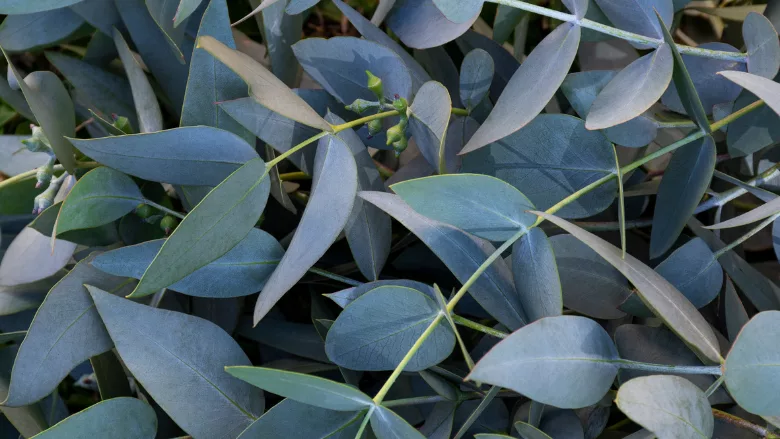
eucalyptus plant leaves
Image credit: Freepik
February 16, 2026

A new study published in MDPI Foods demonstrated the antimicrobial efficacy of select essential oils against multidrug-resistant (MDR) Campylobacter, potentially offering an effective natural control strategy in food production.

The study’s researchers obtained seven commercially available essential oils—Cymbopogon citratus, Mentha pulegium, Artemisia absinthium, Myrtus communis, Thymus algeriensis, Thymus capitatus, and Eucalyptus globulus—and tested them against MDR C. coli and C. jejuni strains isolated from poultry in Tunisia. The most effective essential oils were further evaluated through time–kill kinetics, cell lysis, salt tolerance, and membrane integrity assays to determine their bactericidal mechanisms.

Efficacy Varied by Strain, Oil Type

A broth microdilution assay showed that oils from E. globulus, T. algeriensis, and M. communis exhibited the strongest inhibitory effects, particularly against C. jejuni, with minimum inhibitory concentration (MIC) values ranging from 3.125 percent to 6.25 percent. On the other hand, C. coli was more resistant to all essential oils. The higher resistance of C. coli underscores the importance of considering species-specific responses when designing essential oil-based antimicrobial interventions.

T. capitatus, A. absinthium, and M. pulegium also demonstrated measurable antibacterial activity, although to a lesser extent, highlighting variability in essential oil potency and species-specific susceptibility.

Interestingly, in a disk diffusion assay, T. algeriensis demonstrated comparable inhibitory effects against both C. coli and C. jejuni, indicating a broad antibacterial spectrum. This finding could have potential implications regarding the development of essential oil-based interventions intended to control multiple Campylobacter strains in food production.

Oils Work Against Microbes by Damaging Cell Membranes

Mechanistic investigations revealed that the antibacterial action of these essential oils is primarily membrane-targeted. The rapid bactericidal effects observed in time–kill assays, together with significant cell lysis, cytoplasmic material leakage, and impaired salt tolerance, indicate severe disruption of cell membrane integrity and loss of osmotic homeostasis. These findings provide strong evidence that essential oils act mainly through physical damage to bacterial membranes rather than solely through metabolic inhibition.

Importantly, the ability of essential oils to disrupt stress adaptation mechanisms, such as tolerance to elevated sodium chloride concentrations, suggests an additional mode of action that could reduce Campylobacter survival in food production environments.

Looking for quick answers on food safety topics?
Try Ask FSM, our new smart AI search tool.
Ask FSM →

Organoleptic Considerations

The researchers note, however, that the essential oil concentrations required for antimicrobial efficacy may exceed sensory acceptance thresholds in certain food matrices, potentially limiting their direct application due to strong organoleptic effects.

Future research could explore delivery systems such as micro- or nanoencapsulation, incorporation into edible coatings or active packaging, and integration within hurdle technology approaches.


KEYWORDS: antimicrobial Campylobacter study

Share This Story

Fsm purple logo 200x200

The Food Safety Magazine editorial team comprises Bailee Henderson, Digital Editor ✉; Adrienne Blume, M.A., Editorial Director; and Stacy Atchison, Publisher.

Recommended Content

JOIN TODAY
to unlock your recommendations.

Already have an account? Sign In

  • people holding baby chicks

    Serovar Differences Matter: Utility of Deep Serotyping in Broiler Production and Processing

    This article discusses the significance of Salmonella in...
    Contamination Control
    By: Nikki Shariat Ph.D.
  • woman washing hands

    Building a Culture of Hygiene in the Food Processing Plant

    Everyone entering a food processing facility needs to...
    Food Prep/Handling
    By: Richard F. Stier, M.S.
  • graphical representation of earth over dirt

    Climate Change and Emerging Risks to Food Safety: Building Climate Resilience

    This article examines the multifaceted threats to food...
    Contamination Control
    By: Maria Cristina Tirado Ph.D., D.V.M. and Shamini Albert Raj M.A.
Manage My Account
  • eMagazine Subscription
  • Subscribe to Newsletters
  • Manage My Preferences
  • Website Registration
  • Subscription Customer Service

More Videos

Sponsored Content

Sponsored Content is a special paid section where industry companies provide high quality, objective, non-commercial content around topics of interest to the Food Safety Magazine audience. All Sponsored Content is supplied by the advertising company and any opinions expressed in this article are those of the author and not necessarily reflect the views of Food Safety Magazine or its parent company, BNP Media. Interested in participating in our Sponsored Content section? Contact your local rep!

close
  • Salmonella bacteria
    Sponsored byThermoFisher

    Food Microbiology Testing Methods: Salmonella species

  • a diagram explaining indicator organisms
    Sponsored byHygiena

    How Proactive Listeria Testing Helps Prevent Six- and Seven-Figure Recalls

  • woman grocery shopping
    Sponsored byCorbion

    Designing Safety Into Every Bite: Proactive Risk Mitigation for Refrigerated Foods

Popular Stories

Rosabella moringa capsules

Salmonella Outbreak Linked to Dietary Supplement Involves Extensively Drug-Resistant Strain

resignation letter

FDA, USDA, CDC Continue to Lose Staffers in Fiscal Year 2026

FSM podcast

Ep. 211. Kathy Sanzo: The Implications of FDA’s Synthetic Food Dye Phase-Out

Events

February 25, 2026

How to Manage Food Safety and Regulatory Risks in Your Supply Chain

Live: February 25, 2026 at 2:00 pm EST: From this webinar, attendees will learn how large food manufacturing organizations can successfully manage their supply chain, food safety, and regulatory risks.

March 3, 2026

FDA/USDA Regulatory Updates: Food Safety Work Plans for 2026

Live: March 3, 2026 at 2:00 pm EST: In this high-level, exclusive webinar, FDA Deputy Commissioner for Human Foods Kyle Diamantas and USDA Under Secretary for Food Safety Mindy Brashears, Ph.D. will share their agencies' regulatory priorities and work plans for 2026 and beyond.

May 11, 2026

The Food Safety Summit

Stay informed on the latest food safety trends, innovations, emerging challenges, and expert analysis. Leave the Summit with actionable insights ready to drive measurable improvements in your organization. Do not miss this opportunity to learn from experts about contamination control, food safety culture, regulations, sanitation, supply chain traceability, and so much more.

View All

Products

Global Food Safety Microbial Interventions and Molecular Advancements

Global Food Safety Microbial Interventions and Molecular Advancements

See More Products

Related Articles

  • broilers on the farm

    Study Shows Commensal E. coli Could Effectively Control Drug-Resistant Salmonella in Poultry

    See More
  • dairy cattle in feeding stall

    Study Shows Drug-Resistant Salmonella Dublin Could Spread Among Cows, Food, and Humans

    See More
  • colorful 3d rendering of e coli

    Study Shows Ability of MDR E. Coli Strain to Outcompete Other E. Coli Strains in Gut

    See More

Related Products

See More Products
  • food-safety-making.jpg

    Food Safety: Making Foods Safe and Free From Pathogens

  • 9781498721776.jpg

    Handbook of Food Processing: Food Safety, Quality, and Manufacturing Processes

  • 1444333348.jpg

    Handbook of Food Safety Engineering

See More Products
×

Never miss the latest news and trends driving the food safety industry

Newsletters | Website | eMagazine

JOIN TODAY!
  • RESOURCES
    • Advertise
    • Contact Us
    • Directories
    • Store
    • Want More
  • SIGN UP TODAY
    • Create Account
    • eMagazine
    • Newsletters
    • Customer Service
    • Manage Preferences
  • SERVICES
    • Marketing Services
    • Reprints
    • Market Research
    • List Rental
    • Survey/Respondent Access
  • STAY CONNECTED
    • LinkedIn
    • Facebook
    • Instagram
    • X (Twitter)
  • PRIVACY
    • PRIVACY POLICY
    • TERMS & CONDITIONS
    • DO NOT SELL MY PERSONAL INFORMATION
    • PRIVACY REQUEST
    • ACCESSIBILITY

Copyright ©2026. All Rights Reserved BNP Media.

Design, CMS, Hosting & Web Development :: ePublishing