Study Shows Commensal E. coli Could Effectively Control Drug-Resistant Salmonella in Poultry
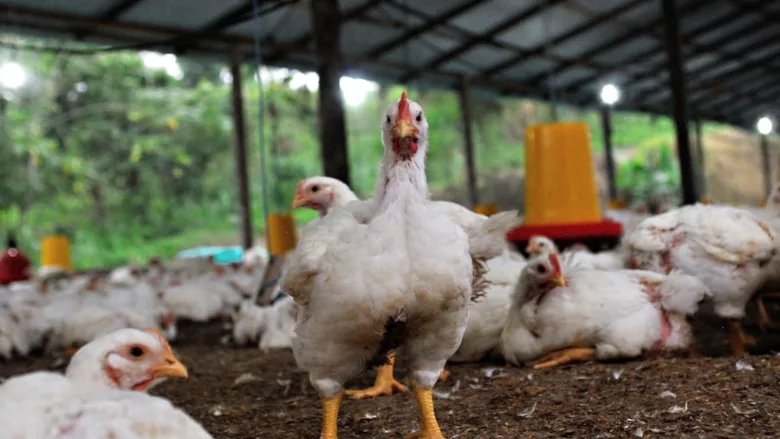
A study led by researchers from the University of Florida College of Veterinary Medicine suggests that commensal Escherichia coli strains could be utilized in poultry production to reduce the antimicrobial resistance (AMR) dissemination, virulence, and growth of Salmonella.
The study addresses the need for alternative methods to antibiotics for controlling nontyphoidal Salmonella in poultry, given the increase of AMR. Additionally, common probiotics have been shown to enhance resistance to Salmonella colonization in the poultry gut.
Commensal E. coli, on the other hand, live symbiotically in the chicken gut and are known to co-exist with Salmonella. These strains are involved in several functions, such as cell maturation and development, enzyme production, and competitive exclusion of pathogens, among others. Projects have begun to explore specific strains of commensal E. coli that may be useful as probiotics against nontyphoidal Salmonella in poultry.
In this context, the researchers sought to elucidate the effects of intestinal commensal E. coli of poultry origin on the colonization, persistence, virulence, and AMR dissemination of foodborne antibiotic-resistant Salmonella Heidelberg in the chicken intestinal tract.
The researchers co-cultured a commensal E. coli strain (EC47-1826) isolated from a commercial broiler chicken and an antibiotic-resistant S. Heidelberg strain (SH18-9079) isolated from the liver of a turkey, in vitro. They analyzed their transcriptomes using RNA-sequencing, and found 4,890 differentially expressed genes in S. Heidelberg when co-cultured with commensal E. coli.
After filtering the expression data, the researchers found 193 genes were significantly upregulated (i.e., increased production), while 202 genes were downregulated (i.e., decreased production). Several genes involved in bacterial growth, pathogenicity and virulence, biofilm formation, metal-ion homeostasis, signal transduction and chemotaxis, stress response, transmembrane transport of xenobiotics, and cellular metabolism were downregulated by as much as 86 times in S. Heidelberg as compared to the control.
Importantly, the researchers observed the downregulation of genes associated with AMR and drug efflux in S. Heidelberg by up to 12 times.
Looking for quick answers on food safety topics?
Try Ask FSM, our new smart AI search tool.
Ask FSM →
Based on their findings, the researchers believe that commensal E. coli may reduce the fitness, persistence, virulence, and AMR dissemination of S. Heidelberg, implying that commensal E. coli strains could be utilized to mitigate antibiotic-resistant nontyphoidal Salmonella in poultry, ultimately improving food safety.
The study was published in the American Society for Microbiology journal Microbiology Spectrum—read the paper in full here.