Food Safety
search
Ask Food Safety AI
cart
facebook twitter linkedin instagram youtube
  • Sign In
  • Create Account
  • Sign Out
  • My Account
Food Safety
  • NEWS
    • Latest News
    • White Papers
  • PRODUCTS
  • TOPICS
    • Contamination Control
    • Food Types
    • Management
    • Process Control
    • Regulatory
    • Sanitation
    • Supply Chain
    • Testing and Analysis
  • PODCAST
  • EXCLUSIVES
    • Food Safety Five Newsreel
    • eBooks
    • FSM Distinguished Service Award
    • Interactive Product Spotlights
    • Videos
  • BUYER'S GUIDE
  • MORE
    • NEWSLETTERS >
      • Archive Issues
      • Subscribe to eNews
    • Store
    • Sponsor Insights
    • ASK FSM AI
  • WEBINARS
  • FOOD SAFETY SUMMIT
  • EMAG
    • eMagazine
    • Archive Issues
    • Editorial Advisory Board
    • Contact
    • Advertise
  • SIGN UP!
NewsContamination ControlFood TypeSanitationMicrobiologicalBiofilm ControlCleaners/SanitizersProduce

Study Shows Listeria Biofilm Age, Surface Properties Affect Sanitizer Efficacy in Produce Packinghouses
By Food Safety Magazine Editorial Team
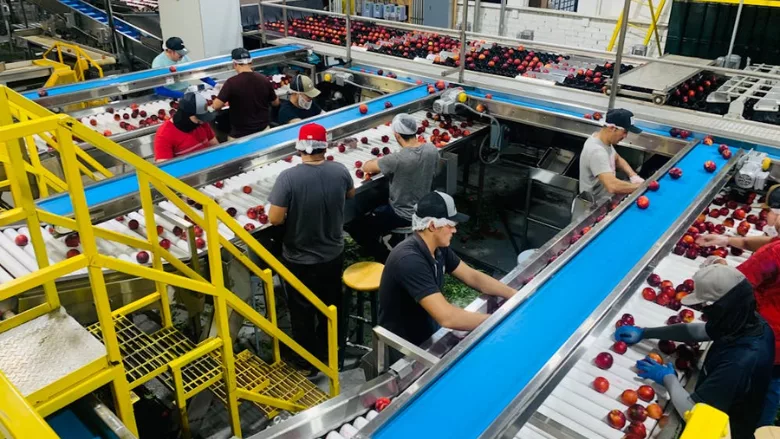
overhead shot of people working at conveyor belts carrying whole fresh apples in production facility
Image credit: Jonathan David via Pexels
February 13, 2026

A recent study examined the efficacy of three commonly used sanitizers—chlorine, quaternary ammonium compounds (QACs), and ultraviolet-C (UV‑C) light—against Listeria monocytogenes biofilms on different materials representing surfaces found in produce packing environments. The findings provided insight into how factors like biofilm age, surface material, and the presence of organic matter affect sanitizer efficacy against L. monocytogenes in produce packinghouses.

The study was conducted by Louisiana State University researchers and published in MDPI Foods.

The researchers cultivated single-species L. monocytogenes biofilms using two foodborne illness outbreak-associated strains diluted in apple juice. The biofilms were evaluated after one and seven days of growth. They were grown on stainless steel, polyethylene terephthalate (PET), and silicone rubber coupons, respectively representing equipment surfaces, packaging and brush beds, and gaskets and conveyor components in produce packinghouses.

Stainless Steel Supports Biofilm Attachment

Stainless steel supported the highest level of biofilm formation, consistent with other research showing that hydrophilic, smooth materials enable faster biofilm attachment. In contrast, the hydrophobicity and roughness of silicone rubber appeared to slow biofilm development.

Sanitizer Efficacy Drops as Biofilms Mature

Treating surfaces with 200 parts-per-million (ppm) of chlorine for two minutes resulted in a significant decrease in L. monocytogenes biofilms across surfaces. Most successful was chlorine applied to 1-day biofilms on stainless steel, achieving reductions of approximately 2.84 log colony forming units (CFU) per coupon. However, against 7-day biofilms on stainless steel, chlorine’s efficacy dropped to 1.9 log CFU/coupon reductions.

Similar trends were noted for QAC and UV-C. Specifically, pathogen reductions achieved by QAC (400 ppm) on stainless steel dropped from 2.42-log CFU/coupon for 1-day biofilms to 1.73-log CFU/coupon for 7-day biofilms. Reductions achieved by UV-C at 0.85 joules per square centimeter (J/cm²) on stainless steel dropped from 2.71-log CFU/coupon to 1.57-log CFU/coupon for 1- and 7-day biofilms, respectively.

The resiliency of older biofilms is potentially attributable to denser extracellular polymeric matrices that shielded cells from chemical penetration and UV‑C exposure. Mature L. monocytogenes populations also display stress‑adapted traits and, relevant to QAC, possible efflux‑pump-associated resistance.

Looking for quick answers on food safety topics?
Try Ask FSM, our new smart AI search tool.
Ask FSM →

Surface Properties Impact Sanitizer Performance

Across sanitizers, silicone rubber and PET showed consistently lower log reductions than stainless steel, likely due to roughness, hydrophobicity, and greater potential for microscopic surface defects that protect biofilms.

The study also found that chlorine and QAC treatments performed best on smooth, hydrophilic stainless steel, where liquids spread evenly and penetrate more effectively. However, UV‑C’s performance suffered on scratched or worn stainless steel, where microscopic grooves create shadowing that limits light penetration.

These findings reinforce the importance of equipment condition, surface integrity, and material selection in sanitation program design.

Organic Matter Reduces Sanitizer Efficacy

Apple juice was used in the study to emulate organic matter on surfaces. Consistent with available literature on the subject, its presence strongly reduced sanitizer performance.

The researchers believe the organic matter may have formed protective films around biofilms, neutralized chlorine and QACs, absorbed or scattered UV‑C light, and increased the thickness and complexity of biofilm matrices.

These findings reinforce the knowledge that organic matter must be removed through rigorous pre‑cleaning for sanitizers to work reliably.

Practical Implications for Produce Packing Facilities

Because none of the sanitizers tested achieved reductions greater than or equal to 3 logs on mature biofilms under realistic, soiled conditions, the researchers recommend:

  • Prioritizing thorough pre-cleaning before sanitizer application
  • Targeting high-risk surfaces
  • Early biofilm intervention
  • Combined or sequential treatments for mature biofilms (e.g., sanitizer plus UV-C or heat).

Overall, once Listeria biofilms mature, standard sanitizers and UV‑C treatments offer limited control. Effective sanitation must combine strong hygienic design and consistent surface maintenance with effective cleaning and sanitation protocols.

Limitations and Future Research

The researchers noted that their lab-grown biofilms were single-species, formed using only two strains, cultivated on new, unworn surfaces, and grown for only up to seven days. In contrast, real-world biofilms are older, multi-species, and exposed to flow, abrasion, and variable temperatures. Future work should integrate environmental isolates, worn surfaces, mixed communities, and expanded sanitizer concentrations.


KEYWORDS: listeria study

Share This Story

Fsm purple logo 200x200

The Food Safety Magazine editorial team comprises Bailee Henderson, Digital Editor ✉; Adrienne Blume, M.A., Editorial Director; and Stacy Atchison, Publisher.

Recommended Content

JOIN TODAY
to unlock your recommendations.

Already have an account? Sign In

  • people holding baby chicks

    Serovar Differences Matter: Utility of Deep Serotyping in Broiler Production and Processing

    This article discusses the significance of Salmonella in...
    Contamination Control
    By: Nikki Shariat Ph.D.
  • woman washing hands

    Building a Culture of Hygiene in the Food Processing Plant

    Everyone entering a food processing facility needs to...
    Personal Hygiene/Handwashing
    By: Richard F. Stier, M.S.
  • graphical representation of earth over dirt

    Climate Change and Emerging Risks to Food Safety: Building Climate Resilience

    This article examines the multifaceted threats to food...
    Management
    By: Maria Cristina Tirado Ph.D., D.V.M. and Shamini Albert Raj M.A.
Manage My Account
  • eMagazine Subscription
  • Subscribe to Newsletters
  • Manage My Preferences
  • Website Registration
  • Subscription Customer Service

More Videos

Sponsored Content

Sponsored Content is a special paid section where industry companies provide high quality, objective, non-commercial content around topics of interest to the Food Safety Magazine audience. All Sponsored Content is supplied by the advertising company and any opinions expressed in this article are those of the author and not necessarily reflect the views of Food Safety Magazine or its parent company, BNP Media. Interested in participating in our Sponsored Content section? Contact your local rep!

close
  • Salmonella bacteria
    Sponsored byThermoFisher

    Food Microbiology Testing Methods: Salmonella species

  • a diagram explaining indicator organisms
    Sponsored byHygiena

    How Proactive Listeria Testing Helps Prevent Six- and Seven-Figure Recalls

  • woman grocery shopping
    Sponsored byCorbion

    Designing Safety Into Every Bite: Proactive Risk Mitigation for Refrigerated Foods

Popular Stories

plate of RTE deli meats and sausages

Boar’s Head Reopens Production Facility Behind Fatal Listeriosis Outbreak

natural blue food coloring powder

FDA Allows Foods with ‘Natural’ Food Dyes to Claim ‘No Artificial Colors’

Rosabella moringa capsules

Salmonella Outbreak Linked to Dietary Supplement Involves Extensively Drug-Resistant Strain

Events

February 25, 2026

How to Manage Food Safety and Regulatory Risks in Your Supply Chain

Live: February 25, 2026 at 2:00 pm EST: From this webinar, attendees will learn how large food manufacturing organizations can successfully manage their supply chain, food safety, and regulatory risks.

March 3, 2026

FDA/USDA Regulatory Updates: Food Safety Work Plans for 2026

Live: March 3, 2026 at 2:00 pm EST: In this high-level, exclusive webinar, FDA Deputy Commissioner for Human Foods Kyle Diamantas and USDA Under Secretary for Food Safety Mindy Brashears, Ph.D. will share their agencies' regulatory priorities and work plans for 2026 and beyond.

May 11, 2026

The Food Safety Summit

Stay informed on the latest food safety trends, innovations, emerging challenges, and expert analysis. Leave the Summit with actionable insights ready to drive measurable improvements in your organization. Do not miss this opportunity to learn from experts about contamination control, food safety culture, regulations, sanitation, supply chain traceability, and so much more.

View All

Products

Global Food Safety Microbial Interventions and Molecular Advancements

Global Food Safety Microbial Interventions and Molecular Advancements

See More Products

Related Articles

  • top of an apple

    Defects, Organic Matter on Food Contact Surfaces Reduces Sanitizer Efficacy Against Listeria Biofilms

    See More
  • raw egg cracked on table

    Study Shows Sustainable Enzymatic Pre-Treatment Speeds Salmonella Biofilm Removal in Egg Processing

    See More
  • dirty potatoes

    Study Investigates Sanitizer Efficacy, Cross-Contamination in Potato Wash Water

    See More

Related Products

See More Products
  • 9781138070912.jpg

    Trends in Food Safety and Protection

  • 1119237963.jpg

    Food Safety in China: Science, Technology, Management and Regulation

  • 9781498721776.jpg

    Handbook of Food Processing: Food Safety, Quality, and Manufacturing Processes

See More Products

Related Directories

  • Best Sanitizers Inc.

    Since 1995, Best Sanitizers, Inc. has supplied the Food Processing and Healthcare industries with high-quality products and support. Our stringent practices and policies ensure reliable performance, giving you confidence in every use. We offer hand soaps, hand sanitizers, surface sanitizers, and industrial cleaners. As the first company to achieve both an E3 rating for an alcohol-based hand sanitizer and a D2 rating for an alcohol/quat-based surface sanitizer, we continue to innovate and provide effective hygiene and sanitation solutions.
  • AEMTEK Laboratories

    ISO 17025 accredited third-party laboratory focused on accuracy, turnaround times, customer service, and knowledgeable staff. AEMTEK specializes in product testing, environmental monitoring, shelf-life studies, process validation, research, training, and consulting services. For over 20 years, AEMTEK has provided clients with holistic solutions to ensure food safety.
×

Never miss the latest news and trends driving the food safety industry

Newsletters | Website | eMagazine

JOIN TODAY!
  • RESOURCES
    • Advertise
    • Contact Us
    • Directories
    • Store
    • Want More
  • SIGN UP TODAY
    • Create Account
    • eMagazine
    • Newsletters
    • Customer Service
    • Manage Preferences
  • SERVICES
    • Marketing Services
    • Reprints
    • Market Research
    • List Rental
    • Survey/Respondent Access
  • STAY CONNECTED
    • LinkedIn
    • Facebook
    • Instagram
    • X (Twitter)
  • PRIVACY
    • PRIVACY POLICY
    • TERMS & CONDITIONS
    • DO NOT SELL MY PERSONAL INFORMATION
    • PRIVACY REQUEST
    • ACCESSIBILITY

Copyright ©2026. All Rights Reserved BNP Media.

Design, CMS, Hosting & Web Development :: ePublishing