Food Safety
search
Ask Food Safety AI
cart
facebook twitter linkedin instagram youtube
  • Sign In
  • Create Account
  • Sign Out
  • My Account
Food Safety
  • NEWS
    • Latest News
    • Sponsored Insights
    • Sponsored White Papers
  • PRODUCTS
  • TOPICS
    • Contamination Control
    • Food Types
    • Management
    • Process Control
    • Regulatory
    • Sanitation
    • Supply Chain
    • Testing and Analysis
  • PODCAST
  • EXCLUSIVES
    • Food Safety Five Newsreel
    • eBooks
    • FSM Distinguished Service Award
    • Interactive Product Spotlights
    • Videos
  • BUYER'S GUIDE
  • MORE
    • NEWSLETTERS >
      • Archive Issues
      • Subscribe to eNews
    • Store
    • ASK FSM AI
  • WEBINARS
  • FOOD SAFETY SUMMIT
  • EMAG
    • eMagazine
    • Archive Issues
    • Editorial Advisory Board
    • Contact
    • Advertise
  • SIGN UP!
Contamination ControlFood TypeTesting & AnalysisMicrobiological ControlEnvironmental Testing & AnalysisMethodsMicrobiological Testing & AnalysisMeat/Poultry

Study Explores qPCR Campylobacter Monitoring in Fecal, Air Samples on Poultry Farms
By Food Safety Magazine Editorial Team
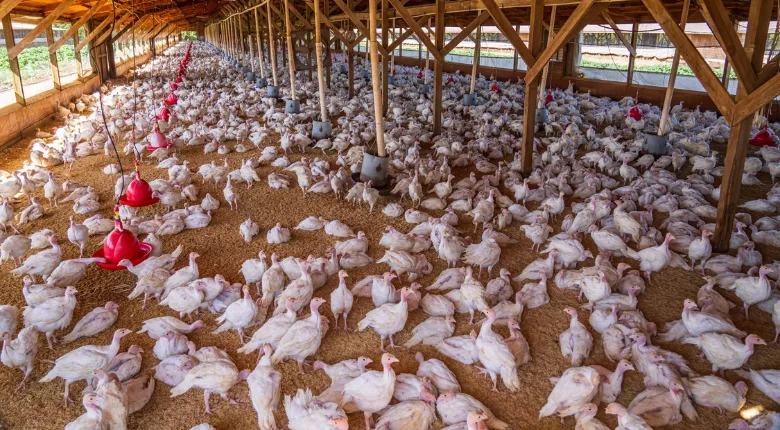
broiler chickens on farm
Image credit: Mark Stebnicki via Pexels
September 16, 2026

A longitudinal study of commercial broiler farms has demonstrated the value of monitoring both fecal and airborne samples for Campylobacter, with targeted quantitative polymerase chain reaction (qPCR) providing the most sensitive detection method across sample types.

Published in Microbiology Research, the study investigated the occurrence and temporal dynamics of Campylobacter across three consecutive production cycles at two commercial broiler farms in Portugal. The researchers also compared culture-based methods, qPCR, and 16S rRNA gene amplicon sequencing for detecting the pathogen.

The two farms shared broiler genetics, chick sources, and comparable feeding programs but differed in historical productive performance. Farm 1 had a history of suboptimal growth performance, while Farm 2 had historically performed optimally.

Across the study, researchers collected 24 fecal and 24 air samples. Sampling during the first production cycle occurred at days 0, 7, 14, 21, 28, and 35; subsequent cycles were sampled at days 0, 14, and 35.

Campylobacter Colonization Emerged Mid-Cycle

At Farm 1, Campylobacter was consistently detected in fecal samples from day 14 onward during all three production cycles using culture and qPCR. During the first cycle, both approaches showed sustained high loads between days 21 and 35.

In contrast, no Campylobacter was detected in fecal samples from Farm 2 during its first monitored cycle by any of the three methods. In the second cycle, qPCR detected low levels at day 14, but colonization was not confirmed by both culture and qPCR until day 35. During the third cycle, fecal colonization was detected beginning at day 14, with counts increasing by day 35.

qPCR Air Monitoring Detected Campylobacter DNA

Culture-based methods did not recover Campylobacter from any air samples at either farm. In comparison, qPCR intermittently detected airborne Campylobacter DNA, sometimes before or independently of fecal detection.

Looking for quick answers on food safety topics?
Try Ask FSM, our new smart AI search tool.
Ask FSM →

Notably, at Farm 2, qPCR detected Campylobacter DNA in air samples at day 14 of the second cycle and as early as day 0 of the third cycle. The researchers said early airborne detection suggested the possibility of environmental carryover between flocks, but stressed that qPCR cannot distinguish between viable cells, nonviable cells, or extracellular DNA. Therefore, the signals could have reflected residual DNA, contaminated dust or manure particles, bedding, or external environmental sources, among other possibilities.

qPCR was Most Sensitive, Consistent Test Method

Across both fecal and air samples, qPCR was the most sensitive and consistent detection approach. Culture provided information about viable bacterial loads in feces but showed limited sensitivity for low-biomass environmental samples. Meanwhile, microbiome sequencing detected Campylobacter less consistently and generally at low relative abundances.

Agreement between qPCR and culture for fecal samples was high. In air samples, however, agreement was low because qPCR frequently produced positive results when culture remained negative.

The researchers concluded that integrating multiple sampling matrices and detection methods could improve understanding of Campylobacter occurrence in commercial broiler production and support preharvest surveillance. They called for larger studies involving more farms and production cycles, more frequent sampling, and greater consideration of management, environmental, and antimicrobial use factors.


KEYWORDS: Campylobacter PCR study

Share This Story

Fsm purple logo 200x200

The Food Safety Magazine editorial team comprises Bailee Henderson, Director of Content Strategy and news editor ✉, and Adrienne Blume, M.A., Director of Editorial and Industry Engagement.

Recommended Content

JOIN TODAY
to unlock your recommendations.

Already have an account? Sign In

  • people holding baby chicks

    Serovar Differences Matter: Utility of Deep Serotyping in Broiler Production and Processing

    This article discusses the significance of Salmonella in...
    Testing & Analysis
    By: Nikki Shariat Ph.D.
  • woman washing hands

    Building a Culture of Hygiene in the Food Processing Plant

    Everyone entering a food processing facility needs to...
    Personal Hygiene/Handwashing
    By: Richard F. Stier, M.S.
  • graphical representation of earth over dirt

    Climate Change and Emerging Risks to Food Safety: Building Climate Resilience

    This article examines the multifaceted threats to food...
    Contamination Control
    By: Maria Cristina Tirado Ph.D., D.V.M. and Shamini Albert Raj M.A.
Manage My Account
  • eMagazine Subscription
  • Subscribe to Newsletters
  • Manage My Preferences
  • Website Registration
  • Subscription Customer Service

More Videos

Sponsored Content

Sponsored Content is a special paid section where industry companies provide high quality, objective, non-commercial content around topics of interest to the Food Safety Magazine audience. All Sponsored Content is supplied by the advertising company and any opinions expressed in this article are those of the author and not necessarily reflect the views of Food Safety Magazine or its parent company, BNP Media. Interested in participating in our Sponsored Content section? Contact your local rep!

close
  • Man In Warehouse
    Sponsored byRentokil

    Mitigating Hidden Rodent Risks in Food Facilities

  • an industrial manufacturing or processing facility
    Sponsored bybioMérieux

    Get Ahead of Spoilage in Food Manufacturing with Metagenomics for Preventive Monitoring

  • an automated industrial production line used in a modern food factory
    Sponsored byIFC

    A Formula for Food Processing Pest Management

Popular Stories

iceberg lettuce growing

Cyclospora Outbreak Linked to Taylor Farms Lettuce Ends with Nearly 13,000 Illnesses, Two Deaths

abbott nutrition logo wall plaque

Abbott Nutrition to Pay $385M Settlement for 2022 Infant Formula Shortage, Contamination Incident

cattle resting in field

Trump Executive Order Seeks Meat Inspection Modernization by Cutting ‘Unnecessary’ Requirements, Expanding State Programs

allergens ebook

Events

September 22, 2026

From EFSA to Enforcement: Managing the Growing Complexity of EU MRLs

Live: September 22, 2026 at 11:00 am EDT: Attend this webinar to evaluate best practices for monitoring regulatory changes and protecting market access.

September 24, 2026

Benchmarking Foreign Material Contamination in 2026: What the Data Shows

Live: September 24, 2026 at 2:00 pm EDT:  From this webinar, attendees will learn what is driving investment decisions, and the factors FSQA and ops leaders weigh when making the case for new prevention technology.

September 29, 2026

How to Talk to Your Board of Directors About Food Safety

Live: September 29, 2026 at 11:00 am EDT: Attend this webinar to learn how to position food safety as a material enterprise risk with measurable financial, operational, and reputational impacts relevant to Board-level decision-making.

View All

Products

Global Food Safety Microbial Interventions and Molecular Advancements

Global Food Safety Microbial Interventions and Molecular Advancements

See More Products

Related Articles

  • three white hens in chicken coop

    Campylobacter More Prevalent on Backyard Poultry Farms, but AMR Much Higher on Commercial Farms

    See More
  • one chicken

    Study Explores Temporal Implications of Campylobacter Prevalence of Poultry, Human Outbreaks

    See More
  • hen and chicks

    Salmonella Less Prevalent in Backyard Poultry Farms Than Commercial Farms, but Multidrug Resistance is Similar

    See More

Related Products

See More Products
  • 9781138070912.jpg

    Trends in Food Safety and Protection

  • 1119237963.jpg

    Food Safety in China: Science, Technology, Management and Regulation

  • 9781498721776.jpg

    Handbook of Food Processing: Food Safety, Quality, and Manufacturing Processes

See More Products

Events

View AllSubmit An Event
  • March 26, 2026

    Continuous Pathogen Control: Enhancing Sanitation and Environmental Monitoring in Food Processing

    On Demand: This session explores the role of continuous airborne pathogen control technology in supporting sanitation and environmental monitoring programs within food processing environments.
  • October 6, 2026

    Advances in Environmental Monitoring Science and Strategy

    Live: October 6, 2026 at 2:00 pm EDT: This webinar will cover how environmental monitoring science and EMP strategies support sanitation verification and the safe production of food.
View AllSubmit An Event

Related Directories

  • Templink Monitoring Solutions

    Founded in 2019, TempLink began with a mission to modernize temperature monitoring for the commercial refrigeration industry. In 2023, the brand was acquired and integrated into the current platform, combining decades of industry expertise with cutting-edge wireless technology. Today, we continue the legacy of reliability established at our inception, serving food and beverage professionals nationwide.
×

Never miss the latest news and trends driving the food safety industry

Newsletters | Website | eMagazine

JOIN TODAY!
  • RESOURCES
    • Advertise
    • Contact Us
    • Directories
    • Store
    • Want More
  • SIGN UP TODAY
    • Create Account
    • eMagazine
    • Newsletters
    • Customer Service
    • Manage Preferences
  • SERVICES
    • Marketing Services
    • Reprints
    • Market Research
    • List Rental
    • Survey/Respondent Access
  • STAY CONNECTED
    • LinkedIn
    • Facebook
    • Instagram
    • X (Twitter)
  • PRIVACY
    • PRIVACY POLICY
    • TERMS & CONDITIONS
    • DO NOT SELL MY PERSONAL INFORMATION
    • PRIVACY REQUEST
    • ACCESSIBILITY

Copyright ©2026. All Rights Reserved BNP Media, Inc. and BNP Media II, LLC.

Design, CMS, Hosting & Web Development :: ePublishing