Food Safety
search
Ask Food Safety AI
cart
facebook twitter linkedin instagram youtube
  • Sign In
  • Create Account
  • Sign Out
  • My Account
Food Safety
  • NEWS
    • Latest News
    • Sponsored Insights
    • Sponsored White Papers
  • PRODUCTS
  • TOPICS
    • Contamination Control
    • Food Types
    • Management
    • Process Control
    • Regulatory
    • Sanitation
    • Supply Chain
    • Testing and Analysis
  • PODCAST
  • EXCLUSIVES
    • Food Safety Five Newsreel
    • eBooks
    • FSM Distinguished Service Award
    • Interactive Product Spotlights
    • Videos
  • BUYER'S GUIDE
  • MORE
    • NEWSLETTERS >
      • Archive Issues
      • Subscribe to eNews
    • Store
    • ASK FSM AI
  • WEBINARS
  • FOOD SAFETY SUMMIT
  • EMAG
    • eMagazine
    • Archive Issues
    • Editorial Advisory Board
    • Contact
    • Advertise
  • SIGN UP!
NewsContamination ControlFood TypeMicrobiological ControlMeat/Poultry

UK Food Standards Agency Reviews Farm-to-Fork Campylobacter Interventions for Chicken
By Food Safety Magazine Editorial Team
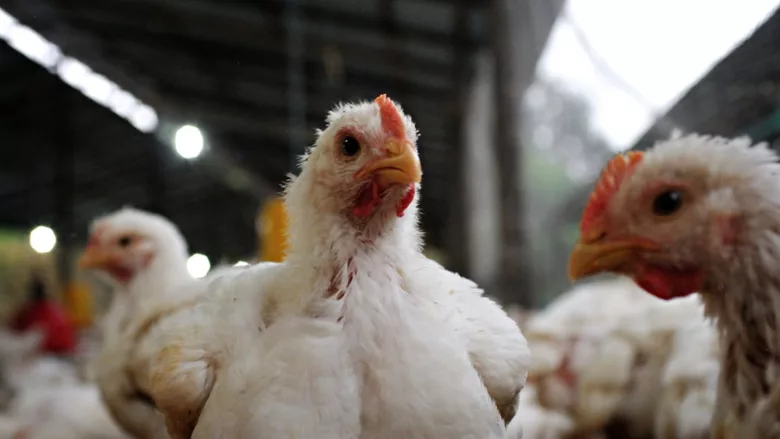
broiler chickens on farm
Image credit: DΛVΞ GΛRCIΛ via Pexels
May 27, 2026

Campylobacter is the leading cause of foodborne illness in the UK, most frequently linked to contaminated chicken. Despite successful industry–government efforts to reduce the proportion of highly contaminated birds at retail in 2008–2015, this did not translate into fewer cases of human campylobacteriosis linked to chicken, highlighting the complexity of Campylobacter interventions.

To consider possible future actions for reducing foodborne campylobacteriosis, the UK Food Standards Agency (FSA) recently completed a systematic scientific assessment of interventions for Campylobacter on chicken meat, from farm to fork. The project included four literature reviews, an expert workshop, and a survey of food business operators (FBOs).

Overall, FSA identified effective controls while concluding that no single intervention is likely to represent a “silver bullet.” Instead, a multi-hurdle approach to microbiological control and monitoring across all stages of production is required.

Campylobacter Control from Farm to Fork

Key findings from the literature reviews, relevant to different supply chain points, include:

  • On the farm: Approximately 60 percent of broilers are already Campylobacter-positive by the time of slaughter. Overall, the group of factors considered to be most important was farm management and biosecurity, with hygiene barriers and staff training consistently mentioned as effective. The evidence for the relative importance of different sources of Campylobacter was mixed due to a lack of investigations into genetic linkage and directionality of spread between broiler farms and external Campylobacter sources. Transmission of Campylobacter during transport from the farm to the slaughterhouse was also identified as a risk factor. Vertical transmission and transmission via feed, water, and litter were considered unlikely to be important risk factors. There is a need for future studies on the sources of Campylobacter introduction into broiler houses.
  • At slaughter: Scalding was associated with some of the highest reductions in contamination, especially hot scalding and scalding with additives. Defeathering was associated with increased contamination, underlining it as a higher-risk stage requiring interventions, and evisceration showed inconsistent effects, suggesting the need for further optimization to ensure microbial control. Washing and chilling were identified as critical control points, with their effectiveness strongly influenced by operational parameters such as temperature, duration, and the use of antimicrobial chemicals. Several effective chemical interventions were effective but not approved for use in UK poultry. Immersion chilling was found to be effective, particularly when combined with antimicrobial chemicals and extended exposure times. When storing the products, freezing was also found to be more effective than refrigeration. Crust freezing emerged as a promising alternative.
  • During processing: Chemical interventions (e.g., organic acids, oxidizing agents, and plant-based extracts) generally achieved reductions of 1–2 log₁₀ colony-forming units (CFU), with some outliers such as sorghum extract reporting up to 7 log₁₀ CFU reductions. Combined treatments also demonstrated promising results. However, non-chemical interventions such as high-pressure processing (HPP) and ultrasound showed limited efficacy when used alone, but improved performance when combined with chemicals. Packaging technologies (e.g., modified atmosphere packaging and vacuum packaging) primarily extended shelf life rather than significantly reducing Campylobacter levels, while novel approaches like zinc oxide nanoparticle pads warrant further investigation. Gaps in the literature were identified, including the absence of larger-scale pilot studies and inconsistent reporting. However, based on the evidence available, no single intervention can eliminate Campylobacter risk at the processing stage; a multi-hurdle approach is essential.
  • At retail and beyond: Cooking chicken above 70 °C remains the most reliable way to inactivate Campylobacter. Refrigeration and freezing offer reductions but are influenced by storage duration and initial contamination levels. Consumer handling of raw chicken poses a significant risk of Campylobacter cross-contamination, with modeling studies predicting cross-contamination as the main pathway for campylobacteriosis, rather than undercooking. Observational studies reveal a gap between reported and actual hygiene behaviors, with proper handwashing inconsistently practiced. Short-term educational interventions can improve behavior temporarily, but sustained change may require a different approach such as early food safety education and continuous reinforcement through public health messaging.

A common theme across the literature reviews was that published studies of interventions are often underpowered, variable in design, not reflective of real-world conditions, and/or do not publish raw data, therefore limiting the robustness of analysis. Improved data reporting and further, formal meta-analysis are recommended.

Food Business Operators on Campylobacter Controls

The project included a survey of FBOs to gather insights on the perceived effectiveness of current Campylobacter control measures at each stage of the supply chain.

Results showed that industry stakeholders are continuously trying to improve standards across the supply chain by trialing new protocols and technologies and through communication and collaboration.

However, the survey also revealed a disconnect between sectors. Farms often viewed interventions as ineffective and expressed frustration over limited outcomes, while downstream stakeholders emphasized the importance of farm-level controls. Slaughterhouses and retailers reported proactive measures such as audits, sourcing policies, and routine testing, with interventions like neck skin removal and temperature control seen as effective.

Several knowledge gaps were identified, including uncertainties around the effectiveness of farm-level interventions and the influence of seasonal variation and consumer behavior on campylobacteriosis.

Looking for quick answers on food safety topics?
Try Ask FSM, our new smart AI search tool.
Ask FSM →


KEYWORDS: Campylobacter chicken FSA UK

Share This Story

Fsm purple logo 200x200

The Food Safety Magazine editorial team comprises Bailee Henderson, Director of Content Strategy and news editor ✉, and Adrienne Blume, M.A., Director of Editorial and Industry Engagement.

Recommended Content

JOIN TODAY
to unlock your recommendations.

Already have an account? Sign In

  • people holding baby chicks

    Serovar Differences Matter: Utility of Deep Serotyping in Broiler Production and Processing

    This article discusses the significance of Salmonella in...
    Contamination Control
    By: Nikki Shariat Ph.D.
  • woman washing hands

    Building a Culture of Hygiene in the Food Processing Plant

    Everyone entering a food processing facility needs to...
    Facilities
    By: Richard F. Stier, M.S.
  • graphical representation of earth over dirt

    Climate Change and Emerging Risks to Food Safety: Building Climate Resilience

    This article examines the multifaceted threats to food...
    International
    By: Shamini Albert Raj M.A. and Maria Cristina Tirado Ph.D., D.V.M.
Manage My Account
  • eMagazine Subscription
  • Subscribe to Newsletters
  • Manage My Preferences
  • Website Registration
  • Subscription Customer Service

More Videos

Sponsored Content

Sponsored Content is a special paid section where industry companies provide high quality, objective, non-commercial content around topics of interest to the Food Safety Magazine audience. All Sponsored Content is supplied by the advertising company and any opinions expressed in this article are those of the author and not necessarily reflect the views of Food Safety Magazine or its parent company, BNP Media. Interested in participating in our Sponsored Content section? Contact your local rep!

close
  • an automated industrial production line used in a modern food factory
    Sponsored byIFC

    A Formula for Food Processing Pest Management

  • fly
    Sponsored byOrkin Commercial

    Fly Control in Food Processing Facilities: Managing Seasonal Food Safety Risks

  • Darkling Beetle
    Sponsored byElanco Animal Health

    Integrated Pest Management: Protecting Poultry Operations as Seasons Change

Popular Stories

U.S. Food and Drug Administration (FDA).

FDA to Hire 2,200 Staffers as it Narrows Search for Commissioner, Names Produce Safety Director

dry instant noodles pack

Salmonella-Contaminated Instant Noodles Sicken Dozens of Children Across Europe

alfalfa sprouted seeds

Salmonella-Tainted Alfalfa Sprouts Sicken 109 People in 11 European Countries, One Death Reported

building a skilled workforce ebook

Events

July 21, 2026

Using AI Responsibly in Food Safety Management Systems

Live: July 21, 2026 at 2:00 pm EDT: This webinar will provide participants with guidance on how to effectively use generative artificial intelligence (AI) tools to develop key components of a food safety management system (FSMS).

August 6, 2026

Beyond Sanitation: Understanding the Hidden System Conditions That Allow Pathogens to Persist

Live: August 6, 2026 at 2:00 pm EDT: Attend this webinar to learn strategies for strengthening environmental control programs through a layered approach to pathogen management.

August 25, 2026

Don’t Wing It: Bird Control for Food Processing Facilities

Live: August 25, 2026 at 2:00 pm EDT: This webinar will cover why managing bird activity should be a priority for your business, the complexities involved in effective bird control, and proactive strategies to help protect your facility.

View All

Products

Global Food Safety Microbial Interventions and Molecular Advancements

Global Food Safety Microbial Interventions and Molecular Advancements

See More Products

Related Articles

  • UK Food Standards Agency Issues New Plan to Tackle Campylobacter

    See More
  • UK Food Standards Agency Kicks Off Anti-Campylobacter Campaign

    See More
  • UK Food Standards Agency CEO Discusses Campylobacter Control Plan

    See More

Related Products

See More Products
  • global food.jpg

    Global Food Safety Microbial Interventions and Molecular Advancements

  • 1119053595.jpg

    Food Safety for the 21st Century: Managing HACCP and Food Safety throughout the Global Supply Chain, 2E

  • 1119160553.jpg

    Food Safety: Innovative Analytical Tools for Safety Assessment

See More Products

Events

View AllSubmit An Event
  • May 12, 2026

    Leveraging AI for Food Safety: From Strategy to Impact

    On Demand: This dynamic workshop brings together leaders from industry, academia, and government to demonstrate how AI can be practically applied in food safety—from data strategy to daily execution.
View AllSubmit An Event

Related Directories

  • Gold Standard Diagnostics

    Gold Standard Diagnostics develops and markets rapid test kits and analyzers for a wide range of food contaminants including: allergens, pathogens, patulin and mycotoxins, glyphosate and pesticides, VDRs, GMOs and more. Get accurate results in minutes on-site with Gold Standard Diagnostics test kits.
×

Never miss the latest news and trends driving the food safety industry

Newsletters | Website | eMagazine

JOIN TODAY!
  • RESOURCES
    • Advertise
    • Contact Us
    • Directories
    • Store
    • Want More
  • SIGN UP TODAY
    • Create Account
    • eMagazine
    • Newsletters
    • Customer Service
    • Manage Preferences
  • SERVICES
    • Marketing Services
    • Reprints
    • Market Research
    • List Rental
    • Survey/Respondent Access
  • STAY CONNECTED
    • LinkedIn
    • Facebook
    • Instagram
    • X (Twitter)
  • PRIVACY
    • PRIVACY POLICY
    • TERMS & CONDITIONS
    • DO NOT SELL MY PERSONAL INFORMATION
    • PRIVACY REQUEST
    • ACCESSIBILITY

Copyright ©2026. All Rights Reserved BNP Media, Inc. and BNP Media II, LLC.

Design, CMS, Hosting & Web Development :: ePublishing