Raw Milk Under the Microscope: Separating Safety Risks From Nutritional Claims
Need to Know
- Pasteurization significantly reduces microbiological risks from pathogens associated with raw milk, including STEC, Salmonella, Campylobacter, and Listeria
- Greater access to unpasteurized milk has been associated with more foodborne illness outbreaks, with children and other vulnerable populations facing particular risks
- Scientific evidence does not support claims that raw milk offers superior overall nutrition, probiotic benefits, or improved lactose digestion compared with pasteurized milk
- Observational studies have associated childhood raw milk consumption with lower rates of some allergic and respiratory conditions, but causation has not been established, and researchers continue to investigate the potential mechanisms
- Future research may help determine whether processing technologies can preserve potentially beneficial milk components while reliably controlling microbiological hazards
High-profile individuals have advocated drinking raw milk, promoting its purported benefits as a more "natural" alternative to pasteurized milk. Yet, outbreaks of disease associated with raw milk and raw milk products continue to occur, while scientific evidence supporting many of the claimed health benefits remains limited.
What do we need to know about raw milk as a product increasingly promoted for its health benefits, and where can reliable information be found? These are important questions for milk and dairy producers, consumers, and regulators responsible for food safety and nutritional claims.
The Difference Between Raw and Pasteurized Milk
The term "raw," in relation to milk, generally refers to milk produced by the mammary glands of cows, ewes, goats, or buffaloes that has not been heated above 40 °C (104 °F) or undergone treatment having an equivalent effect.1
In contrast, milk sold commercially in the U.S. is commonly pasteurized using heat treatment to inactivate vegetative microbial cells, including pathogenic microorganisms. One common method is high-temperature, short-time (HTST) pasteurization, in which milk is heated to at least 72 °C (161 °F) for at least 15 seconds, although time and temperature requirements vary depending on the pasteurization method.2 In addition to improving microbial safety, heat treatment can help extend the shelf life of milk.
Other dairy processing methods use different combinations of time and temperature to achieve specific objectives. Ultra-high-temperature (UHT) processing, for example, involves heating milk to approximately 138 °C (280 °F) for a fraction of a second to inactivate vegetative microorganisms and most bacterial spores.3 Some cheesemaking processes may also involve heat treatment of raw milk before production.3
There is strong evidence that commercial pasteurization of milk, combined with improved farm practices, greatly reduces the risk from zoonotic pathogens associated with diseases such as brucellosis (Brucella spp.), diphtheria (Corynebacterium diphtheriae), and tuberculosis (Mycobacterium tuberculosis), as well as foodborne illness caused by Shiga toxin-producing Escherichia coli (STEC), Salmonella, Campylobacter, and Listeria spp.4,5
Regulatory and Economic Environment
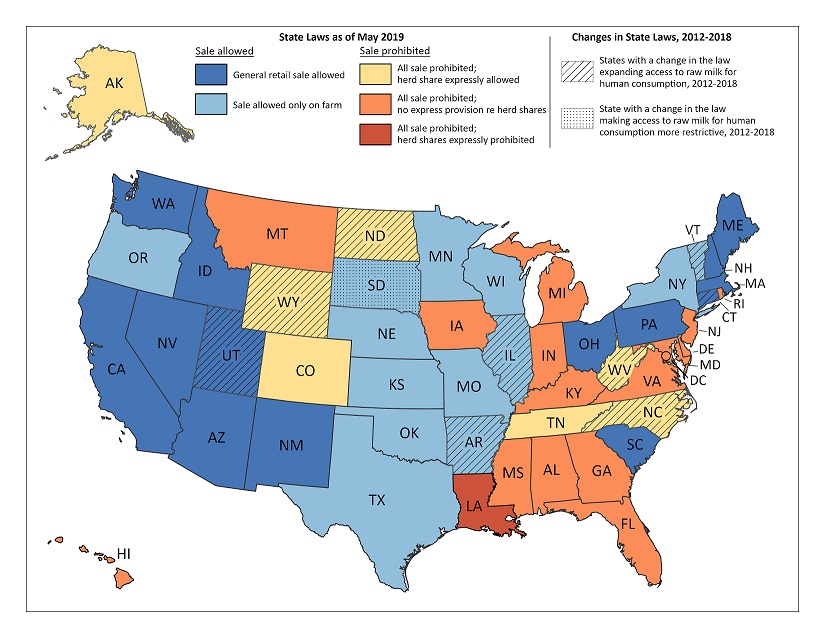
Regulations governing the sale, consumption, and use of raw dairy milk vary considerably among countries and, in the U.S., among states. Some regulatory frameworks were established or substantially developed in high-income countries as recently as the 1980s, alongside industry consolidation, bulk milk collection, and the emergence of large-scale retailers.6 This regulatory patchwork, illustrated by the map of U.S. state laws on the sale of unpasteurized milk (Figure 1), has important implications for the movement and sale of raw milk.
Looking for quick answers on food safety topics?
Try Ask FSM, our new smart AI search tool.
Ask FSM →
Government organizations have developed resources to help producers and consumers navigate these differences, including the U.S. Centers for Disease Control and Prevention's (CDC's) Research Anthology on Raw Milk and the UK Food Standards Agency's (FSA's) Raw Drinking Milk Guidance.
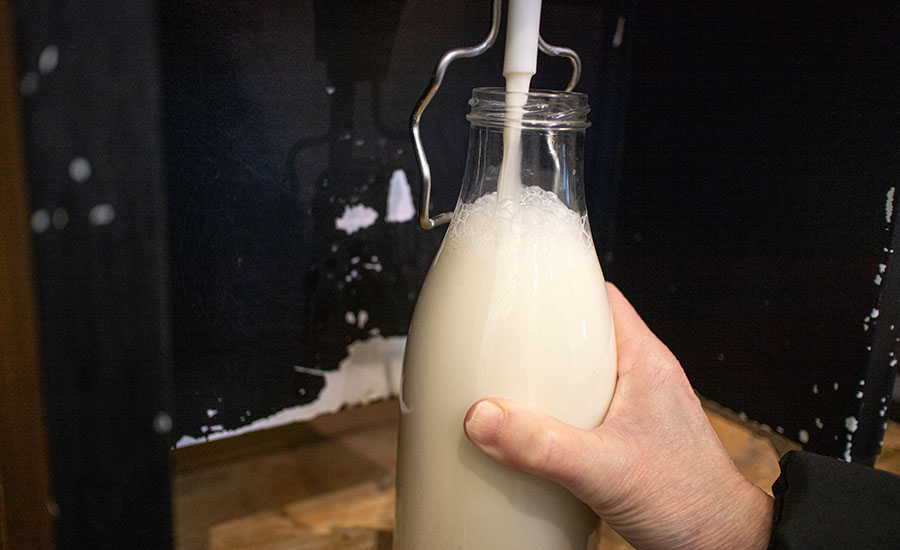
In the U.S., some states allow raw milk to be sold in retail stores, while others restrict sales to farms or other direct-to-consumer channels. Federal law prohibits the interstate sale of raw milk for direct human consumption. In the EU, legislation establishes requirements for milk intended for human consumption, including provisions related to imports, traceability, and animal health.7 Raw milk sales are permitted under varying conditions in some Member States. Requirements can also vary within individual countries, including Italy and France, where regional provisions may permit on-farm sales, sales through farm shops, or local delivery. Raw milk vending machines also operate in some countries (Figure 2), including Italy, where consumers may be instructed to boil the milk before consumption.8
The UK illustrates the regulatory complexities that can exist within a single non-EU country that borders the EU. Only raw milk from registered production farms can be legally sold for direct human consumption in England, Wales, and Northern Ireland,9 whereas its sale is prohibited in Scotland, reflecting its different epidemiological pattern.10 In 2018, a risk assessment by the FSA's Advisory Committee on the Microbiological Safety of Food concluded that the risk associated with raw milk consumption was not sufficient to warrant a ban in England, again because of the differences in epidemiology.11
To protect public health while balancing consumer choice and business interests, controls are applied to food business operators (FBOs) that produce or sell raw milk. Enforcement of milk hygiene regulations is intended to ensure that FBOs understand their legal responsibilities and comply with applicable requirements through measures such as inspections, supply chain audits, and testing. Oversight varies by jurisdiction, with the FSA responsible for England and Wales, Food Standards Scotland responsible for Scotland, and the Department of Agriculture, Environment, and Rural Affairs (DAERA) responsible for Northern Ireland. Cross-border coordination is also necessary on the island of Ireland, where Safefood, the Food Safety Promotion Board, supports food safety cooperation between Northern Ireland and the Republic of Ireland.
Meanwhile, the regulatory landscape continues to evolve. In Oklahoma in the U.S., for example, the volume of raw milk permitted for on-farm sale directly to consumers was increased in May of 2026 to 1,500 gallons from 100 gallons, representing a 15-fold increase. The state had previously reported an outbreak linked to raw milk products in 2020.12 Coinciding with Oklahoma's regulatory change, a raw milk-associated outbreak involving Campylobacter and Cryptosporidium infections raised concerns in Louisiana, where raw milk cannot be legally sold for human consumption and is permitted for sale only as animal or pet food.
Implementing and enforcing raw milk regulations requires considerable public resources. At the same time, the economic burden of raw milk-associated foodborne illness extends beyond regulatory oversight, encompassing lost productivity, outbreak response and prevention costs, and healthcare expenditures. These costs can be borne by consumers and employers, healthcare systems, the agri-food sector, and governments.
In the U.S., 79 percent of dairy-associated foodborne illness outbreaks between 1998 and 2011 were linked to raw milk and raw cheese products.13 Furthermore, from 2000–2020, foodborne disease outbreaks generally occurred more frequently in states that permitted raw milk sales than in states where sales for human consumption were prohibited. The number of outbreaks also increased in correlation with the number of annual licenses issued for raw milk sales.12
Despite these documented risks, consumer interest in raw milk has grown in several regions. In the UK, for example, sales have increased fivefold over the past five years, alongside broader consumer interest in unprocessed foods.14 Raw milk is also perceived, and sometimes promoted, as offering nutritional or health advantages over pasteurized milk, including higher levels of certain nutrients and protection against conditions such as childhood allergies.15 These perceived benefits must be considered alongside the established microbiological risks associated with consuming unpasteurized dairy products.
This raises several fundamental questions: Is raw milk safe to drink? Is it more nutritious than pasteurized milk? And does its consumption reduce the risk of allergies?
Raw Milk and Microbiological Risk
Over the course of the authors' careers, the food chain and the threats affecting its integrity have changed considerably. Historically, brucellosis was a major concern because of its zoonotic potential, although its prevalence has been substantially reduced in many regions through animal disease control programs, including vaccination. Current concerns include bovine tuberculosis, avian influenza in dairy cattle, and antimicrobial-resistant (AMR) organisms.
Foodborne pathogens have also demonstrated adaptations that enable them to persist in food production environments. Listeria and Salmonella spp., for example, can mount stress responses that improve survival under desiccation, while Campylobacter spp. can survive under some freezing conditions. The emergence of STEC as an important foodborne hazard in the late 1980s and early 1990s also illustrated the ability of pathogenic E. coli to move through diverse environments. Ruminants can carry STEC in their gastrointestinal tracts and shed the organisms into farm environments from manure, including soil, pasture, vegetable crops, milking parlors, and cattle housing, from which contamination can spread further through the food chain.
Advances in microbiology and molecular methods have increased awareness that pathogens such as Listeria and Campylobacter can occur throughout the farm-to-fork continuum, including in milking parlors, milk dispensing equipment, and food processing facilities. Whole genome sequencing (WGS) has further improved the ability to track sources of contamination and pathogen transmission. Together with risk-based approaches across the food chain, these advances have contributed to major improvements in food safety and hygiene.
At the same time, emerging zoonotic hazards continue to present new questions. Following the detection of highly pathogenic avian influenza (HPAI) H5N1 in U.S. dairy cattle, concerns were raised about the potential risk to people consuming raw milk from infected cows.16 Raw milk products have also been voluntarily recalled after batches tested positive for H5N1.17 Pasteurization inactivates the virus in milk, and CDC continues to recommend consumption of pasteurized milk and dairy products.18
Despite advances in detection and surveillance, important scientific and epidemiological challenges remain when investigating foodborne pathogens in milk. These include:
- Limits of detection and difficulties recovering injured or dormant microorganisms
- Limited availability of implicated foods and challenges associated with representative sampling, particularly when microorganisms are unevenly distributed within a product
- The time required to obtain definitive results using accredited methods
- The presence of strains in addition to the outbreak strain, which can complicate outbreak investigations, including those involving STEC
- Gaps in understanding transmission pathways.
Pathogen carriage in food-producing animals creates another challenge because animals can harbor foodborne pathogens without showing clinical signs. Colonization and shedding can also vary considerably among individual animals, with some shedding much higher levels than others. Sampling of farm environments can therefore yield pathogenic E. coli, Campylobacter, Salmonella, or Listeria even when animals appear healthy.
The presence of these pathogens in raw milk can pose particular risks to children, pregnant women, older adults, and people with compromised immune systems. Severe foodborne infections can result in outcomes including hemolytic uremic syndrome (HUS), Guillain-Barré syndrome, and death. Although consumers of raw milk products do not invariably become ill, consumption increases the risk of foodborne disease compared with pasteurized milk,2 requiring consumers and regulators to consider the balance between perceived benefits and established risks.19
A global perspective further illustrates the range of hazards associated with dairy products. Important microbiological hazards include non-typhoidal Salmonella enterica, Campylobacter spp., and Mycobacterium bovis, as well as Brucella spp., particularly in the Eastern Mediterranean region. Other pathogens, including STEC, Cryptosporidium spp., and Toxoplasma gondii, also contribute to disease burden.20
Determining the true burden of raw milk-associated disease is challenging because illnesses may be sporadic, surveillance systems vary among countries, and reporting is not always mandatory. Studies of raw milk produced in low- and middle-income countries have also identified a broad range of bacterial, viral, and parasitic hazards, as well as toxins, antibiotic residues, and heavy metals (Figure 3).20
In the U.S., greater access to unpasteurized milk has been associated with more outbreaks. From 2013–2018, jurisdictions where unpasteurized milk was accessible experienced 3.2 times as many outbreaks as jurisdictions where retail sales were prohibited.21 These outbreaks resulted in a reported 98 hospitalizations, including ten cases of HUS, two cases of Guillain-Barré syndrome or Miller Fisher syndrome, and two deaths.
Similar patterns have been documented in Europe. EU Member States reported 27 outbreaks associated with raw milk consumption from 2007–2013, primarily involving cow's milk.8 Campylobacter was the leading cause of illness, with Salmonella, STEC, and foodborne tick-borne encephalitis virus (TBEV) also implicated.
In the UK, raw milk consumption was associated with 26 outbreaks of intestinal infectious disease from 1992–2017, involving 343 people and 41 hospitalizations. During the same 25-year period, milk sold as pasteurized was associated with 12 outbreaks, ten resulting from pasteurization failures and two from post-pasteurization contamination.22
Food safety authorities continue to advise about the risks associated with raw or unpasteurized milk, particularly for vulnerable populations.23 These groups continue to be affected; for example, children accounted for almost one-third of patients in UK raw milk outbreaks reported in 2017.22
Nutritional Aspects of Raw Milk
Contemporary nutritional claims about raw dairy milk often extend longstanding arguments that have gained greater visibility in wellness circles and on social media. In terms of macronutrients, however, there is no meaningful difference in nutritional value between raw and pasteurized milk. Although pasteurization can reduce some vitamin C, milk contains relatively low levels of the vitamin. The enzymes present in raw milk have not been shown to provide meaningful benefits to human digestion, and potentially probiotic bacteria are generally present at levels too low to provide an established benefit to the gut microbiota.2 Moreover, no health claim relating specifically to raw milk has been approved under the EU health and nutrition claims regulation EC No. 1924/2006.24
Advocates also describe raw milk as tasting "richer" than pasteurized milk. However, perceived differences in taste may reflect factors other than pasteurization. Raw milk can have a higher fat content than retail milk, which is typically standardized to a specified fat percentage. Raw milk also tends to be consumed closer to its point of production and is generally not homogenized.
Digestive health is another commonly cited reason for choosing raw milk. Human digestion relies largely on enzymes produced by the pancreas and intestine. Most enzymes found in milk are either heat-stable and therefore survive pasteurization, or are broken down in the stomach before they can contribute meaningfully to digestion. Raw milk also does not naturally contain sufficient lactase to alleviate lactose intolerance.25
Some consumers nevertheless report fewer digestive symptoms with raw milk than with pasteurized milk. Research has examined whether factors other than pasteurization could contribute to these observations. These include the structural composition of casein, one of the major proteins in milk, which may affect digestion and subsequent immune responses,26 as well as differences related to non-homogenized milk fat and individual sensitivities unrelated to lactose.
Another common claim is that raw milk contains beneficial bacteria that support gut health and the microbiome but are destroyed by pasteurization. However, the bacterial population of raw milk is highly variable and can include pathogens. Commercial probiotic foods, by comparison, contain high concentrations of selected strains with demonstrated benefits.
Claims of superior nutrition and probiotic value for raw milk have not been supported by scientific evidence,25 and a review found concentrations of potentially probiotic bacteria in raw milk to be too low for heating to have a meaningful detrimental effect.4 Moreover, because many bacteria described as potentially probiotic are gut-associated, their presence in raw milk may, in some circumstances, serve as an indicator of fecal contamination.27
Vitamin content has also been raised in discussions about raw versus pasteurized milk. A meta-analysis found that pasteurization had minimal overall effects on milk's nutritional value because milk is relatively low in heat-sensitive vitamins in relation to adult daily intake.28 Vitamin B2 was identified as an area in which the effects of heat treatment warranted further investigation.
Raw Milk and Allergies
One area in which the evidence is more complex is the relationship between raw milk consumption and allergies. In children, but not adults, observational research has shown a relatively consistent association between raw milk consumption and lower rates of atopy, allergic sensitization, hay fever, and asthma. Importantly, these largely observational studies do not establish that drinking raw milk causes these protective effects, nor do they negate the risks of foodborne infection.
Many observations supporting a possible protective effect have involved farm families, whose members are exposed to a diverse range of microorganisms, animals, and allergens. This makes it difficult to separate the effect of raw milk consumption from the broader "farm effect."29 Research is continuing to distinguish milk-related effects from other aspects of farm life30 and to examine the potential role of nongenetic, heritable factors in immune responses.31
Early-life consumption of raw milk has also been associated with an approximately 30 percent lower risk of respiratory tract infections compared with UHT milk, along with lower rates of rhinitis and otitis.32 Researchers have investigated several possible biological mechanisms that might help explain such observations.
For asthma, research has examined immune responses associated with omega-3 polyunsaturated fatty acids, which are precursors of anti-inflammatory mediators.33 MicroRNAs (miRNAs) have also been investigated as immune regulators potentially involved in the association between raw milk consumption and reduced asthma, particularly when contained within exosomes, which can protect these molecules from degradation. One gene targeted by miRNAs is prostaglandin-endoperoxide synthase 2 (PTGS2), which is involved in the synthesis of pro-inflammatory eicosanoids, potent mediators of allergic inflammation.34
Eicosanoid metabolism is also influenced by omega-3 polyunsaturated fatty acids, which may partly explain observed associations between milk fat content and asthma.33 Importantly, researchers examining these potential protective mechanisms have also emphasized the microbiological risks associated with raw milk consumption.
This has prompted interest in whether less intensive processing technologies could produce a microbiologically safe milk product while preserving components potentially involved in anti-inflammatory processes, including omega-3 polyunsaturated fatty acids and miRNAs, at functional levels.35 Such approaches remain an area of research rather than an established alternative to pasteurization.
What About Raw Milk Cheese?
Cheese made from raw milk has also been implicated in high-profile foodborne disease outbreaks (Figure 4). These investigations can become particularly complex when the pathogen responsible for illness cannot be recovered from the implicated food, a challenge that is not unusual with perishable products or when the product is no longer available by the time an investigation begins.
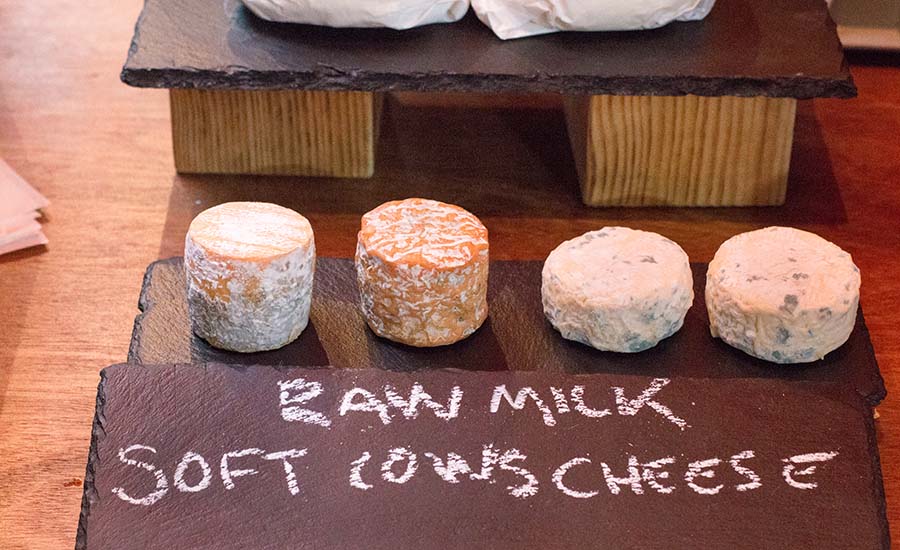
This occurred during a multistate U.S. outbreak of STEC O157 in 2026, when epidemiological evidence implicated cheese made from unpasteurized milk. The producer voluntarily withdrew the implicated product from sale, although the outbreak strain was not recovered from tested cheese.
The case had parallels with an outbreak a decade earlier in Scotland, where raw milk cheese was associated with an STEC O157 outbreak. The outbreak involved 26 reported cases across two phases in July and September 2016 and resulted in one death. Epidemiological evidence implicated a particular cheese, leading to a voluntary recall by the producer. As in the 2026 U.S. outbreak, however, the outbreak strain was not detected in the implicated products that were tested.
Sampling at the Scottish production premises did detect STEC O157 in a different product, as well as other STEC, including strains carrying stx2, which is associated with severe disease. The case subsequently involved legal proceedings in which the implicated products were disputed. The case was eventually dismissed following changes in EU guidelines that nullified the case, while an independent review cleared the actions of the food safety authority.
Around the same period, a report from elsewhere in the UK demonstrated the value of genomic sequencing for definitively identifying an outbreak strain of STEC associated with raw milk.36 Since then, raw milk cheeses have continued to be associated with foodborne disease outbreaks, including outbreaks involving fatalities, prompting calls for clearer labeling of risks to vulnerable consumers.37
These cases also illustrate a broader challenge in foodborne disease investigations: failure to recover an outbreak strain from an implicated food does not necessarily exclude that food as the source, particularly when epidemiological and other evidence support an association.
Takeaway
Raw milk presents a complex balance among consumer choice, traditional production practices, potential health benefits, and established microbiological risks. For regulators, raw milk remains a higher-risk product that poses particular concerns for children, pregnant people, older adults, and people who are immunocompromised or have chronic illnesses.
For producers and consumers, high-quality evidence supporting many nutritional and digestive health claims remains scarce. At the same time, research into associations between raw milk consumption and lower rates of some allergic and respiratory conditions has identified potentially important areas for further investigation. The challenge is to determine which milk components, if any, contribute to these associations without exposing consumers to preventable microbiological hazards.
One avenue for future research is the development of processing approaches that reliably eliminate pathogens while preserving components that may have beneficial biological properties. Such technologies would require robust evidence of both microbiological safety and any claimed health benefit.
Scientific understanding will continue to evolve as researchers learn more about milk biology, food-producing animals, pathogen ecology, dairy processing, human immune responses, and consumer behavior. Progress will require collaboration among researchers, producers, consumers, and regulatory authorities: with producers to apply science under real-world production conditions; with consumers to communicate evidence-based information about benefits and risks; and with regulators to ensure that contemporary evidence informs proportionate and effective food safety controls.
Ultimately, the question is not simply whether raw milk is "good" or "bad." The more useful questions are which purported benefits are supported by evidence, which risks are well established, and how milk and dairy products can be produced in ways that maximize both safety and nutritional value.
References
- UK Government. The Dairy Products (Hygiene) Regulations 1995. May 9, 1995. https://www.legislation.gov.uk/uksi/1995/1086/made.
- Amenabar, T. "RFK Jr. says he drinks raw milk. How safe is unpasteurized milk?" The Washington Post. November 21, 2024. https://www.washingtonpost.com/wellness/2024/11/21/rfk-jr-raw-milk-difference-taste/.
- Nefasa, A.N., M. Christwardana, Z.H. Abdurrahman, F. Rohman, and A. Afif. "A Mini Review on Technique of Milk Thermization." Journal of Bioresources and Environmental Sciences 2, no. 3 (December 2023): 140–144. https://jbes.cbiore.id/index.php/jbes/article/view/19916.
- Claeys, W.L., S. Cardoen, G. Daube, J. De Block, K. Dewettinck, et al. "Raw or heated cow milk consumption: Review of risks and benefits." Food Control 31, no. 1 (May 2013). https://doi.org/10.1016/j.foodcont.2012.09.035.
- Elvehjem, C.A., E.B. Hart, H.C. Jackson, and K.G. Weckel. "The Nutritional Value of Milks—Raw vs. Pasteurized and Summer vs. Winter." Journal of Dairy Science 17, no. 12 (1934): 763–770. https://doi.org/10.3168/jds.S0022-0302(34)93301-4.
- Wilbey, R.A. "Dairy technology: A UK perspective on its past, present and future." International Journal of Dairy Technology 70, no. 4 (September 2017): 459–468. https://doi.org/10.1111/1471-0307.12460.
- Čapla, J., P. Zajác, K. Ševcová, J. Čurlej, M. Fikselová. "Overview of the milk and dairy products legislation in the European Union." Legestic no. 1 (2023): 1–16. https://legestic.org/index.php/journal/article/view/1.
- EFSA Panel on Biological Hazards. "Scientific Opinion on the public health risks related to the consumption of raw drinking milk." EFSA Journal 13, no. 1 (2015): 3940. https://doi.org/10.2903/j.efsa.2015.3940.
- UK Food Standards Agency. "Raw Drinking Milk Premises in England, Wales and Northern Ireland." September 1, 2026. https://www.data.gov.uk/dataset/f6706084-9c82-4a50-a781-41e0e6229948/raw-drinking-milk-premises-in-england-wales-and-northern-ireland.
- Food Standards Scotland. "Dairy and eggs: Guidance on controls for raw milk (including antibiotic residues), cheese production and eggs." https://www.foodstandards.gov.scot/business-guidance/industry-specific-advice/farming/dairy-and-eggs.
- Advisory Committee on the Microbiological Safety of Food (ACMSF). "Assessment of whether the microbiological risk associated with consumption of raw drinking milk (and certain raw milk products) made in the UK has changed since 2015–2018." April 5, 2018.
- Stephenson, M.M., M.E. Coleman, and N.A. Azzolina. "Trends in Burdens of Disease by Transmission Source (USA, 2005–2020) and Hazard Identification for Foods: Focus on Milkborne Disease." Journal of Epidemiology and Global Health 14, no. 3 (2024): 787–816. https://pubmed.ncbi.nlm.nih.gov/38546802/.
- Hsu, P. and F. Wu. "The unseen risks of dairyborne disease: Disease burden, economic impact, and regulatory trends in raw milk and cheese in the US, 2000–2020." Trends in Food Science & Technology no. 172: 105712. https://doi.org/10.1016/j.tifs.2026.105712.
- Case, P. "Dairy farmers club together to protect raw milk sales." Farmers Weekly. March 1, 2019. https://www.fwi.co.uk/business/markets-and-trends/dairy-markets/dairy-farmers-club-together-to-protect-raw-milk-sales.
- Raw Milk Institute. "United Kingdom Milk Producers." 2019. https://www.rawmilkinstitute.org/rawmilkuk.
- Guan, L., A.J. Eisfeld, D. Pattinson, C. Gu, A. Biswas, et al. "Cow's Milk Containing Avian Influenza A(H5N1) Virus—Heat Inactivation and Infectivity in Mice." New England Journal of Medicine 391, no. 1 (2024): 87–90. https://www.nejm.org/doi/full/10.1056/NEJMc2405495.
- Bluth, R. and M. Brown. "Head of a celebrity-friendly raw milk brand says its recall is political. He may soon have an FDA role." POLITICO. December 6, 2024. https://www.politico.com/news/2024/12/06/rfk-jr-raw-milk-recall-00192906.
- U.S. Centers for Disease Control and Prevention. "Talking to Patients about Unpasteurized (Raw) Milk and Highly Pathogenic Avian Influenza." June 3, 2024. https://www.cdc.gov/bird-flu/hcp/unpasteurized-raw-milk/index.html.
- Verhagen, H., C. Alonso-Andicoberry, R. Assunção, F. Cavaliere, H. Eneroth, et al. "Risk-benefit in food safety and nutrition—Outcome of the 2019 Parma Summer School." Food Research International no. 141 (March 2021): 110073. https://doi.org/10.1016/j.foodres.2020.110073.
- Grace, D., F. Wu, and A.H. Havelaar. "MILK Symposium review: Foodborne diseases from milk and milk products in developing countries—Review of causes and health and economic implications." Journal of Dairy Science 103, no. 11 (November 2020): 9715–9729. https://pubmed.ncbi.nlm.nih.gov/33076183/.
- Koski, L., H. Kisselburgh, L. Landsman, R. Hulkower, M. Howard-Williams, et al. "Foodborne illness outbreaks linked to unpasteurized milk and relationship to changes in state laws—United States, 1998–2018." Epidemiology & Infection 150, no. e183 (October 2022). https://pubmed.ncbi.nlm.nih.gov/36280604/.
- Adams, N., L. Byrne, J. Edge, A. Hoban, C. Jenkins, et al. "Gastrointestinal infections caused by consumption of raw drinking milk in England & Wales, 1992–2017." Epidemiology & Infection 147, no. e281 (September 2019). https://pubmed.ncbi.nlm.nih.gov/34596012/.
- UK Food Standards Agency. "Raw drinking milk." January 9, 2018. https://www.food.gov.uk/safety-hygiene/raw-drinking-milk.
- National Food Institute TUoD, Denmark, R. Assunção, S. Pires, and M. Nauta. "Risk-Benefit Assessment of Foods." EFSA Journal 17 (S2) (September 2019): e170917. https://doi.org/10.2903/j.efsa.2019.e170917.
- Lucey, J.A. "Raw Milk Consumption: Risks and Benefits." Nutrition Today 50, no.4 (June 2015): 189–193. https://pmc.ncbi.nlm.nih.gov/articles/PMC4890836/.
- Jeong, H., Y.-S. Park, and S.-S. Yoon. "A2 milk consumption and its health benefits: An update." Food Science and Biotechnology 33, no.3 (February 2024): 491–503. https://pubmed.ncbi.nlm.nih.gov/38274187/.
- Wheater, D.W.F., D. Mara, A. Opara, and P. Singleton. "Anaerobic bacteria as indicators of faecal pollution." Proceedings of the Royal Society of Edinburgh, Section B: Biological Sciences 78, no. 3–4 (1980): s161–s169. https://www.cambridge.org/core/journals/proceedings-of-the-royal-society-of-edinburgh-section-b-biological-sciences/article/abs/anaerobic-bacteria-as-indicators-of-faecal-pollution/FFB2020DD35949A7DB82E6404686A5E6.
- Macdonald, L.E., J. Brett, D. Kelton, S.E. Majowicz, K. Snedeker, et al. "A Systematic Review and Meta-Analysis of the Effects of Pasteurization on Milk Vitamins, and Evidence for Raw Milk Consumption and Other Health-Related Outcomes." Journal of Food Protection 74, no. 11 (2011): 1814–1832. https://doi.org/10.4315/0362-028X.JFP-10-269.
- Vercelli, D. and G. Wlasiuk. "The farm effect, or: When, what and how a farming environment protects from asthma and allergic disease." Current Opinion in Allergy & Clinical Immunology 12, no. 5 (October 2012): 461–466. https://pubmed.ncbi.nlm.nih.gov/22892709/.
- Alves, P.B., E. Khaleva, P. Eigenmann, and R.L. Peters. "Editorial comment on 'Prevention of allergies and infections by minimally processed milk in infants—The MARTHA feasibility and safety trial.'" Pediatric Allergy and Immunology 35, no. 12 (December 2024): e70012. https://doi.org/10.1111/pai.70012.
- Grigg, J., B. Barratt, K. Bønnelykke, A. Custovic, M. Ege, et al. "European Respiratory Society Research Seminar on Preventing Pediatric Asthma." Pediatric Pulmonology 60, no. 1 (December 2024): e27401. https://doi.org/10.1002/ppul.27401.
- Loss, G., M. Depner, L.H. Ulfman, R.J.J. van Neerven, A.J. Hose, et al. "Consumption of unprocessed cow's milk protects infants from common respiratory infections." Journal of Allergy and Clinical Immunology 135, no. 1 (January 2015): 56–62. https://pubmed.ncbi.nlm.nih.gov/25441645/.
- Brick, T., K. Hettinga, B. Kirchner, M.W. Pfaffl, and M.J. Ege. "The Beneficial Effect of Farm Milk Consumption on Asthma, Allergies, and Infections: From Meta-Analysis of Evidence to Clinical Trial." Journal of Allergy and Clinical Immunology: In Practice 8, no. 3 (March 2020): 878–889. https://doi.org/10.1016/j.jaip.2019.11.017.
- Liu, X., J. Gao, L. Yang, and X. Yuan. "Roles of Exosomal miRNAs in Asthma: Mechanisms and Applications." Journal of Asthma and Allergy 17 (September 2024): 935–947. https://pubmed.ncbi.nlm.nih.gov/39376731/.
- Kirchner, B., M.W. Pfaffl, J. Dumpler, E. von Mutius, and M.J. Ege. "MicroRNA in native and processed cow's milk and its implication for the farm milk effect on asthma." Journal of Allergy and Clinical Immunology 137, no. 6 (June 2016): 1893–1895. https://pubmed.ncbi.nlm.nih.gov/26707195/.
- Butcher, H., R. Elson, M.A. Chattaway, C.A. Featherstone, C. Willis, et al. "Whole genome sequencing improved case ascertainment in an outbreak of Shiga toxin-producing Escherichia coli O157 associated with raw drinking milk." Epidemiology & Infection 144, no. 13 (October 2016): 2812–2823. https://pubmed.ncbi.nlm.nih.gov/27338677/.
- Quinn, O.I., C. Jenkins, D.R. Greig, S. Neale, F. Jorgensen, et al. "An outbreak of Shiga toxin-producing Escherichia coli serotype O145:H28 associated with domestic travel and consumption of unpasteurized cheese, UK, 2023." Journal of Food Protection 88, no. 4 (March 2025): 100470. https://doi.org/10.1016/j.jfp.2025.100470.