Study Links Pesticide Exposure to 150 Percent Higher Cancer Risk, Identifies Biological Mechanisms
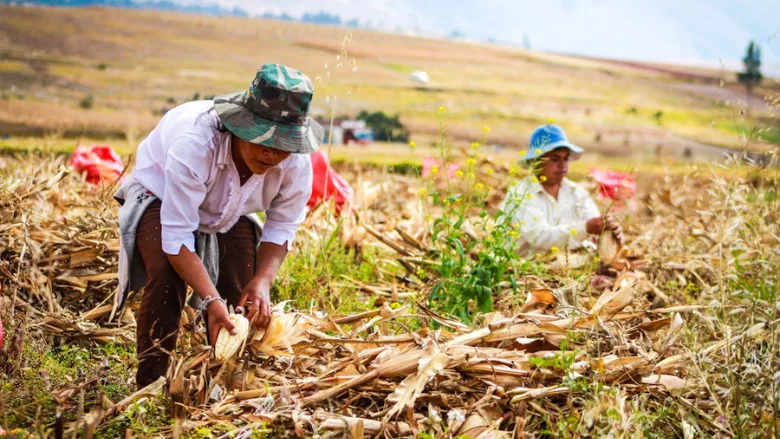
A new study published in Nature Health identified biological mechanisms by which pesticide exposure may lead to an increased risk of cancer, estimating that living in environments where pesticides are heavily used may increase cancer risk by as much as 150 percent.
The study was conducted by researchers at the Peruvian National Institute of Neoplastic Diseases’ Research Institute for Development (IRD); the Pasteur Institute, France; and the University of Toulouse, France.
Challenging Traditional Pesticide Safety Assessments
Despite decades of concern over the carcinogenic potential of agricultural pesticides, toxicological studies relying on single endpoints have yet to establish a definitive link between environmental pesticide exposure and cancer in real-world contexts. Traditional approaches to chemical safety assessment typically evaluate one substance at a time and define exposure limits considered “safe.”
In the real world, pesticides are found in food, water, and the environment, often as complex mixtures rather than single substances, making their health effects difficult to measure.
Noting that the way in which chemicals are studied does not reflect real-world human exposure, the researchers sought to take a broader approach, examining how multiple pesticides interact and affect populations under realistic conditions.
Overall, the findings suggest that traditional chemical safety assessments may overlook the risks posed by combined exposures and real-life environmental conditions.
Mapping Pesticide Exposure and Cancer Hotspots Across Peru
To better understand the potential connection between pesticides and cancer, researchers created detailed models showing how agricultural chemicals spread across Peru, which was chosen as the focus of the study due to the country’s unique setting and the growing public health significance of cancer. Specifically, Peru includes regions with intensive agriculture, diverse climates and ecosystems, and significant social and geographic inequalities, with disproportionately high levels of pesticide exposure in some communities.
Looking for quick answers on food safety topics?
Try Ask FSM, our new smart AI search tool.
Ask FSM →
The analysis included 31 widely used pesticides, none of which are classified as known human carcinogens by the World Health Organization (WHO), yet the combined presence of which had been carefully tracked in the environment.
Using an integrative spatial Bayesian framework, the researchers modeled the dispersion of pesticides in the environment over a six-year period (2014–2019), merging high-resolution environmental pesticide risk modeling with comprehensive cancer registry data. The researchers created maps that identified areas with the highest risk of exposure, comparing these maps to health data from more than 150,000 cancer patients recorded in the Peruvian National Cancer Institute registry between 2007 and 2020.
The cancer incidence data were also stratified according to how individuals’ cancers developed (developmental lineage), revealing patterns in geospatial cancer clusters that would not be identified through conventional organ-based classifications.
To validate real-world model performance, the researchers analyzed hair samples from 50 people residing in high-exposure areas. The presence of active ingredients in these biomonitoring samples closely aligned with modeled exposure risk estimates.
Robust Association Between Pesticide Exposure and Cancer Risk
The comparison between pesticide exposure and cancer data revealed a robust spatial association. Regions with higher environmental pesticide exposure also had higher rates of certain cancers, with residents of these areas having a 150 percent higher likelihood of developing cancer on average.
Moreover, certain populations, especially Indigenous and rural farming communities, faced disproportionately greater risk, simultaneously being exposed to approximately 12 different pesticides at elevated concentrations.
The developmental lineage stratification enabled the identification of an atypical molecular subtype of liver cancer in Andean–Amazonian Indigenous patients, the underlying factors of which have historically remained elusive.
Biological Mechanisms of Pesticide Exposure Potentially Increasing Cancer Risk
The researchers explained that some cancerous tumors that affect different organs share underlying biological weaknesses tied to their cellular origins. These vulnerabilities may be influenced by pesticide exposure, affecting the body long before cancer is diagnosed.
For example, molecular studies of liver tissues—a primary target of chemical carcinogens and a marker for environmental exposure—from patients in pesticide-associated cancer hotspots uncovered a distinct transcriptomic signature of pesticide exposure. This finding implicated a non-genotoxic mode of action by which pesticides interfere with processes that maintain normal cell function and identity.
These disruptions occur early and may accumulate over time without obvious symptoms. Such changes could make tissues more susceptible to other harmful influences, including infections, inflammation, and environmental stress.
Implications for Pesticide Risk Assessment and Public Health
Overall, the findings challenge traditional approaches to chemical safety, suggesting that these methods may overlook the risks posed by combined exposures and real-life environmental conditions.
The study also points to the role of external factors such as climate events. Phenomena like El Niño may increase exposure by affecting how pesticides are used and how they move through the environment. The researchers argue that current risk assessment and prevention strategies need to be updated to reflect these complexities.
Although the study focuses on Peru, its implications are global. The findings highlight how environmental changes, agricultural practices, extreme weather, and social inequalities can interact to influence health outcomes.
With the goal of supporting more effective and equitable public health policies that account for real-world environmental exposures, the research team plans to continue investigating the biological mechanisms of pesticide exposure and to develop better tools for preventing adverse health outcomes.