Center for Food Safety Opposes Monsanto–Bayer Legal Efforts to Preempt State Pesticide Warnings
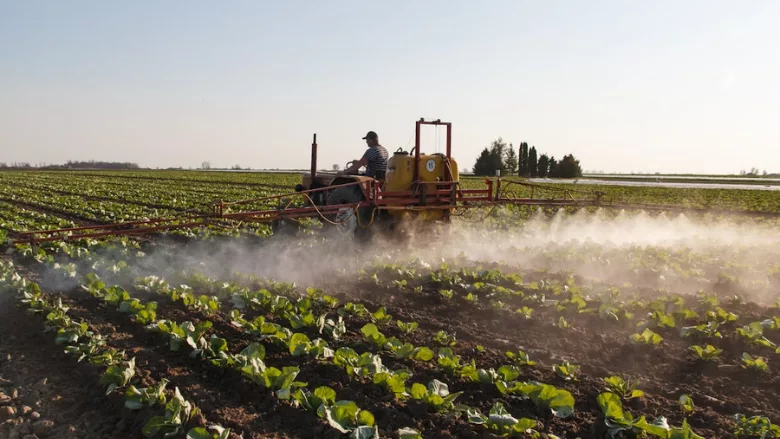
A coalition of consumer, public health, and environmental protection organizations has filed an amicus brief in the U.S. Supreme Court case Monsanto v. Durnell, arguing that state authority to require pesticide health warnings—an authority that Bayer (which now owns Monsanto) seeks to strike down—is essential to protecting food, environmental, worker, and consumer safety.
The brief, submitted by groups represented by the Center for Food Safety (CFS), opposed Monsanto’s efforts to preempt state-level warning requirements and limit liability related to alleged cancer risks from its glyphosate-based herbicide, Roundup. According to the coalition, eliminating state authority would weaken longstanding federal–state roles in communicating pesticide hazards to consumers and agricultural workers.
Represented by legal counsel from CFS, the Amici groups include CFS, Consumer Federation of America, Breast Cancer Prevention Partners, Rural Coalition, Alliance of Nurses for Healthy Environments, Center for Biological Diversity (CBD), Beyond Pesticides, and Food and Water Watch.
Widespread Use of Glyphosate and Concerns for Health, Safety
According to CFS, glyphosate is the most widely used pesticide in the U.S., with approximately 280 million pounds applied annually to farmland, in addition to millions of pounds used in residential and other non-agricultural settings. Due to its extensive use, glyphosate residues have been detected in food, as well as in soil, water, and human biomonitoring samples.
The World Health Organization’s (WHO’s) International Agency for Research on Cancer classified glyphosate as “probably carcinogenic to humans” in 2015. Since then, multiple juries have found Monsanto liable for failing to warn users about cancer risks (especially non-Hodgkin lymphoma) associated with Roundup exposure.
Moreover, in early 2026, the journal Regulatory Toxicology and Pharmacology retracted a paper from the year 2000 asserting the safety of glyphosate, which has been relied upon as a hallmark piece of evidence for regulatory approvals of the agricultural chemical since its publication.
Interestingly, in a February 2026 Executive Order, President Trump urged the increased domestic production of glyphosate as a matter of “national defense.”
Looking for quick answers on food safety topics?
Try Ask FSM, our new smart AI search tool.
Ask FSM →
States’ Role in Filling EPA Pesticide Risk Communication Gaps
The organizations argued that pesticide labeling and state-level warning requirements are key mechanisms for communicating chemical hazards that may affect food safety and occupational exposure. If such requirements are preempted, federal regulators would be the sole authority responsible for risk communication.
The brief cited new analyses by CFS and CBD indicating that the U.S. Environmental Protection Agency (EPA) has approved pesticides with identified cancer risks without requiring warning labels, raising concerns about gaps in federal oversight and transparency.
Specifically, CFS found that pesticides have been allowed on the market with a cancer risk as high as one in every 100 people exposed, exceeding EPA's benchmark of a one in a million chance of developing cancer. Over the last 40 years, EPA has approved 200 active ingredients that are "likely" or "possible" carcinogens.
Moreover, CBD examined pesticide product labels for all currently approved pesticide products and found that EPA has instituted cancer warnings on only 69 of 4,919 pesticide labels (1.4 percent) containing an active ingredient that the agency has designated as a “likely" human carcinogen. The agency has instituted cancer warnings on just 242 of the 22,147 pesticide labels (1.1 percent) that contain an ingredient the agency has designated as a "possible" human carcinogen.
EPA Pesticide Oversight: “Rife with Loopholes, Limitations”
The filing also referenced a 2022 federal court decision in a lawsuit filed by CFS that vacated EPA’s human health risk assessment for glyphosate, finding it inconsistent with the agency’s cancer evaluation standards. Because of this decision, the groups argue that Monsanto's heavy reliance on EPA is “misplaced,” as the registration decision was struck down for violating core cancer safety standards, among other reasons.
The groups also asserted that this court decision revealed the weaknesses and limitations of federal oversight, further underscoring the importance of maintaining state-level authority to address potential risks.
“EPA's oversight of pesticides generally is the antithesis of the rosy picture Monsanto paints: in reality, it is rife with loopholes, limitations, data gaps, delays, and lack of enforcement, making additional state enforcement vital,” said CFS.
Potential Implications for Food System Stakeholders
The outcome of Monsanto v. Durnell could affect how pesticide risks are communicated across the food system, including labeling practices, regulatory oversight, and legal accountability for chemical exposures.
Oral arguments in the case are scheduled for April 27, with a decision expected by the end of June.
Update, June 25, 2026: In a 7–2 split, the U.S. Supreme Court has ruled in favor of Bayer–Monsanto.