Food Safety
search
Ask Food Safety AI
cart
facebook twitter linkedin instagram youtube
  • Sign In
  • Create Account
  • Sign Out
  • My Account
Food Safety
  • NEWS
    • Latest News
    • White Papers
  • PRODUCTS
  • TOPICS
    • Contamination Control
    • Food Types
    • Management
    • Process Control
    • Regulatory
    • Sanitation
    • Supply Chain
    • Testing and Analysis
  • PODCAST
  • EXCLUSIVES
    • Food Safety Five Newsreel
    • eBooks
    • FSM Distinguished Service Award
    • Interactive Product Spotlights
    • Videos
  • BUYER'S GUIDE
  • MORE
    • NEWSLETTERS >
      • Archive Issues
      • Subscribe to eNews
    • Store
    • Sponsor Insights
    • ASK FSM AI
  • WEBINARS
  • FOOD SAFETY SUMMIT
  • EMAG
    • eMagazine
    • Archive Issues
    • Editorial Advisory Board
    • Contact
    • Advertise
  • SIGN UP!
NewsContamination ControlManagementRegulatoryInternationalChemical ControlInternational Standards/Harmonization

Codex Committee Advances Work on Standards for Veterinary Drug Residues in Food

JECFA has also issued a related call for data to support future CCRVDF work and Codex standards development.
By Food Safety Magazine Editorial Team
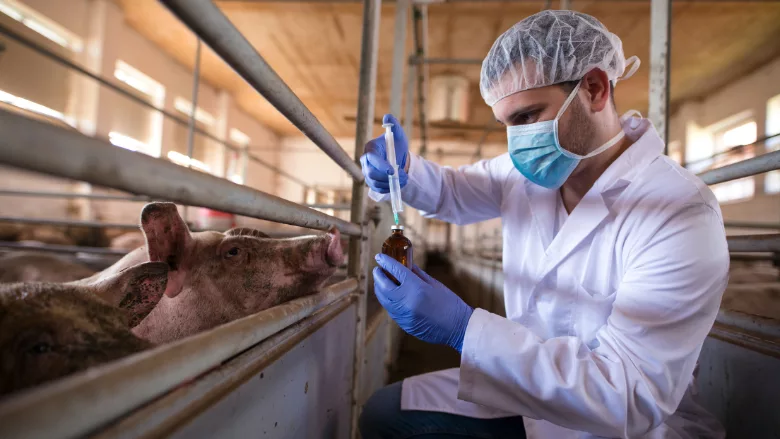
veterinarian preparing to administer drugs to pig
Image credit: aleksandarlittlewolf via Freepik
April 3, 2026

On March 31, the Codex Committee on Residues of Veterinary Drugs in Foods (CCRVDF) concluded its 28th session in Minneapolis, Minnesota.

The session made advances related to maximum residue limits (MRLs), extrapolation approaches, and risk management guidance, reflecting continued efforts to strengthen international standards for veterinary drug residues in food. Several measures were forwarded to the Codex Alimentarius Commission (CAC) for adoption. Work to address emerging cross-sector food safety issues was also advanced.

Progress on MRLs and Extrapolation Approaches

Among the key outcomes, CCRVDF agreed to forward MRLs for veterinary drugs in camelid tissues, representing the first time Codex has established such limits for this species category. Specifically, the committee advanced MRLs for tetracyclines in camelid kidney, liver, milk, and muscle, as well as ivermectin in camelid milk.

At the same time, CCRVDF determined that certain compounds, including albendazole and ivermectin in most camelid tissues, did not meet the established criteria for extrapolation.

The committee also progressed work on extrapolating MRLs to edible offal tissues beyond liver and kidney, agreeing to pilot an approach using selected compounds to evaluate both extrapolation criteria and exposure assessment methods.

Action Levels and Risk-Based Guidance

CCRVDF finalized action levels for lasalocid and nicarbazin in chicken eggs and agreed to forward them to CAC, alongside new guidance for competent authorities on managing residues resulting from unavoidable and unintentional carryover in animal feed.

The guidance was intended to support a risk-based approach to enforcement in cases where no Codex MRL exists or where established action levels are exceeded, providing additional clarity for regulators managing residues in foods of animal origin.

Looking for quick answers on food safety topics?
Try Ask FSM, our new smart AI search tool.
Ask FSM →

The committee also agreed on a priority list of compounds for evaluation by the Joint FAO/WHO Expert Committee on Food Additives (JECFA) and for consideration for extrapolation to additional species for approval as new work.

Collaborative Work Related to Veterinary Drugs Also Used as Pesticides

CCRVDF also continued collaboration with the Codex Committee on Pesticide Residues on harmonized MRLs for compounds with both veterinary drug and pesticide uses.

Specific MRLs under consideration included those for fumagillin dicyclohexylamine (DCH) in fish fillets and honey. CCRVDF agreed to retain the MRLs pending the outcomes of the JECFA re-evaluation due to safety concerns raised by members.

A stepwise process has been established to support this effort, including a planned virtual working group meeting in April 2026 and a joint session of the two committees anticipated in 2027.

JECFA Calls for Data to Support Veterinary Drug Residue Evaluations

In related work, the Food and Agriculture Organization of the United Nations (FAO) and the World Health Organization (WHO) have issued a call for data to support the 103rd meeting of JECFA, scheduled for January 2027.

The data call seeks scientific information on veterinary drug residues to inform toxicological and residue evaluations, which underpin Codex MRLs and related standards.

The list of substances for evaluation was based on CCRVDF recommendations and prior JECFA decisions.

Data submissions from regulatory bodies, industry, and researchers are due by July 31, 2026, and will support future risk assessments and standard-setting activities within the Codex framework.


KEYWORDS: call for data Codex FAO veterinary drugs WHO

Share This Story

Fsm purple logo 200x200

The Food Safety Magazine editorial team comprises Bailee Henderson, Digital Editor ✉ and Adrienne Blume, M.A., Editorial Director.

Recommended Content

JOIN TODAY
to unlock your recommendations.

Already have an account? Sign In

  • people holding baby chicks

    Serovar Differences Matter: Utility of Deep Serotyping in Broiler Production and Processing

    This article discusses the significance of Salmonella in...
    Microbiological Control
    By: Nikki Shariat Ph.D.
  • woman washing hands

    Building a Culture of Hygiene in the Food Processing Plant

    Everyone entering a food processing facility needs to...
    Sanitation
    By: Richard F. Stier, M.S.
  • graphical representation of earth over dirt

    Climate Change and Emerging Risks to Food Safety: Building Climate Resilience

    This article examines the multifaceted threats to food...
    Best Practices
    By: Maria Cristina Tirado Ph.D., D.V.M. and Shamini Albert Raj M.A.
Manage My Account
  • eMagazine Subscription
  • Subscribe to Newsletters
  • Manage My Preferences
  • Website Registration
  • Subscription Customer Service

More Videos

Sponsored Content

Sponsored Content is a special paid section where industry companies provide high quality, objective, non-commercial content around topics of interest to the Food Safety Magazine audience. All Sponsored Content is supplied by the advertising company and any opinions expressed in this article are those of the author and not necessarily reflect the views of Food Safety Magazine or its parent company, BNP Media. Interested in participating in our Sponsored Content section? Contact your local rep!

close
  • The image displays a person selecting packaged fresh chicken meat from a supermarket display cooler.
    Sponsored byCorbion

    Developing a Future-Proof Food Safety Strategy for Meat and Poultry Products

  • The image shows a variety of fresh produce packaged in plastic trays and wrap.
    Sponsored byWaters Corporation

    PFAS-Free Food Packaging by August 2026

  • This image displays a multi-stage water filtration system designed to remove contaminants from drinking water.
    Sponsored byWaterdrop Filter

    The 4.0 ppt Era: Future-Proofing Your Food Supply Chain Against 'Forever Chemicals'

Popular Stories

half shredded block of cheddar cheese and pile of cheese shreds on wooden cutting board

Patient Count in Raw Farm E. coli Outbreak Grows, Majority are Young Children

smiling employee in bottling factory looking at camera with arms crossed in front of production line

GFSI Unveils Updated Food Safety Culture Framework

This image depicts a high-tech vertical farming facility where leafy greens like lettuce are grown indoors using hydroponic systems and artificial LED lighting.

Improving the Safety of Hydroponic Crops: Evaluation of Strategies to Mitigate Human Pathogens in Hydroponic Production

foreign material webinar


Events

April 8, 2026

Foreign Material Contamination: Why In-Line Reinspection Isn't Enough

Live: April 8, 2026, at 11:00 am EDT: From this webinar, attendees will learn why reinspecting with in-line equipment is not sufficient when it comes to potential foreign material contamination.

April 16, 2026

Recordkeeping and Document Management for Food Safety Compliance

Live: April 16, 2026, at 2:00 pm EDT: From this webinar, attendees will learn why recordkeeping and document control are essential to food safety and business management.

May 11, 2026

The Food Safety Summit

Stay informed on the latest food safety trends, innovations, emerging challenges, and expert analysis. Leave the Summit with actionable insights ready to drive measurable improvements in your organization. Do not miss this opportunity to learn from experts about contamination control, food safety culture, regulations, sanitation, supply chain traceability, and so much more.

View All

Products

Global Food Safety Microbial Interventions and Molecular Advancements

Global Food Safety Microbial Interventions and Molecular Advancements

See More Products

Related Articles

  • four cattle behind barricade looking at camera

    New Toolbox From FAO: Conducting Risk Assessments for Veterinary Drug Residues in Food

    See More
  • Veterinary Drug Residues in Animals and Human Food Decline in 2020, Says EFSA

    Veterinary Drug Residues in Human Food, Animals Decline in 2020, Says EFSA

    See More
  • Public Meeting to Address Agenda Items for Codex Committee on Pesticide Residues

    See More

Related Products

See More Products
  • 9781138070912.jpg

    Trends in Food Safety and Protection

  • 1119053595.jpg

    Food Safety for the 21st Century: Managing HACCP and Food Safety throughout the Global Supply Chain, 2E

  • 1119160553.jpg

    Food Safety: Innovative Analytical Tools for Safety Assessment

See More Products

Events

View AllSubmit An Event
  • March 3, 2026

    FDA/USDA Regulatory Updates: Food Safety Work Plans for 2026

    On Demand: In this high-level, exclusive webinar, FDA Deputy Commissioner for Human Foods Kyle Diamantas and USDA Under Secretary for Food Safety Mindy Brashears, Ph.D. will share their agencies' regulatory priorities and work plans for 2026 and beyond.
View AllSubmit An Event

Related Directories

  • North American Chemical Residue Workshop

    NACRW) formerly the Florida Pesticide Residue Workshop conducts an annual meeting for scientists particularly interested in trace level analysis of pesticides, veterinary drug residues, and other chemicals in food, animal feed, and environmental samples. The purpose of the meeting is to provide training, develop and improve technical knowledge, facilitate development and distribution of new analysis methods and techniques, and establish networking to promote professional cooperation between scientists of these interests.
  • WorkForge

    WorkForge is reshaping the landscape of learning and development in the food manufacturing industry. Our comprehensive solution provides a centralized hub for off-the-shelf and customizable content, an advanced Learning Management System (LMS), and expert consulting services. WorkForge creates bespoke learning experiences where employees can access tailored training at their convenience, promoting universal learning across diverse environments and devices.
×

Never miss the latest news and trends driving the food safety industry

Newsletters | Website | eMagazine

JOIN TODAY!
  • RESOURCES
    • Advertise
    • Contact Us
    • Directories
    • Store
    • Want More
  • SIGN UP TODAY
    • Create Account
    • eMagazine
    • Newsletters
    • Customer Service
    • Manage Preferences
  • SERVICES
    • Marketing Services
    • Reprints
    • Market Research
    • List Rental
    • Survey/Respondent Access
  • STAY CONNECTED
    • LinkedIn
    • Facebook
    • Instagram
    • X (Twitter)
  • PRIVACY
    • PRIVACY POLICY
    • TERMS & CONDITIONS
    • DO NOT SELL MY PERSONAL INFORMATION
    • PRIVACY REQUEST
    • ACCESSIBILITY

Copyright ©2026. All Rights Reserved BNP Media, Inc. and BNP Media II, LLC.

Design, CMS, Hosting & Web Development :: ePublishing