Key Technology Introduces COMPASS Optical Sorter for Vegetable Processing
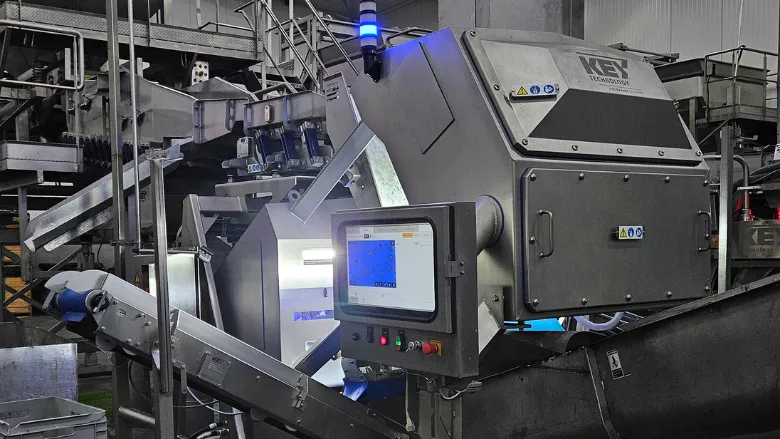
Key Technology has introduced its COMPASS optical sorter for fresh and individually quick frozen (IQF) corn, peas, and green beans. According to the company, the system was developed for vegetable processors handling multiple stock-keeping units (SKUs), mixed products, and frequent production changeovers.
COMPASS is available in belt-fed configurations for fresh vegetables and chute-fed configurations for IQF products. It is designed to detect and remove foreign material and product defects across varying production conditions.
COMPASS features a modular design and is available in multiple sizes to support a range of processing capacities and applications.
Optical Sorting Technology for Foreign Material Detection
COMPASS uses a sensing architecture that combines multi-channel sensor data and multi-wavelength strobing to generate up to eight inspection data streams. Pixel Fusion detection technology integrates visible and infrared data at the pixel level to enhance contrast for detecting foreign materials and product defects.
In some applications, the system provides detection capabilities comparable to laser-based sorters but without mechanical scanning components, which may reduce maintenance requirements and operating costs.
The sorter is designed to identify and remove foreign materials such as stones, sticks, plastic, metal, and extraneous vegetable matter, along with discolored or damaged product. In IQF applications, the system can also detect large ice pieces or frozen agglomerates. Object recognition and shape analysis are used to distinguish foreign material and defects that closely resemble acceptable product.
Configurations for Fresh and IQF Vegetable Processing
For fresh corn, peas, and green beans, COMPASS is configured as a belt-fed sorter designed for wet and debris-heavy environments. According to the company, the sorter can be installed at various points along the processing line, including raw receiving and prior to freezing.
Looking for quick answers on food safety topics?
Try Ask FSM, our new smart AI search tool.
Ask FSM →
The system’s belt control includes automated tracking and tensioning to reduce downtime, while a quick-release belt design is intended to facilitate sanitation and maintenance.
For IQF vegetables, the sorter is offered in a chute-fed configuration for final quality inspection. The system can sort a range of vegetable formats, including slices, dices, and mixed medleys, and can detect product defects during single-product runs. Optional high-powered ejectors are designed to remove dense contaminants, including ice chunks, while maintaining sorting accuracy.
Recipe-Driven Operation and Changeover
According to Key, COMPASS supports faster product changeovers through recipe-based programming accessed through a touchscreen interface. Selecting a recipe automatically adjusts sorting parameters, reducing the need for manual recalibration.
New product recipes can be configured within the interface using product-specific templates, allowing operators to adjust settings without requiring an application engineer or service technician.
Hygienic Design and Data Analytics
COMPASS was developed with an open, washdown-ready hygienic design intended for vegetable processing environments. The system provides access to cameras and lighting to facilitate cleaning while protecting internal components during washdown.
The sorter also includes Key Discovery, the company’s analytics and reporting software platform. The system collects and analyzes sorting data to help processors monitor yield, reject rates, raw material variability, and upstream processing performance.
Key Technology: www.key.net