Food Safety
search
Ask Food Safety AI
cart
facebook twitter linkedin instagram youtube
  • Sign In
  • Create Account
  • Sign Out
  • My Account
Food Safety
  • NEWS
    • Latest News
    • White Papers
  • PRODUCTS
  • TOPICS
    • Contamination Control
    • Food Types
    • Management
    • Process Control
    • Regulatory
    • Sanitation
    • Supply Chain
    • Testing and Analysis
  • PODCAST
  • EXCLUSIVES
    • Food Safety Five Newsreel
    • eBooks
    • FSM Distinguished Service Award
    • Interactive Product Spotlights
    • Videos
  • BUYER'S GUIDE
  • MORE
    • NEWSLETTERS >
      • Archive Issues
      • Subscribe to eNews
    • Store
    • Sponsor Insights
    • ASK FSM AI
  • WEBINARS
  • FOOD SAFETY SUMMIT
  • EMAG
    • eMagazine
    • Archive Issues
    • Editorial Advisory Board
    • Contact
    • Advertise
  • SIGN UP!
NewsContamination ControlFood TypeMicrobiological ControlMeat/Poultry

Scientists Tackle Food Waste with More Accurate ‘Sell By’ Dates Based on Meat Microbial Activity
By Food Safety Magazine Editorial Team
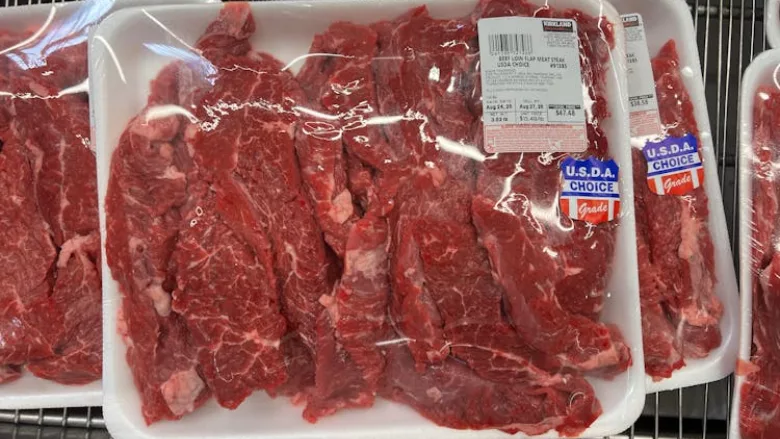
packages of beef at retail
Image credit: Natalia S via Pexels
May 8, 2026

Auburn University researchers are investigating methods to predict meat spoilage based on microbial activity, which would enable producers to affix more accurate “best by” or “sell by” dates, thereby reducing food waste.

How ‘Sell By’ Dates Contribute to Food Waste

According to the United Nations (UN), approximately 10 percent of all meat is discarded by retailers or consumers due to it reaching its “sell by” or “best by” date. These dates are conservative values that are typically based on when meat will begin to lose its color (about four days past the date of packaging), rather than being an indicator of when the product would be unsafe for consumption. Meat turning from pink to brown in its packaging is a food quality issue, rather than a food safety risk.

As consumers often make decisions about when to throw away meat based on discoloration and the “sell by” or “best by” date, overly conservative dates exacerbate the problem of food waste.

Wasted food translates into wasted resources—including the emissions, water, energy, and land required for production—presenting a pressing sustainability challenge.

Predicting Meat Spoilage Based on Patterns in Microbial Activity

Led by Isabella Gafanha, M.S. during her time as a master’s student in the Auburn College of Agriculture, a team of Auburn University researchers sought to identify changes in microbial communities over the shelf life of packaged ground beef and associate those changes with meat quality degradation and spoilage indicators.

The researchers tracked the activity of microbial communities on ground beef over a 14-day span, collecting data on the meat’s objective color, lipid oxidation, microbial plate counts, and microbiome. A machine learning model was used to predict meat spoilage based on the data, and its predictions were compared against Ms. Gafanha’s findings from her experiments with ground beef samples.

Quality analysis results showed that the meat was microbiologically spoiled after six days. The microbiome shifted over the 14 days in a predictable succession pattern, with Rhodobacteraceae and Enterobacterales present within the samples during the early stages of shelf life, and Pseudomonadaceae and Carnobacteriaceae increasing to detectable levels by the end of the 14 days.

Looking for quick answers on food safety topics?
Try Ask FSM, our new smart AI search tool.
Ask FSM →

In other words, aerobic bacteria multiplied first, depleting the oxygen present in the package. Subsequently, anaerobic bacteria grew, thriving in the oxygen-depleted environment.

The machine learning models were able to accurately predict spoilage based on changes in microbial communities, demonstrating that Carnobacterium, among other organisms, are important for predicting day of spoilage.

”Trends followed spoilage to a ‘T’ … [which is] exactly what we wanted to see,” said Ms. Gafanha.

Next Steps: Using the Data to Derive Accurate ‘Sell By’ Dates

The study, published in the American Meat Science Association’s Meat and Muscle Biology, was part of a larger initiative led by Aeriel Belk, Ph.D., Assistant Professor of Animal Sciences at Auburn University. The research was funded by a $10,000 grant from the Alabama Beef Checkoff program.

Dr. Belk plans to replicate the study with additional samples and sessions, as well as look at other markers of spoilage. In the future, the research team’s model will be used as a tool to derive more accurate “sell by” dates to prevent meat from being unnecessarily discarded.

Ms. Gafanha was joined on the study by Dianna Bourassa, Ph.D., Associate Professor and Extension Specialist, and Amit Morey, Ph.D., Associate Professor, from the Auburn Department of Poultry Science; as well as Barney Wilborn, M.S., Associate Director, Agricultural Research and Extension Center, Auburn Department of Animal Sciences.


KEYWORDS: best-by date spoilage study

Share This Story

Fsm purple logo 200x200

The Food Safety Magazine editorial team comprises Bailee Henderson, Digital Editor ✉ and Adrienne Blume, M.A., Editorial Director.

Recommended Content

JOIN TODAY
to unlock your recommendations.

Already have an account? Sign In

  • people holding baby chicks

    Serovar Differences Matter: Utility of Deep Serotyping in Broiler Production and Processing

    This article discusses the significance of Salmonella in...
    Methods
    By: Nikki Shariat Ph.D.
  • woman washing hands

    Building a Culture of Hygiene in the Food Processing Plant

    Everyone entering a food processing facility needs to...
    Sanitation
    By: Richard F. Stier, M.S.
  • graphical representation of earth over dirt

    Climate Change and Emerging Risks to Food Safety: Building Climate Resilience

    This article examines the multifaceted threats to food...
    International
    By: Maria Cristina Tirado Ph.D., D.V.M. and Shamini Albert Raj M.A.
Manage My Account
  • eMagazine Subscription
  • Subscribe to Newsletters
  • Manage My Preferences
  • Website Registration
  • Subscription Customer Service

More Videos

Sponsored Content

Sponsored Content is a special paid section where industry companies provide high quality, objective, non-commercial content around topics of interest to the Food Safety Magazine audience. All Sponsored Content is supplied by the advertising company and any opinions expressed in this article are those of the author and not necessarily reflect the views of Food Safety Magazine or its parent company, BNP Media. Interested in participating in our Sponsored Content section? Contact your local rep!

close
  • the use of dual-energy X-ray food inspection technology to identify foreign contaminants.
    Sponsored byEagle by METTLER TOLEDO

    Precision Inspection Starts with the Right X-ray Detector

  • This image depicts a worker cleaning stainless steel machinery in a food processing plant
    Sponsored byCintas

    Employee Uniforms: A Frontline Defense Against Food Contamination

  • This image depicts a healthcare professional managing a large volume of paperwork and transitioning to a digital workflow.
    Sponsored bySafetyChain

    The Invisible Plant Tax Starts with Your Records

Popular Stories

packages of beef at retail

Scientists Tackle Food Waste with More Accurate ‘Sell By’ Dates Based on Meat Microbial Activity

scientists using molecular model

Updated EU Food Chemical Safety Information Database Now Available

close-up of woman in suit writing on clipboard

FDA Launches One-Day Inspectional Assessments


Events

May 11, 2026

The Food Safety Summit

Stay informed on the latest food safety trends, innovations, emerging challenges, and expert analysis. Leave the Summit with actionable insights ready to drive measurable improvements in your organization. Do not miss this opportunity to learn from experts about contamination control, food safety culture, regulations, sanitation, supply chain traceability, and so much more.

May 14, 2026

FSMA at 15: Where Are We Now?

Live Streaming from Food Safety Summit: This session will explore how FSMA has shaped today’s food safety landscape—and what’s next.

May 28, 2026

Advanced Sanitation Strategies for Allergen Risk Reduction in Food Processing

Live: May 28, 2026, at 2:00 pm EDT: From this webinar, attendees will learn why validation and verification are necessary for allergen control, and how analytical tools can support allergen management programs.

View All

Products

Global Food Safety Microbial Interventions and Molecular Advancements

Global Food Safety Microbial Interventions and Molecular Advancements

See More Products

Related Articles

  • person reading label on jar of food in grocery store

    California Passes First-of-its-Kind Legislation Standardizing 'Best By' Dates on Food; Bans 'Sell By'

    See More
  • FSIS: “Best if Used By” Dates to Curb Food Waste, Save Money

    See More
  • Hygiena Introduces More Accurate, PCR-based Alternative to Quantify Salmonella Contamination in Poultry

    See More

Related Products

See More Products
  • global food.jpg

    Global Food Safety Microbial Interventions and Molecular Advancements

  • 9781498721776.jpg

    Handbook of Food Processing: Food Safety, Quality, and Manufacturing Processes

  • 1119160553.jpg

    Food Safety: Innovative Analytical Tools for Safety Assessment

See More Products

Related Directories

  • OneVision Corp.

    We develop, manufacture, sell and support can seam inspection and weighing systems to food and beverage canners, can makers, and specialty manufacturers (oil filter, aerosol cans, composite cans). Founded in 1994, we've installed and support more than 350 can seam inspection systems around the world.
  • On Target Packaging

    On Target Packaging is a production/maintenance servicer for combination and check weighers. We do not sell or process food, but provide service/repairs, and equipment for the food industry
×

Never miss the latest news and trends driving the food safety industry

Newsletters | Website | eMagazine

JOIN TODAY!
  • RESOURCES
    • Advertise
    • Contact Us
    • Directories
    • Store
    • Want More
  • SIGN UP TODAY
    • Create Account
    • eMagazine
    • Newsletters
    • Customer Service
    • Manage Preferences
  • SERVICES
    • Marketing Services
    • Reprints
    • Market Research
    • List Rental
    • Survey/Respondent Access
  • STAY CONNECTED
    • LinkedIn
    • Facebook
    • Instagram
    • X (Twitter)
  • PRIVACY
    • PRIVACY POLICY
    • TERMS & CONDITIONS
    • DO NOT SELL MY PERSONAL INFORMATION
    • PRIVACY REQUEST
    • ACCESSIBILITY

Copyright ©2026. All Rights Reserved BNP Media, Inc. and BNP Media II, LLC.

Design, CMS, Hosting & Web Development :: ePublishing