U.S. Cracks Down on Hemp-Derived THC While EU Sets Safe Intake Levels for Delta-8
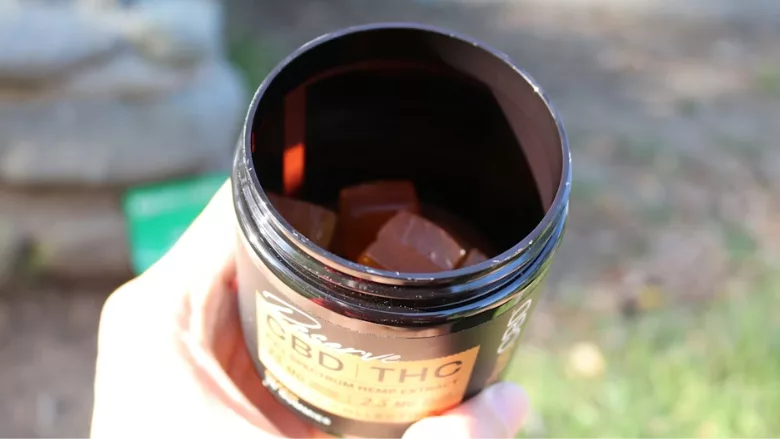
Authorities in the U.S. and EU have recently made moves related to products containing hemp-derived tetrahydrocannabinol (THC), such as Delta-8 THC, with Congress closing the 2018 Farm Bill loophole allowing its sale, and the European Food Safety Authority (EFSA) setting a safe intake level for the compound in food.
Delta-8 THC and other hemp-derived THC chemicals have risen in popularity in recent years, being included in candies, beverages, and other edible products marketed for their psychoactive effects.
What is Delta-8 THC and Hemp-Derived THC?
Delta-9 THC is the primary cannabinoid in Cannabis sativa that is responsible for the plant’s psychoactive effects on consumers. Industrial hemp and marijuana are two varieties of Cannabis sativa, with different concentrations of THC and legal statuses in the U.S.
Different from Delta-9 THC, Delta-8 THC is also native to the Cannabis plant and has milder psychoactive effects, although it occurs naturally at lower levels than Delta-9.
Hemp-derived THC refers to THC that has been extracted from industrial hemp rather than the marijuana plant, which includes Delta-8 THC and other THC cannabinoids that can have psychoactive effects. The manufacture and inclusion of synthetic cannabinoids with psychoactive effects was also a practice used by producers.
What is the Legality of Delta-8 and Hemp-Derived THC in the U.S. and EU?
The use of Delta-8 THC and hemp-derived THC has risen in popularity in the U.S. and EU in recent years due to regulatory gray areas.
In the U.S., the 2018 Farm Bill had allowed for hemp-derived products containing THC to be sold, meaning that the THC used was extracted from industrial hemp containing less than 0.3 percent THC content. This is the same loophole that allowed products containing cannabidiol (CBD)—a non-psychoactive cannabinoid—to be sold. This loophole was closed as part of the government shutdown reconciliation bill signed on November 12.
Looking for quick answers on food safety topics?
Try Ask FSM, our new smart AI search tool.
Ask FSM →
Similarly, in the EU, the Regulation of the European Parliament and of the Council (EU) 2021/2115 on the Common Agricultural Policy (CAP) includes varieties of legal hemp that are listed in the “Common Catalogue of Varieties of Agricultural Plant Species” and have a THC content below 0.3 percent of dry weight. Leaves from varieties listed in the Common Catalogue can be used for infusion without further restrictions if not conflicting with national drug legislation of a given Member State. Individual countries in the EU may have their own legislation restricting Delta-8 or other hemp-derived THC.
Congress Closes Farm Bill Hemp Loophole Affecting THC, CBD Products
The appropriations bill passed on November 12 to end the longest federal government shutdown in U.S. history included a provision banning intoxicating hemp-derived products, including edible candies and gummies, beverages, capsules, tinctures, and other products.
The bill bans any hemp-derived cannabinoid products containing more than 0.4 milligrams of THC, cannabinoids that are not capable of being produced by the Cannabis plant naturally, and natural cannabinoids that were synthesized or manufactured outside of the plant.
According to experts, the new bill will affect the majority of CBD edibles and drinks on the market, as well as products containing Delta-8 and hemp-derived THC, as the majority of hemp-derived products have some THC content, even if it is minimal enough to not have psychoactive effects.
European Food Safety Authority Sets Safe Intake Level for Delta-8
In a new scientific opinion, EFSA derived a health-based guidance value (HBGV) for Delta-8 THC in food with an assessment of the occurrence of Delta-8 THC and co-occurrence with Delta-9 THC in hemp and hemp-derived products.
Based on EFSA’s work, the European Commission and Member States will consider if regulatory measures are needed for Delta-8 THC in food to protect consumers from potential health risks.
Overall, considering the similarity in the effects and modes of action between Delta-8 THC and Delta-9 THC, EFSA scientists established that both chemicals have similar potency. They concluded that the acute reference dose (ARfD) set in 2015 for delta-9 THC, which is 1 microgram per kilogram of bodyweight per day (1 μg/kg BW/day), should apply to the total amount of delta-8 THC and delta-9 THC consumed together.
EFSA also recommended that further risk assessment of Delta-9 THC, considering the most recent science, is needed to reevaluate its safety.