Food Safety
search
Ask Food Safety AI
cart
facebook twitter linkedin
  • Sign In
  • Create Account
  • Sign Out
  • My Account
Food Safety
  • NEWS
    • Latest News
    • White Papers
  • PRODUCTS
  • TOPICS
    • Contamination Control
    • Food Types
    • Management
    • Process Control
    • Regulatory
    • Sanitation
    • Supply Chain
    • Testing and Analysis
  • PODCAST
  • EXCLUSIVES
    • Food Safety Five Newsreel
    • eBooks
    • FSM Distinguished Service Award
    • Interactive Product Spotlights
    • Videos
  • BUYER'S GUIDE
  • MORE
    • ENEWSLETTER >
      • Archive Issues
      • Subscribe to eNews
    • Store
    • Sponsor Insights
    • ASK FSM AI
  • WEBINARS
  • FOOD SAFETY SUMMIT
  • EMAG
    • eMagazine
    • Archive Issues
    • Editorial Advisory Board
    • Contact
    • Advertise
  • SIGN UP!
NewsContamination ControlFood TypeSanitationMicrobiologicalBiofilm ControlDairy/Eggs

Study Identifies Biofilm-Forming, Drug-Resistant Pseudomonas Strains Posing a Challenge to Dairy Industry
By Bailee Henderson
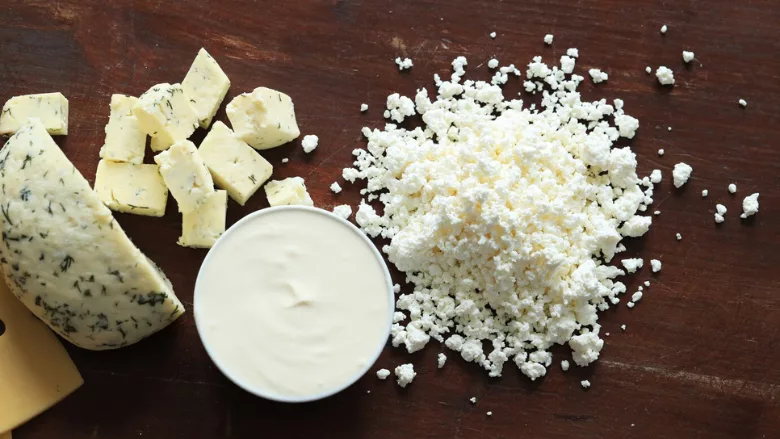
dairy curds, cheeses, and cream

Image credit: azerbaijan-stockers via Freepik

March 26, 2025

A recent study of Pseudomonas spoilage microorganisms isolated from dairy products in Spain identified the presence of highly biofilm-forming, antibiotic-resistant strains, presenting challenges for dairy industry control strategies. The researchers caution that these traits, which are especially pronounced in the P. fluorescens subgroup, could facilitate the transfer of antimicrobial resistance (AMR) genes to pathogenic foodborne bacteria.

Published in Foods, the project was carried out by Department of Food Technology researchers from the Spanish National Research Council’s Institute of Agricultural and Food Research and Technology (CSIC’s INIA). The researchers isolated, identified, and cultured 106 Pseudomonas strains from Spanish cheese whey, raw and pasteurized milk, and spoiled creams and cheeses. Of the 20 identified species, P. fluorescens (19 percent), P. fragi (16 percent), and P. lundensis (12 percent) were the most prevalent; the species were further classified into strains.

The biofilm-forming ability of the Pseudomonas strains was tested at 6 °C and 25 °C, representing refrigeration and ambient temperatures, respectively. Biofilm production was strongly influenced by temperature, with higher formation observed under refrigeration. After 48 hours of incubation, 72 percent and 65 percent of strains formed biofilms at 6 °C and 25 °C, respectively. At 6 °C, 80 percent of the biofilm-forming strains were classified as high producers, and at 25 °C, 39 percent of the biofilm formers were classified as high producers.

Strains of P. shahriarae, P. atacamensis, P. salmasensis, and P. canadensis were identified as high biofilm producers, alongside well-known dairy Pseudomonas such as P. fluorescens, P. koreensis, and P. lundensis. On the other hand, most P. fragi and P. putida strains exhibited low or no biofilm-forming ability. The researchers also tested the Pseudomonas for the adnA gene, and found that it played an important role in biofilm formation among certain species including P. fluorescens, P. shahriarae, P. salmasensis, and P. canadensis.

Antimicrobial susceptibility of the Pseudomonas strains to 14 antibiotics was also tested, following the European Committee on Antimicrobial Susceptibility Testing (EUCAST) guidelines. While most strains showed susceptibility or sensitivity to a range of antibiotics (i.e., aminoglycosides, 2- and 4-Quinolones, penicillins and beta-lactamase inhibitors, and cephalosporins), variable sensitivity was observed for the carbapenem meropenem, with 66 percent of strains fully susceptible and 13 percent of strains resistant. The majority of P. fragi (82 percent), P. lundensis (69 percent), P. weihenstephanensis (100 percent), and Pseudomonas spp. strains from the P. fragi subgroup (67 percent) were sensitive to all antibiotics.

However, 73 percent of Pseudomonas strains were resistant to the monobactam aztreonam. The researchers also found not-insignificant levels of resistance to carbapenems imipenem (28 percent of strains), doripenem (28 percent), and meropenem (13 percent), as well as cephalosporins ceftazidime (19 percent) and cefepime (7 percent). Additionally, several strains showed multidrug resistance (MDR); 78 percent of P. fluorescens and 100 percent of P. shahriarae were resistant to two or more antibiotic classes. 

A total of 15 strains were resistant to three or more drug classes, and three strains were resistant to four classes. Specifically, 85 percent of P. shahriarae, 21 percent of P. fluorescens, and 30 percent of Pseudomonas spp. strains from the P. fluorescens subgroup were identified as MDR.

Overall, the researchers underline that the presence of biofilm-forming, AMR Pseudomonas strains, especially within the P. fluorescens group, could pose significant challenges for dairy industry control strategies. These biofilm-forming and resistance traits could facilitate the transfer of AMR genes to pathogenic bacteria during processing or after dairy product consumption.

Looking for quick answers on food safety topics?
Try Ask FSM, our new smart AI search tool.
Ask FSM →


KEYWORDS: AMR Pseudomonas Spain spoilage study

Share This Story

Baileehendersonmay23

Bailee Henderson is the Digital Editor of Food Safety Magazine. She can be reached at hendersonb@bnpmedia.com.

Recommended Content

JOIN TODAY
to unlock your recommendations.

Already have an account? Sign In

  • people holding baby chicks

    Serovar Differences Matter: Utility of Deep Serotyping in Broiler Production and Processing

    This article discusses the significance of Salmonella in...
    Testing & Analysis
    By: Nikki Shariat Ph.D.
  • woman washing hands

    Building a Culture of Hygiene in the Food Processing Plant

    Everyone entering a food processing facility needs to...
    Training
    By: Richard F. Stier, M.S.
  • graphical representation of earth over dirt

    Climate Change and Emerging Risks to Food Safety: Building Climate Resilience

    This article examines the multifaceted threats to food...
    Contamination Control
    By: Maria Cristina Tirado Ph.D., D.V.M. and Shamini Albert Raj M.A.
Manage My Account
  • eMagazine Subscription
  • Subscribe to eNewsletter
  • Manage My Preferences
  • Website Registration
  • Subscription Customer Service

More Videos

Sponsored Content

Sponsored Content is a special paid section where industry companies provide high quality, objective, non-commercial content around topics of interest to the Food Safety Magazine audience. All Sponsored Content is supplied by the advertising company and any opinions expressed in this article are those of the author and not necessarily reflect the views of Food Safety Magazine or its parent company, BNP Media. Interested in participating in our Sponsored Content section? Contact your local rep!

close
  • Salmonella bacteria
    Sponsored byThermoFisher

    Food Microbiology Testing Methods: Salmonella species

  • a diagram explaining indicator organisms
    Sponsored byHygiena

    How Proactive Listeria Testing Helps Prevent Six- and Seven-Figure Recalls

  • woman grocery shopping
    Sponsored byCorbion

    Designing Safety Into Every Bite: Proactive Risk Mitigation for Refrigerated Foods

Popular Stories

NRTE breaded stuffed chicken

USDA Indefinitely Delays Enforcement of Salmonella as Adulterant in Raw Breaded, Stuffed Chicken

digital map of europe

EU Publishes Food Fraud Tool Mapping Thousands of Cases Since 2016

non-conforming product

How to Handle Non-Conforming Product

Events

December 11, 2025

How to Develop and Implement an Effective Food Defense Strategy

Live: December 11, 2025 at 2:00 pm EDT: From this webinar, attendees will learn common areas where companies encounter challenges in their food defense strategies and how to address them.

May 11, 2026

The Food Safety Summit

Stay informed on the latest food safety trends, innovations, emerging challenges, and expert analysis. Leave the Summit with actionable insights ready to drive measurable improvements in your organization. Do not miss this opportunity to learn from experts about contamination control, food safety culture, regulations, sanitation, supply chain traceability, and so much more.

View All

Products

Global Food Safety Microbial Interventions and Molecular Advancements

Global Food Safety Microbial Interventions and Molecular Advancements

See More Products

Related Articles

  • scientist looking at petri dish with cultured biofilm

    Study Highlights Importance of Addressing Biofilm-Forming Pathogens to Control Listeria in Food Processing Facilities

    See More
  • researcher dropping liquid in petri dishes

    First-of-its-Kind Study Shows How Listeria Strains Evolve Into Strong Biofilm Formers

    See More
  • Biofilm

    Biofilm: A Contemporary Challenge to Food Safety

    See More

Related Products

See More Products
  • 9781498721776.jpg

    Handbook of Food Processing: Food Safety, Quality, and Manufacturing Processes

  • food safety.jpg

    Food Safety Contaminants and Risk Assessment

  • Food-Forensics-3D.jpg

    Food Forensics Handbook Practice, Instrumentation, Case Studies

See More Products

Events

View AllSubmit An Event
  • June 26, 2025

    How to Design and Conduct Challenge Studies for Safer Products and Longer Shelf Life

    On Demand: During this webinar, attendees will learn how to conduct challenge studies for microbial spoilage and pathogen growth, including the common challenges encountered, laboratory selection, and use of predictive models.
View AllSubmit An Event

Related Directories

  • SoftTrace Ltd.

    SoftTrace has being providing innovative Software solutions to the Dairy industry for over twenty two years. Our experienced team fully understand the many challenges facing today’s dairy industry. Since the beginning, our customers are at the centre of what we do, SoftTrace takes pride in having developed and maintained strong customer relationships building up a strong Dairy manufacturing client base. Our software solutions form a key component for dairy manufacturing in Ireland, the U.K, Europe and North America.
×

Never miss the latest news and trends driving the food safety industry

eNewsletter | Website | eMagazine

JOIN TODAY!
  • RESOURCES
    • Advertise
    • Contact Us
    • Directories
    • Store
    • Want More
  • SIGN UP TODAY
    • Create Account
    • eMagazine
    • eNewsletter
    • Customer Service
    • Manage Preferences
  • SERVICES
    • Marketing Services
    • Reprints
    • Market Research
    • List Rental
    • Survey/Respondent Access
  • STAY CONNECTED
    • LinkedIn
    • Facebook
    • Instagram
    • X (Twitter)
  • PRIVACY
    • PRIVACY POLICY
    • TERMS & CONDITIONS
    • DO NOT SELL MY PERSONAL INFORMATION
    • PRIVACY REQUEST
    • ACCESSIBILITY

Copyright ©2025. All Rights Reserved BNP Media.

Design, CMS, Hosting & Web Development :: ePublishing