The agency has also reopened a previously closed Salmonella outbreak investigation linked to powdered moringa supplements, with 22 new reported illnesses in four additional states.
The agency has released a discussion paper offering context and questions about the lot-level tracking requirements of the Food Traceability Rule to help shape engagements with industry, including a virtual public meeting in June.
The updated compliance program for pesticide residues includes a new focus on risk-based sampling of foods commonly consumed by young children and reflects procedural changes to the laboratory testing and analysis methods.
Highlighting contaminated seafood as a particular concern, the Destruction of Hazardous Imports Act answers FDA’s request for the authority to destroy food imports that do not pass safety inspections at the border, preventing importers from “port shopping” their unsafe products.
FDA published a literature review on the eight phthalates currently approved for food contact uses to determine whether they should be considered chemically and/or pharmacologically related for the purpose of cumulative risk assessment.
The guidance was developed to help manufacturers and laboratories in the design, conduct, evaluation, and reporting of Protein Efficiency Ratio (PER) studies.
The Food Traceability Rule training, offered through the Food Safety Preventive Controls Alliance (FSPCA), provides industry participants with foundational knowledge needed to understand and comply with FSMA 204 requirements.
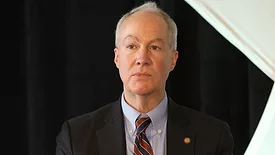
Dr. Prater is taking over the position as the previous Deputy Commissioner for Human Foods, Kyle Diamantas, is elevated to the FDA Commissioner role, replacing Dr. Marty Makary.
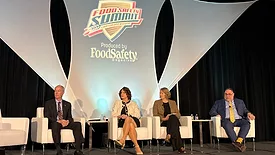
On Thursday morning, officials from FDA, USDA-FSIS, CDC, and AFDO took the stage at the 2026 Food Safety Summit Town Hall to talk about the current developments and priorities at their respective agencies.
 RSS
RSS