Food Safety
search
Ask Food Safety AI
cart
facebook twitter linkedin instagram youtube
  • Sign In
  • Create Account
  • Sign Out
  • My Account
Food Safety
  • NEWS
    • Latest News
    • White Papers
  • PRODUCTS
  • TOPICS
    • Contamination Control
    • Food Types
    • Management
    • Process Control
    • Regulatory
    • Sanitation
    • Supply Chain
    • Testing and Analysis
  • PODCAST
  • EXCLUSIVES
    • Food Safety Five Newsreel
    • eBooks
    • FSM Distinguished Service Award
    • Interactive Product Spotlights
    • Videos
  • BUYER'S GUIDE
  • MORE
    • NEWSLETTERS >
      • Archive Issues
      • Subscribe to eNews
    • Store
    • Sponsor Insights
    • ASK FSM AI
  • WEBINARS
  • FOOD SAFETY SUMMIT
  • EMAG
    • eMagazine
    • Archive Issues
    • Editorial Advisory Board
    • Contact
    • Advertise
  • SIGN UP!
NewsRegulatoryFDAInspection

Analysis Shows FDA Foreign Facility Inspections Hit Historic Low After Trump Admin Cuts

By Bailee Henderson
inspector in a facility
Image credit: Freepik
November 6, 2025

Foreign food safety inspections conducted by the U.S. Food and Drug Administration (FDA) have hit a historic low due to Trump Administration budget and staff cuts, according to an investigative report by ProPublica.

Through analysis of FDA’s publicly available Inspections Dashboard, ProPublica determined that, in March 2025, the number of foreign food inspections conducted by the agency dropped by nearly half compared to the monthly average—110 foreign food inspections per month—seen in the previous two years. By the end of July 2025, the number of foreign food inspections conducted by the agency was nearly 30 percent lower compared to similar periods in the previous two years.

In May 2025, FDA announced its intent to expand the use of unannounced inspections at foreign manufacturing facilities that produce regulated goods; a goal which the agency has failed to meet, at least with respect to foods, and which ProPublica’s anonymous FDA sources called “comical,” given the severe cuts to FDA’s resources.

Historically, even prior to the Trump Administration, FDA has struggled to meet its inspection targets—both foreign and domestic—set by Congress under the Food Safety Modernization Act (FSMA) in 2011. A 2025 report from the U.S. Government Accountability Office (GAO) uncovered that FDA has never met its FSMA-mandated foreign facility inspection goals. In 2019, the year in which FDA conducted the greatest number of foreign inspections, FDA only completed 9 percent (1,727) of the 19,200 target.

Since the inauguration of President Trump, however, the already under-resourced FDA has experienced:

  • An initial round of mass layoffs in February, including 89 “indiscriminate” firings of experts within the Human Foods Program, resulting in the resignation of the Deputy Commissioner for Human Foods, Jim Jones.
  • An FDA spending freeze revealed in March, requiring staffers to “get every travel or purchase expense preapproved through an opaque, multistep process,” and resulting in a time lag that specifically impacted the inspection force. The significance of this issue was reaffirmed by staffers who spoke to ProPublica, revealing that investigators (who are responsible for paying off their own credit cards used for agency expenses) waited as a backlog of unfulfilled reimbursements climbed to more than $1 million.  
  • Another round of mass layoffs at HHS in March–April, including 3,500 and 2,400 staffers employed at FDA and the U.S. Centers for Disease Control and Prevention (CDC), respectively. Although HHS claimed that this round of layoffs would not affect inspectors, sources began to reveal this was not actually the case.
  • The eventual voluntary resignation of many FDA inspectors who could afford to leave, per insiders who spoke to ProPublica. The inspectorate workforce was significantly affected by the culling of agency support staff; after FDA lost 65 percent of those responsible for travel and budgets, inspectors found themselves burdened by having to book their own travel and accommodations, obtain diplomatic passports and visas, and coordinate with foreign authorities—resulting in frustration and inefficiency.
  • Significant budget cuts that may have decreased FDA’s funding from $7.2 billion in Fiscal Year (FY) 2025 to as little as $6.5 billion in FY 2026—a reduction that was suggested to be made possible by moving total responsibility for domestic food facility inspections to states (despite states also facing reduced funding that they received from FDA and relied on to conduct regular activities). Congressional actions seeking to address FDA budget disparities suggest these cuts were made official for FY 2026.

Experts agree that the stark decrease in foreign food facility inspections leave American consumers at an increased risk of foodborne illness.

Neither FDA nor the U.S. Department of Health and Human Services (HHS) responded to ProPublica’s request for comment or data.

Looking for quick answers on food safety topics?
Try Ask FSM, our new smart AI search tool.
Ask FSM →


KEYWORDS: budgets HHS President Trump and food safety industry

Share This Story

Baileehendersonmay23

Bailee Henderson is the Digital Editor of Food Safety Magazine, where she covers industry-relevant current events, regulatory affairs, and scientific developments. She also produces the Food Safety Five Newsreel. Notably, Bailee's coverage for Food Safety Magazine has been featured in national televised news segments including CBS Sunday Morning and MSNBC's Rachel Maddow Show. She can be reached at hendersonb@bnpmedia.com.

Recommended Content

JOIN TODAY
to unlock your recommendations.

Already have an account? Sign In

  • people holding baby chicks

    Serovar Differences Matter: Utility of Deep Serotyping in Broiler Production and Processing

    This article discusses the significance of Salmonella in...
    Testing & Analysis
    By: Nikki Shariat Ph.D.
  • woman washing hands

    Building a Culture of Hygiene in the Food Processing Plant

    Everyone entering a food processing facility needs to...
    Training
    By: Richard F. Stier, M.S.
  • graphical representation of earth over dirt

    Climate Change and Emerging Risks to Food Safety: Building Climate Resilience

    This article examines the multifaceted threats to food...
    Best Practices
    By: Maria Cristina Tirado Ph.D., D.V.M. and Shamini Albert Raj M.A.
Manage My Account
  • eMagazine Subscription
  • Subscribe to Newsletters
  • Manage My Preferences
  • Website Registration
  • Subscription Customer Service

More Videos

Sponsored Content

Sponsored Content is a special paid section where industry companies provide high quality, objective, non-commercial content around topics of interest to the Food Safety Magazine audience. All Sponsored Content is supplied by the advertising company and any opinions expressed in this article are those of the author and not necessarily reflect the views of Food Safety Magazine or its parent company, BNP Media. Interested in participating in our Sponsored Content section? Contact your local rep!

close
  • Salmonella bacteria
    Sponsored byThermoFisher

    Food Microbiology Testing Methods: Salmonella species

  • a diagram explaining indicator organisms
    Sponsored byHygiena

    How Proactive Listeria Testing Helps Prevent Six- and Seven-Figure Recalls

  • woman grocery shopping
    Sponsored byCorbion

    Designing Safety Into Every Bite: Proactive Risk Mitigation for Refrigerated Foods

Popular Stories

Rosabella moringa capsules

Salmonella Outbreak Linked to Dietary Supplement Involves Extensively Drug-Resistant Strain

resignation letter

FDA, USDA, CDC Continue to Lose Staffers in Fiscal Year 2026

FSM podcast

Ep. 211. Kathy Sanzo: The Implications of FDA’s Synthetic Food Dye Phase-Out

Events

February 25, 2026

How to Manage Food Safety and Regulatory Risks in Your Supply Chain

Live: February 25, 2026 at 2:00 pm EST: From this webinar, attendees will learn how large food manufacturing organizations can successfully manage their supply chain, food safety, and regulatory risks.

March 3, 2026

FDA/USDA Regulatory Updates: Food Safety Work Plans for 2026

Live: March 3, 2026 at 2:00 pm EST: In this high-level, exclusive webinar, FDA Deputy Commissioner for Human Foods Kyle Diamantas and USDA Under Secretary for Food Safety Mindy Brashears, Ph.D. will share their agencies' regulatory priorities and work plans for 2026 and beyond.

May 11, 2026

The Food Safety Summit

Stay informed on the latest food safety trends, innovations, emerging challenges, and expert analysis. Leave the Summit with actionable insights ready to drive measurable improvements in your organization. Do not miss this opportunity to learn from experts about contamination control, food safety culture, regulations, sanitation, supply chain traceability, and so much more.

View All

Products

Global Food Safety Microbial Interventions and Molecular Advancements

Global Food Safety Microbial Interventions and Molecular Advancements

See More Products

Related Articles

  • official looking man in suit checking tablet in foodservice establishment

    Food Safety Spending Cuts Associated with Fewer Hygiene Interventions by England Authorities, Study Shows

    See More
  • platter of sliced RTE meats

    USDA Announces Immediate Changes to Listeria Rule, Inspections for RTE Food Facilities

    See More
  • resignation letter

    FDA, USDA, CDC Continue to Lose Staffers in Fiscal Year 2026

    See More

Related Products

See More Products
  • 1118396308.jpg

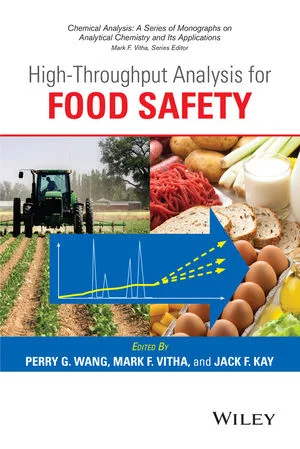
    High Throughput Analysis for Food Safety

  • Food-Forensics-3D.jpg

    Food Forensics Handbook Practice, Instrumentation, Case Studies

  • 1119160553.jpg

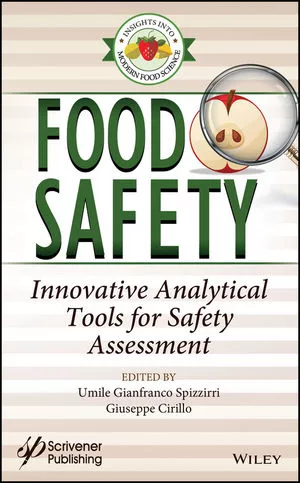
    Food Safety: Innovative Analytical Tools for Safety Assessment

See More Products

Events

View AllSubmit An Event
  • August 12, 2025

    Systematic Approach to Hazard Analysis: Considering Product- and Process-Specific Risks

    On Demand: From this webinar, attendees will learn where and why hazard analysis can fail, especially for high-risk products like leafy greens and meat/poultry.
View AllSubmit An Event

Related Directories

  • Eagle Product Inspection

    Eagle Product Inspection is a leading manufacturer of hygienically designed x-ray equipment & inline fat analysis systems. Eagle specializes in complex x-ray inspection solutions using dual energy photon-counting technology for bone detection and inline fat analysis for a wide variety of industries, including meat, poultry and seafood.
  • METTLER TOLEDO Product Inspection

    METTLER TOLEDO provides inspection solutions that boost profits, protect your brand, and help you comply with food safety regulations. Our full range of metal detectors, checkweighers, x-ray and vision inspection systems eliminate metal and foreign material in liquid or packaged products, verify weights, and ensure accuracy and integrity of packaging and labels.
×

Never miss the latest news and trends driving the food safety industry

Newsletters | Website | eMagazine

JOIN TODAY!
  • RESOURCES
    • Advertise
    • Contact Us
    • Directories
    • Store
    • Want More
  • SIGN UP TODAY
    • Create Account
    • eMagazine
    • Newsletters
    • Customer Service
    • Manage Preferences
  • SERVICES
    • Marketing Services
    • Reprints
    • Market Research
    • List Rental
    • Survey/Respondent Access
  • STAY CONNECTED
    • LinkedIn
    • Facebook
    • Instagram
    • X (Twitter)
  • PRIVACY
    • PRIVACY POLICY
    • TERMS & CONDITIONS
    • DO NOT SELL MY PERSONAL INFORMATION
    • PRIVACY REQUEST
    • ACCESSIBILITY

Copyright ©2026. All Rights Reserved BNP Media.

Design, CMS, Hosting & Web Development :: ePublishing