Based on a nationwide study of retail food store delis, FDA identified employee handwashing and proper cold and hot holding temperatures as areas requiring greater control, and identified Food Safety Management Systems (FSMS) as the strongest predictor food safety compliance.
CDC has declared the unprecedented Cyclospora outbreak linked to Taylor Farms iceberg lettuce over. FDA continues its root cause investigation of the current outbreak as well as investigations into other U.S. cyclosporiasis outbreak clusters.
Considering the unprecedented ByHeart and Nara Organics infant botulism outbreak and with a focus on dairy ingredients, participants emphasized the need for prevalence research, more sensitive and standardized testing, data-sharing, validated preventive controls, and coordinated industry action.
The researchers analyzed cost and sequencing-volume data from 23 FDA and FDA partner GenomeTrakr laboratories. Findings suggested that WGS-based genomic surveillance is a cost-effective public health investment.
The Taylor Farms iceberg lettuce recall has been given Class I status. The details of the recall and FDA’s public health advice remain unchanged. Experts explain why recall classifications “should not be a media-worthy event” and how such headlines can cause confusion among consumers.
The broad preemption provision in the proposed FDA FRESH Act could dismantle state and local food safety laws without establishing equivalent federal requirements, potentially affecting labeling, contaminant regulations, foodservice/retail, manufacturing, permitting, inspections, and other areas.
The event will explore whether organizational investment in food safety culture has made a tangible impact on outcomes. FDA has also posted video recordings of past Food Safety Culture webinars and whitepapers summarizing each webinar.
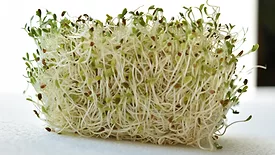
Outbreak strains include STEC serotypes O26:H11, O103:H25, and O168:H8 and one strain of Salmonella Agona. Some people were infected with more than one outbreak strain. The implicated products were distributed by Everything Sprouts LLC of Minneapolis, Minnesota.
Participants argued that reductions in listeriosis will require implementation of fundamental preventive controls, true “seek and destroy” efforts, and risk-based approaches. Dose-response models suggesting that low contamination may confer low risk were also discussed.
FDA recently proposed the most significant changes to its GRAS framework since 1958. For companies managing ingredient compliance, the proposed mandatory filing obligations raise questions about statutory authority, agency capacity, and whether its design matches its stated objectives.
 RSS
RSS