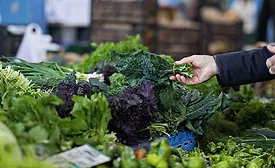

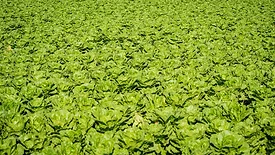
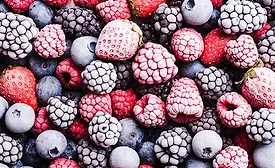
A recent report from the FAO/WHO Joint Expert Meeting on Microbiological Risk Assessment (JEMRA) summarizes the development of formal risk assessment models for Listeria monocytogenes in leafy greens, cantaloupe, frozen vegetables, and ready-to-eat (RTE) seafood.
An analysis of globally sourced table grapes conducted by the Chemical and Veterinary Analytical Institute of Stuttgart, Germany (CVUA Stuttgart) found notable levels of pesticides, which were significantly higher in grapes imported from outside the EU. Grapes from Türkiye were especially problematic.
Uncovered through a FOIA request, an FDA Form 483 sent to Taylor Farms’ Colorado Springs facility documented questionable food safety and hygiene observations. The release of the FOIA-requested form comes from increased scrutiny following the facility's implication as the supplier of McDonald’s onions that caused an E. coli outbreak in late 2024.
To meet the need for sustainable alternatives for food packaging, researchers from Chungnam National University have developed an edible, natural coating that extends the shelf life of fruits.
A new study led by USDA-ARS and Oklahoma State University showed that oregano and cinnamon essential oils can be reused multiple times to effectively wash organic leafy greens contaminated with E. coli without losing antimicrobial activity.
FDA has declared the outbreak of Escherichia coli infections linked to Grimmway Farms carrots to be over. Although the outbreak strain of E. coli did not match the Shiga toxin-producing E. coli strain found in environmental samples, traceback evidence implicates the recalled carrots as the vehicle of illness.
A research project funded by the Center for Produce Safety (CPS) is exploring the microbial risks of unconventional surfaces in small and midsized produce packinghouses with the goal of determining sanitation best practices.
Development of a new microbiological risk assessment model, led by researchers from the University of Illinois Urbana-Champaign, could help the produce industry determine the best risk management strategies for a diverse range of production scenarios.
Recently concluded research funded by the Center for Produce Safety provides practical, immediately actionable insights that industry can integrate into their operations, ranging from sanitation best practices, to Salmonella and E. coli mitigation, to wild bird management, and more.