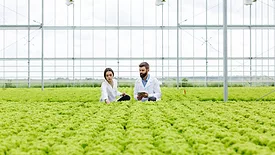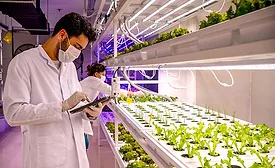
This article looks at food safety in hydroponic agriculture, including interventions used in hydroponic crop production to control pathogenic contamination.
The Environmental Working Group’s 2026 Shopper’s Guide to Pesticides in Produce highlights PFAS pesticides for the first time. Although EWG recently updated its methodology, scientists argue it still does not consider key exposure science and risk assessment principles, therefore misleading consumers about the health risks of conventionally grown produce.
No U.S. Salmonella outbreaks linked to Mexican papayas have been identified since 2020 thanks to collaborative efforts between regulators and industry in both countries. The case study could serve as a framework for improving food safety in other commodities and global supply chains.
The Achyut Adhikari Research Group is conducting several projects focused on preventive, FSMA-aligned strategies to reduce microbiological risks during pre-harvest and processing of produce, including hydroponic production, manure fertilizer treatment, food-contact surface sanitation, and antimicrobial packaging development.
This article examines the frequent contamination of fresh produce (e.g., cucumber and sprouts due to recent outbreaks linked to these foods) with Salmonella and Shiga toxin-producing Escherichia coli.
Providing evidence for potential Produce Safety Rule standards, the assessment examined how pathogens survive in untreated biological soil amendments of animal origin (BSAAO) and contaminate produce. FDA found that longer time between BSAAO application and harvest significantly reduces crop contamination.
Despite having Listeria-positive samples that matched the outbreak strain via whole genome sequencing (WGS), which prompted an FDA Import Alert and a company recall for the suspected vehicle of illness, FDA did not disclose the specific product or any of the firms implicated.
The California Longitudinal Study, a five-year environmental study of California’s Central Coast produce-growing region, identified wildlife, livestock, and surface water as potential contributors to the persistence and movement of Shiga toxin-producing Escherichia coli (STEC).
The educational series comprises four distinct food safety events taking place across the U.S. to help address the nut industry’s diverse challenges through networking, professional development, and knowledge-sharing.
The researchers conducted environmental sampling throughout a controlled environment agriculture (CEA) operation and tested swabs for L. monocytogenes. Boot covers proved to be a useful tool for evaluating the effectiveness of cleaning and sanitation.