Sustainable Fertilizer Practice Causes Increased Cadmium in Rice, Study Shows
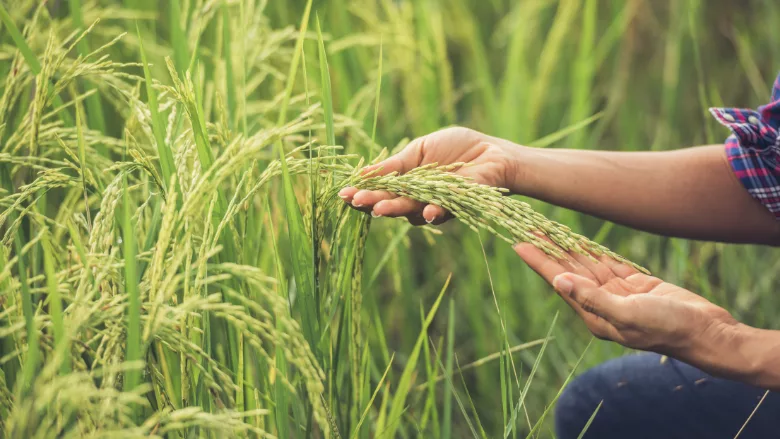
A new study led by Wageningen University and Research has found that large-scale recycled manure use can lead to the accumulation of cadmium in soil, which is then taken up by rice crops, affecting food safety.
The findings were published in Nature Food. Researchers from China Agricultural University joined as collaborators on the project.
In many parts of the world, such as China, soil acidification is reducing agricultural yields. Circular agriculture approaches like manure recycling can help combat this trend, but they may also come with food safety risks. Therefore, the project was conducted to investigate the long-term effects of various nutrient management and limiting strategies to reduce soil acidification and cadmium uptake by crops.
Cadmium in Recycled Manure Leads to Food Safety Problems
Using coupled models of soil processes and metal transport, the researchers conducted simulations of nutrient management on soil acidification and cadmium dynamics in a typical Chinese paddy rice system over decades. The results showed that relying on amendments like manure or lime to enhance soil pH is insufficient to avoid long-term adverse impacts of cadmium accumulation.
Specifically, while enhanced manure recycling decreased soil acidification and almost completely reduced mineral phosphorus fertilizer use, it also accelerated soil cadmium accumulation through increased manure cadmium inputs and reduced cadmium leaching. Additionally, raising soil pH without lowering cadmium inputs reduced rice cadmium contents in the short to medium term, but continued soil cadmium accumulation offset these benefits in the long term.
The models showed that, under current cadmium deposition levels, only around 20 percent of manure can be safely recycled without exceeding cadmium safety thresholds, which is lower than the current manure recycling ratio of 30 percent. However, when cadmium deposition is minimized by controlling cadmium content in manure, the manure recycling ratio can increase up to 85 percent.
A Systems-Wide Approach to Sustainable Agriculture is Needed
Based on these findings, the researchers call for a holistic, systems-wide approach to sustainable agriculture that combines multiple targeted interventions, underlining the interconnectedness of policy decisions in agriculture, industry, and environmental protection. They stress that maintaining soil pH levels while simultaneously reducing cadmium deposition through stricter control of industrial emissions is required to avoid cadmium levels in rice that exceed quality criteria.
Looking for quick answers on food safety topics?
Try Ask FSM, our new smart AI search tool.
Ask FSM →
“This research shows that circularity cannot be considered in isolation from its wider environmental context,” said study author Professor Wim de Vries, Ph.D., Ir. “If we want to close nutrient cycles, we also need to ensure the quality of the material that is used to close those cycles.”
“What benefits the soil in the short term may pose risks to food safety in the long run,” added first author Donghao Xu, Ph.D. “This trade-off cannot be resolved by looking at agricultural practices alone.”