Refrigerator Cyberattack at Hundreds of Stores in France, Other Countries Results in Mass Food Losses
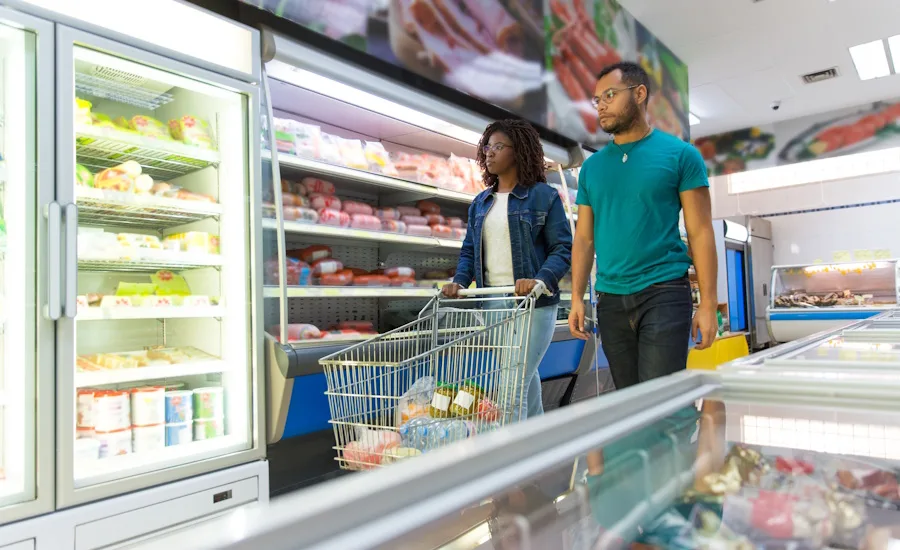
On October 12, hundreds of grocery stores in France were targeted by a cyberattack in which hackers overrided refrigerators and raised temperatures to as high as 50 °C (122 °F), leading to mass food spoilage and loss, as well as fires in some stores.
Per Reuters, France’s National Cybersecurity Agency (ANSSI) is currently investigating as no party has yet claimed responsibility for the attack.
Hackers were able to remotely trigger the forced defrosting systems in connected refrigeration systems across the many impacted stores.
Evidently, some retailers in Spain, Portugal, Poland, Germany, and Belgium were also affected.
Hackers May Have Exploited Danfoss Software Vulnerability
A source familiar with the investigation said ANSSI had identified a vulnerability in software running on equipment supplied by Danish company Danfoss. The company said the targeted refrigerators were running on outdated firmware, which it had advised its customers to update or replace.
ANSSI told TIME that stores in other countries may use the same software and be at risk. Internet scans found Danfoss refrigeration controllers exposed in South Africa, the U.S., the U.K., and other countries.
France had the largest concentration of exposed Danfoss controllers detected by scans (60 percent), according to firm UK Cyber Defense.
Looking for quick answers on food safety topics?
Try Ask FSM, our new smart AI search tool.
Ask FSM →
Losses Across Hundreds of French Stores Could Total Tens of Millions of Euros
Major retailers were targeted, including 300 locations of Intermarché and its Netto brand, more than 100 Cooperative U locations, more than 80 Carrefour locations, approximately 6 percent of Monoprix’s 490 locations, and several E Leclerc locations, according to Al Jazeera.
Official estimates of industrywide losses have not yet been made, but Intermarché CEO Thierry Cotillard suggested to BFM TV that the attack likely cost the affected retailers tens of millions of euros, having to throw away products that were subject to uncontrolled temperatures.
On LinkedIn, Cooperative U CEO Dominique Schelcher wrote, “Our refrigerators are connected to the internet to allow remote temperature monitoring, day and night, and rapid intervention in the event of an anomaly. This is an essential device for the proper preservation of food products.”
Mr. Schelcher added, “Attacking equipment that is essential to the preservation of fresh products is attacking the food supply chain of the French. This is unprecedented, extremely serious and unacceptable.”
Incident Highlights Cybersecurity as a Food Safety Issue
These cyberattacks highlight cybersecurity as an emerging and important food safety issue—a topic explored in ongoing Food Safety Magazine cybersecurity columns.
In an early entry from June 2022, authors Robert Norton, Ph.D., Auburn University Professor, and National Security Liaison, and N.C. Simmons, a National Security Specialist, wrote:
“Cyber is the backbone for food and agriculture defense. Adversaries have the means, opportunity, and motivation to break the cyber backbone at will. Just because they have not done so, does not mean they will not in the future. If or when adversaries carry out an attack of large magnitude, the result could be a massive compromise of food safety, food defense, and food security. To avoid that dark scenario, agriculture and food companies must properly prepare for a different kind of assault. The place to start is with their own cyber defense systems.”