Food Safety
search
Ask Food Safety AI
cart
facebook twitter linkedin instagram youtube
  • Sign In
  • Join Today
  • Sign Out
  • My Account
Food Safety
  • NEWS
    • Latest News
    • Food Safety Five Newsreel
  • PRODUCTS
  • TOPICS
    • Contamination Control
    • Food Types
    • Management
    • Process Control
    • Regulatory
    • Sanitation
    • Supply Chain
    • Testing and Analysis
  • PODCAST
  • EXCLUSIVES
    • eBooks
    • Sponsored Insights
    • Sponsored White Papers
    • FSM Distinguished Service Award
    • Interactive Product Spotlights
    • Videos
  • MORE
    • BUYER'S GUIDE
    • NEWSLETTERS >
      • Archive Issues
    • Store
    • ASK FSM AI
  • WEBINARS
  • FOOD SAFETY SUMMIT
  • FSM FEATURES
    • FSM Features Collection
    • eMag Archives
    • Op-Eds
    • Editorial Advisory Board
    • Contact
    • Advertise
  • JOIN
Contamination ControlRegulatoryTesting & AnalysisChemical ControlChemical Testing & AnalysisFDA

The Challenge of Addressing Hidden Chemical Food Risks
By Jennifer Hoponick Redmon M.S.E.S., M.P.A., CHMM, Jamie Pero Parker Ph.D., Imari Walker-Franklin Ph.D.
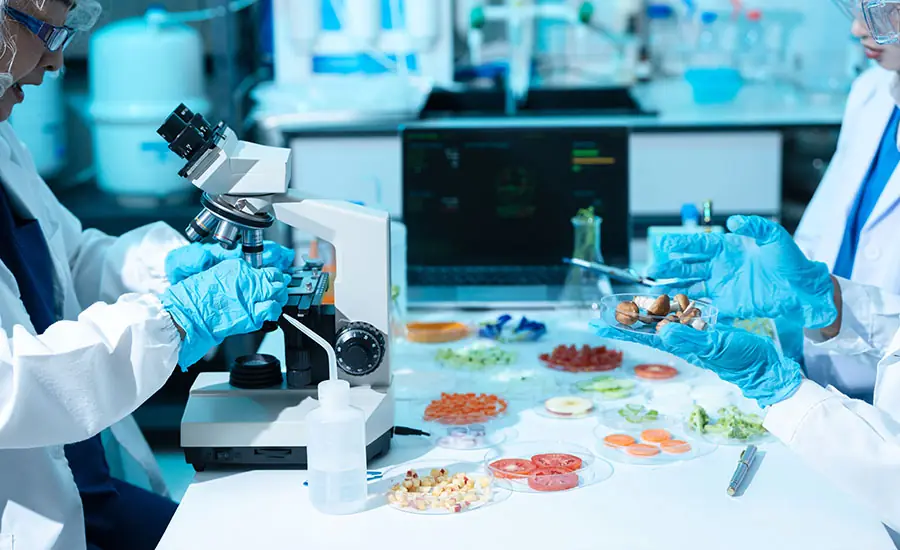
food safety scientists and microbiologists working in a laboratory to test food and microbiological samples
Image credit: Thicha Satapitanon/iStock/Getty Images Plus
November 17, 2026

Need to Know

  • Unlike microbial contamination, chemical contamination may not cause immediate illness, making it difficult to detect through traditional food safety surveillance
  • Cases involving PFAS in beer, lead in cinnamon applesauce, and heavy metals in foods for young children highlight different contamination pathways and testing challenges
  • Effective chemical testing plans should identify potential contamination sources, prioritize strategic sampling points, and establish response procedures before testing begins

When Salmonella or E. coli bacteria contaminate food, illnesses can alert health departments to a problem. Investigators may then trace those illnesses to a product, prompting a recall.

Chemical contamination in food may not give that kind of warning. A child who eats applesauce with elevated lead, or an adult who drinks beer containing per- and polyfluoroalkyl substances (PFAS), also known as "forever chemicals," may have no immediate symptoms. The potential health effects depend on the chemical, how much people consume, how often they consume it, and their susceptibility. Some effects may not become apparent until long after exposure. As these exposures can go unnoticed, they are easy to miss.

Food safety programs may be able to identify more of these problems if testing plans started with three questions:

  1. Where could a contaminant get into this product?
  2. Where in the supply chain is testing most likely to find it?
  3. What actions will be taken if the result comes back high?

Testing Is Selective by Design

Testing every batch or lot of food for every chemical would not be practical. Manufacturers use supplier qualification and sampling programs to check products and ingredients. Regulators decide where to inspect and sample based on risk, and they screen some imports. In the U.S., several agencies share oversight. The U.S. Food and Drug Administration's (FDA's) Total Diet Study measures contaminants in foods prepared as people would eat them, helping estimate dietary exposure rather than assessing individual brands.

This selective approach reflects limited resources. Still, contaminants can enter the supply chain through soil, irrigation water, feed, spices, processing water, equipment, or packaging. For newer contaminants, validated test methods, occurrence data, and regulatory limits may not yet be available.

Three examples illustrate different challenges in detecting and preventing chemical contamination: PFAS in beer, lead in cinnamon applesauce, and arsenic and lead in foods for young children.

PFAS in Beer

Beer is mostly water, making a brewery's water supply a potential source of contamination. A study1 of U.S. retail beers found PFAS in most samples. Levels were higher in beers brewed where local water was known to be contaminated.

The findings point to brewing water as an important place to investigate. Testing only the finished beverage may reveal contamination without identifying its source. Testing brewing water alongside the product could help identify contamination in the water supply earlier and inform decisions about treatment or sourcing.

Looking for quick answers on food safety topics?
Try Ask FSM, our new smart AI search tool.
Ask FSM →

Lead in Cinnamon Applesauce

The 2023–2024 applesauce pouch investigation2 began when blood-lead screening found elevated levels in young children. County environmental health staff investigated potential sources and learned through interviews that the children had eaten the same applesauce product.

Testing confirmed lead in the pouches. The investigation led to public advisories and recalls, and agencies traced the contamination to cinnamon used as an ingredient.

Ingredient specifications and supplier checks are intended to help identify problems before products reach consumers. In this case, screening children for lead exposure brought the contamination to light first.

Arsenic and Lead in Foods for Young Children

Rice absorbs inorganic arsenic from soil and irrigation water more readily than many other grains. Young children's exposure depends on both the concentration in a food and how much they eat relative to their body weight.

FDA has set an action level for inorganic arsenic in infant rice cereal.3 Through its Closer to Zero initiative, it has also set action levels for lead in processed foods for babies and young children.

For these foods, ingredient sourcing, testing, and product formulation can help reduce contaminant levels before final product testing begins. Unlike the applesauce investigation, this example concerns an ongoing sourcing and exposure challenge rather than a single contamination event.

Implications for Surveillance

The three examples reinforce the key questions that should guide a chemical testing plan: where contamination could enter a product, where testing could detect it, and what actions should be taken if detected levels exceed relevant response thresholds.

Identifying likely entry points helps determine where to sample. For beer, that could mean testing brewing water alongside the finished beverage. For cinnamon applesauce, it could mean testing cinnamon before it enters production. For infant rice cereal, it could mean testing rice ingredients before they are used. The aim is to choose sampling points where a finding can guide a decision, rather than relying only on final product testing.

The testing method also needs to fit the question. A non-detect result does not establish that every chemical of concern is absent. It should be interpreted in light of which compounds the method measures and how low of a concentration it can detect. There is also power in utilizing newer technologies such as non-targeted chemical analysis to screen for unknowns or unintentionally added substances to a product. This type of analysis will help an organization determine a suspect list for future testing and monitoring in a product. 

Before results arrive, companies should agree on what would trigger a response and who would be responsible. Depending on the finding, that could mean holding product, conducting additional testing, investigating a supplier, switching sources, or reformulating. Confirming an unexpected result and taking precautionary steps while it is investigated are separate decisions; a response plan should account for both.

Supply chain testing is only part of surveillance. The applesauce case shows how public health screening can uncover contamination that was not identified within the supply chain. Testing budgets will always be finite, but coordination among food companies, suppliers, regulators, researchers, and local health departments can help connect findings, investigate sources, and identify chemical risks sooner.

References

  1. RTI International. "PFAS and beer: RTI study reveals drinking water as primary source of contamination in brewing." April 30, 2025. https://www.rti.org/news/pfas-beer-water-contamination-study.
  2. U.S. Food and Drug Administration (FDA). "Investigation of Elevated Lead & Chromium Levels: Cinnamon Applesauce Pouches (November 2023)." Current as of October 3, 2024. https://www.fda.gov/food/outbreaks-foodborne-illness/investigation-elevated-lead-chromium-levels-cinnamon-applesauce-pouches-november-2023. 
  3. FDA. Guidance for Industry: Action Levels for Lead in Processed Food Intended for Babies and Young Children. January 2025. https://www.fda.gov/regulatory-information/search-fda-guidance-documents/guidance-industry-action-levels-lead-processed-food-intended-babies-and-young-children. 
KEYWORDS: Chemicals in food heavy metals PFAS

Share This Story

Jennifer Hoponick Redmon, M.S.E.S., M.P.A., CHMM, is Senior Director of Environmental Health and Water Quality at RTI International. She is an environmental health scientist specializing in drinking water quality, emerging contaminants, exposure science, risk assessment, and public health. Her work examines the pathways through which environmental contamination can contribute to food and beverage exposure.

Jamie Pero Parker, Ph.D., is a Senior Innovation Advisor and Sustainability Lead at RTI International. An analytical chemist and sustainability expert, she develops innovative approaches to complex challenges involving chemicals of concern, circular economy strategies, sustainable packaging, and product innovation. Her work spans commercial and advisory projects in the U.S. and internationally.

Imari Walker-Franklin, Ph.D., is a Research Natural Scientist at RTI International whose work focuses on PFAS, microplastics, and other emerging contaminants. She supports research on contaminant detection and characterization across environmental, food, beverage, and consumer product matrices and helps translate analytical findings into insights about occurrence, exposure, and potential risk.

Recommended Content

JOIN TODAY
to unlock your recommendations.

Already have an account? Sign In

  • people holding baby chicks

    Serovar Differences Matter: Utility of Deep Serotyping in Broiler Production and Processing

    This article discusses the significance of Salmonella in...
    Methods
    By: Nikki Shariat Ph.D.
  • woman washing hands

    Building a Culture of Hygiene in the Food Processing Plant

    Everyone entering a food processing facility needs to...
    Management
    By: Richard F. Stier, M.S.
  • graphical representation of earth over dirt

    Climate Change and Emerging Risks to Food Safety: Building Climate Resilience

    This article examines the multifaceted threats to food...
    International
    By: Maria Cristina Tirado Ph.D., D.V.M. and Shamini Albert Raj M.A.
Manage My Account
  • Join Food Safety Magazine
  • Manage My Preferences
  • Customer Service

More Videos

Sponsored Content

Sponsored Content is a special paid section where industry companies provide high quality, objective, non-commercial content around topics of interest to the Food Safety Magazine audience. All Sponsored Content is supplied by the advertising company and any opinions expressed in this article are those of the author and not necessarily reflect the views of Food Safety Magazine or its parent company, BNP Media. Interested in participating in our Sponsored Content section? Contact your local rep!

close
  • pre-packaged salads, noodles, and prepared meals stocked on multi-tier grocery store refrigerator shelves
    Sponsored byCorbion

    How Many Days of Shelf Life Are You Leaving on the Table?

  • Top view portrait of two factory workers standing by conveyor belt during quality inspection at food production, copy space
    Sponsored byFlexXray

    Foreign Material By the Numbers: What the 2026 Benchmark Report Reveals

  • a conveyorized industrial metal detector system that appears to resemble a Loma Systems IQ4 Metal Detector setup with an integrated conveyor belt and control panel for food or package inspection.
    Sponsored byMettler Toledo

    Beyond Detection: How to Avoid Physical Contamination in Food Through a Smarter Inspection Strategy

Popular Stories

AI and Advanced Analytics eBook

eBook | AI and Advanced Analytics for Smarter Food Safety Management

man in suit inspector looking at documents in restaurant kitchen

FDA Issues 2026 Voluntary National Retail Food Regulatory Program Standards

FoodSafetyMattersFinal-900x550-(002).jpg

Ep. 229. Rocco Renaldi: Rethinking the Ultra-Processed Foods Debate

AI and Advanced Analytics ebook

Events

November 17, 2026

Are You Getting the Most from Your Food Safety Testing?

Live: November 17, 2026 at 11:00 am EST: Attend this webinar to explore practical ways food processors can modernize sanitation verification and microbiological testing while keeping workflows simple and effective.

December 2, 2026

Beyond Surface Clean: Tackling Biofilms and Persistent Pathogens

Live: December 2, 2026 at 11:00 am EST: Attend this webinar to understand why chlorine dioxide is not chlorine, and what “ultra-pure” means for residues, byproducts, and effectiveness.

December 3, 2026

How to Use AI to Improve Workforce Training

Live: December 3, 2026 at 11:00 am EST: This webinar will cover best practices for reviewing, refining, and governing AI-generated training content for accuracy and consistency.

View All

Products

Global Food Safety Microbial Interventions and Molecular Advancements

Global Food Safety Microbial Interventions and Molecular Advancements

See More Products

Related Articles

  • The Challenge of Food Allergens: An Update

    See More
  • The Challenge of Regulating Allergens in Food

    See More
  • Food Safety and the Challenge of Globalization

    See More

Related Products

See More Products
  • 1119053595.jpg

    Food Safety for the 21st Century: Managing HACCP and Food Safety throughout the Global Supply Chain, 2E

  • 9781498721776.jpg

    Handbook of Food Processing: Food Safety, Quality, and Manufacturing Processes

  • 1119258073.jpg

    FSMA and Food Safety Systems: Understanding and Implementing the Rules

See More Products

Related Directories

  • The Acheson Group (TAG)

    A global leader in food safety consulting, The Acheson Group (TAG) helps companies assess their unique situation, address gaps, and deploy best practices to mitigate operational, reputational, and regulatory risk. With in-depth industry knowledge and real-world experience, TAG’s experts provide remote or onsite assistance to help businesses protect their brand.
  • Crimson Chemicals

    Crimson Chemicals was established in 2002. Based in Fort Worth, TX, we offer top solutions and services in food industries across the United States. Our continual commitment to serve our customer’s needs ensures we are on the forefront of innovation. We provide a wide range of products and services to the food industry across the United States. With agile and progressive delivery, we are able to exceed the needs of our customers, as well as stay one step ahead of the ever-changing US food industry.
×

Never miss the latest news and trends shaping the food safety industry

Newsletters | Website | FSM Features Collection

JOIN TODAY!
  • RESOURCES
    • Advertise
    • Contact Us
    • Directories
    • Store
  • JOIN TODAY
    • Create Account
    • FSM Features Collection
    • Newsletters
    • Customer Service
    • Manage Preferences
  • SERVICES
    • Marketing Services
    • Reprints
    • Market Research
    • List Rental
    • Survey/Respondent Access
  • STAY CONNECTED
    • LinkedIn
    • Facebook
    • Instagram
    • X (Twitter)
    • YouTube
  • PRIVACY
    • PRIVACY POLICY
    • TERMS & CONDITIONS
    • DO NOT SELL MY PERSONAL INFORMATION
    • PRIVACY REQUEST
    • ACCESSIBILITY

Copyright ©2026. All Rights Reserved BNP Media, Inc. and BNP Media II, LLC.

Design, CMS, Hosting & Web Development :: ePublishing