Food Safety
search
Ask Food Safety AI
cart
facebook twitter linkedin
  • Sign In
  • Create Account
  • Sign Out
  • My Account
Food Safety
  • NEWS
    • Latest News
    • White Papers
  • PRODUCTS
  • TOPICS
    • Contamination Control
    • Food Types
    • Management
    • Process Control
    • Regulatory
    • Sanitation
    • Supply Chain
    • Testing and Analysis
  • PODCAST
  • EXCLUSIVES
    • Food Safety Five Newsreel
    • eBooks
    • FSM Distinguished Service Award
    • Interactive Product Spotlights
    • Videos
  • BUYER'S GUIDE
  • MORE
    • ENEWSLETTER >
      • Archive Issues
      • Subscribe to eNews
    • Store
    • Sponsor Insights
    • ASK FSM AI
  • WEBINARS
  • FOOD SAFETY SUMMIT
  • EMAG
    • eMagazine
    • Archive Issues
    • Editorial Advisory Board
    • Contact
    • Advertise
  • SIGN UP!
NewsContamination ControlFood TypeMicrobiologicalProduce

Improving Antimicrobial Efficacy of Food-Grade Fruit Wax is Complex, Researchers Find
By Food Safety Magazine Editorial Team
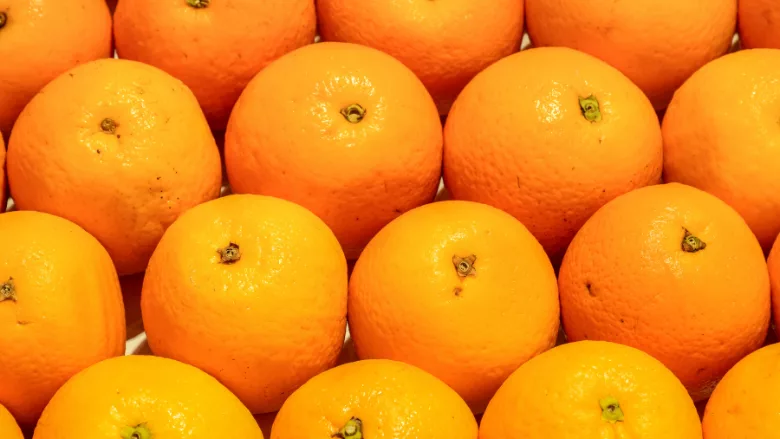
oranges
Image credit: ilovehz via Freepik
November 20, 2025

An ongoing project funded by the Center for Produce Safety (CPS) is investigating ways to increase the antimicrobial activity of food-grade waxes, which are commonly applied to fruit and vegetables to extend shelf life.

The research is led by Nitin Nitin, Ph.D. of the University of California–Davis and Meijun Zhu, Ph.D., of Washington State University.

According to Dr. Nitin, food-grade waxes currently used by industry provide minimal antimicrobial activity. To potentially improve the food safety benefits of food-grade waxes, Drs. Nitin and Zhu are testing the efficacy of various antimicrobial compounds and are also examining how typical hot air drying of the waxes (ranging from 40-55 °C) may enhance microbial inactivation.

So far, the researchers have found the food-grade waxes used by the produce industry to be complex, with a variety of formulations with different conditions like pH.

For their experiments, the researchers are using apples and oranges, and test strains Listeria innocua (a surrogate for Listeria monocytogenes) and Escherichia coli.

Initial tests involved the addition of inoculated olive pomace extract or propyl gallate to a wax suspension, which was then exposed to a mild 40 °C heat treatment. These conditions resulted in more than 4-log pathogen reductions after 10 minutes, with L. innocua more susceptible than E. coli.

Next, the researchers simulated a packinghouse scenario by inoculating orange skins with E. coli O157:H7 before applying different treatments to the fruit. These treatments included unaltered wax; wax with olive pomace extract or propyl gallate; wax and 55 °C heat; and a combination of wax, antimicrobial treatments of olive pomace extract or propyl gallate, and 55 °C heat. From this experiment, the researchers found that although the wax alone had minimal antimicrobial activity, the combination of wax, olive pomace extract or propyl gallate, and heat resulted in up to 3-log pathogen reductions. Additionally, the researchers observed that the combination treatment was not as effective near the calyx (flower end) as at the sides or stem area of the fruit.

Looking for quick answers on food safety topics?
Try Ask FSM, our new smart AI search tool.
Ask FSM →

When the same experiment was run using apples instead of oranges, the researchers saw a maximum 0.5- to 1-log pathogen reduction. Dr. Nitin theorized that this difference in efficacy could be caused by the specific wax formulations used by the apple industry. The researchers then applied olive pomace extract or propyl gallate without wax to inoculated apples, followed by hot air drying, and achieved up to 2.5-log reductions—confirming that the wax was interfering with the antimicrobial compounds.

Moving forward with the project, using apples, Dr. Zhu is studying a two-step treatment of antimicrobial compound application with hot air drying, followed by wax application. The fruit will be held in cold storage and sampled periodically to assess microflora populations and fruit quality.


KEYWORDS: antimicrobial Center for Produce Safety fruit study

Share This Story

Fsm purple logo 200x200

The Food Safety Magazine editorial team comprises Bailee Henderson, Digital Editor ✉; Adrienne Blume, M.A., Editorial Director; and Stacy Atchison, Publisher.

Recommended Content

JOIN TODAY
to unlock your recommendations.

Already have an account? Sign In

  • people holding baby chicks

    Serovar Differences Matter: Utility of Deep Serotyping in Broiler Production and Processing

    This article discusses the significance of Salmonella in...
    Meat/Poultry
    By: Nikki Shariat Ph.D.
  • woman washing hands

    Building a Culture of Hygiene in the Food Processing Plant

    Everyone entering a food processing facility needs to...
    Food Prep/Handling
    By: Richard F. Stier, M.S.
  • graphical representation of earth over dirt

    Climate Change and Emerging Risks to Food Safety: Building Climate Resilience

    This article examines the multifaceted threats to food...
    Risk Assessment
    By: Maria Cristina Tirado Ph.D., D.V.M. and Shamini Albert Raj M.A.
Manage My Account
  • eMagazine Subscription
  • Subscribe to eNewsletter
  • Manage My Preferences
  • Website Registration
  • Subscription Customer Service

More Videos

Sponsored Content

Sponsored Content is a special paid section where industry companies provide high quality, objective, non-commercial content around topics of interest to the Food Safety Magazine audience. All Sponsored Content is supplied by the advertising company and any opinions expressed in this article are those of the author and not necessarily reflect the views of Food Safety Magazine or its parent company, BNP Media. Interested in participating in our Sponsored Content section? Contact your local rep!

close
  • Salmonella bacteria
    Sponsored byThermoFisher

    Food Microbiology Testing Methods: Salmonella species

  • a diagram explaining indicator organisms
    Sponsored byHygiena

    How Proactive Listeria Testing Helps Prevent Six- and Seven-Figure Recalls

  • woman grocery shopping
    Sponsored byCorbion

    Designing Safety Into Every Bite: Proactive Risk Mitigation for Refrigerated Foods

Popular Stories

NRTE breaded stuffed chicken

USDA Indefinitely Delays Enforcement of Salmonella as Adulterant in Raw Breaded, Stuffed Chicken

spoonfuls of food ingredients

FDA’s Developing Rule to Tighten GRAS Oversight Moves to White House

non-conforming product

How to Handle Non-Conforming Product

Events

December 11, 2025

How to Develop and Implement an Effective Food Defense Strategy

Live: December 11, 2025 at 2:00 pm EDT: From this webinar, attendees will learn common areas where companies encounter challenges in their food defense strategies and how to address them.

May 11, 2026

The Food Safety Summit

Stay informed on the latest food safety trends, innovations, emerging challenges, and expert analysis. Leave the Summit with actionable insights ready to drive measurable improvements in your organization. Do not miss this opportunity to learn from experts about contamination control, food safety culture, regulations, sanitation, supply chain traceability, and so much more.

View All

Products

Global Food Safety Microbial Interventions and Molecular Advancements

Global Food Safety Microbial Interventions and Molecular Advancements

See More Products

Related Articles

  • chicken hanging out on some equipment

    Using WGS, MSU Researchers Find More Than Half of Campylobacter is Resistant to Antibiotics

    See More
  • blue LED light

    Study to Examine Antimicrobial Efficacy of Blue Light in Food Processing Facilities

    See More
  • hand holding a shiny apple at store

    Researchers Investigating how Wax Roller Brushes for Produce Affect Microbial Food Safety

    See More

Related Products

See More Products
  • 0813808774.jpg

    Improving Import Food Safety

  • 9781498721776.jpg

    Handbook of Food Processing: Food Safety, Quality, and Manufacturing Processes

  • 1444333348.jpg

    Handbook of Food Safety Engineering

See More Products

Related Directories

  • Saldesia "Goddess of Food Safety"

    Saldesia is a distributor of Food Safety products and solutions. We are focused on supplying the Quality, Production, Safety and Sanitation departments. Product lines include Color Coded, Metal Detectable, Antimicrobial Flooring & Mats, Workwear, Footwear, Spray Nozzles, and more!
  • Institute of Food Technologists

    Since 1939, the Institute of Food Technologists (IFT) has served as the voice of the global food science community. IFT advocates for science, technology, and research to address the world’s greatest food challenges, guiding our community of more than 200,000. IFT convenes professionals from around the world – from producers and product developers to innovators and researchers across food, nutrition, and public health – with a shared mission to help create a global food supply that is sustainable, safe, nutritious, and accessible to all. IFT provides its growing community spanning academia, industry, and government with the resources, connections, and opportunities necessary to stay ahead of a rapidly evolving food system as IFT helps feed the minds that feed the world. For more information, please visit ift.org.
×

Never miss the latest news and trends driving the food safety industry

eNewsletter | Website | eMagazine

JOIN TODAY!
  • RESOURCES
    • Advertise
    • Contact Us
    • Directories
    • Store
    • Want More
  • SIGN UP TODAY
    • Create Account
    • eMagazine
    • eNewsletter
    • Customer Service
    • Manage Preferences
  • SERVICES
    • Marketing Services
    • Reprints
    • Market Research
    • List Rental
    • Survey/Respondent Access
  • STAY CONNECTED
    • LinkedIn
    • Facebook
    • Instagram
    • X (Twitter)
  • PRIVACY
    • PRIVACY POLICY
    • TERMS & CONDITIONS
    • DO NOT SELL MY PERSONAL INFORMATION
    • PRIVACY REQUEST
    • ACCESSIBILITY

Copyright ©2025. All Rights Reserved BNP Media.

Design, CMS, Hosting & Web Development :: ePublishing