Food Safety
search
Ask Food Safety AI
cart
facebook twitter linkedin
  • Sign In
  • Create Account
  • Sign Out
  • My Account
Food Safety
  • NEWS
    • Latest News
    • White Papers
  • PRODUCTS
  • TOPICS
    • Contamination Control
    • Food Types
    • Management
    • Process Control
    • Regulatory
    • Sanitation
    • Supply Chain
    • Testing and Analysis
  • PODCAST
  • EXCLUSIVES
    • Food Safety Five Newsreel
    • eBooks
    • FSM Distinguished Service Award
    • Interactive Product Spotlights
    • Videos
  • BUYER'S GUIDE
  • MORE
    • ENEWSLETTER >
      • Archive Issues
      • Subscribe to eNews
    • Store
    • Sponsor Insights
    • ASK FSM AI
  • WEBINARS
  • FOOD SAFETY SUMMIT
  • EMAG
    • eMagazine
    • Archive Issues
    • Editorial Advisory Board
    • Contact
    • Advertise
  • SIGN UP!
NewsContamination ControlFood TypeMicrobiologicalProduce

Actionable Takeaways for Industry From the Center for Produce Safety 2025 Research Symposium

By Food Safety Magazine Editorial Team
researchers looking at CEA crops
Image credit: freepic.diller via Freepik
August 20, 2025

The Center for Produce Safety’s (CPS’) 2025 Symposium, held June 17–18 in San Diego, California, highlighted new research and emerging technologies aimed at strengthening produce safety across the supply chain. Like years prior, the 2025 event offered practical solutions for growers, packers, and food safety professionals.

An in-depth document outlining the 2025 CPS Symposium key learnings can be accessed here.

Immediately Actionable Insights for Industry

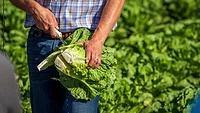
Irrigation water treatment. Research led by the University of Arizona demonstrated that consistent use of peracetic acid (PAA) and calcium hypochlorite in irrigation water for lettuce crops significantly reduced Escherichia coli risk from aerosol deposition, animal intrusion, and treatment failures. However, the risk of pathogens being introduced to crops by animal feces is better controlled by animal intrusion prevention than by irrigation water treatment with residual sanitizer.

Simplified field surveillance. A project from the University of Illinois at Urbana-Champaign validated bootie and drag swabs as effective alternatives to soil grabs for detecting aerobic plate counts, coliforms, and generic E. coli. Additionally, alternative methods to the traditional skim milk wetting agent performed well, and avoid allergens.

Effective sanitizer use in wash water. Peach packinghouse trials led by Washington State University assessed critical operating parameters for commercially used sanitizers against important foodborne pathogens. Researchers introduced Enterococcus faecium as a non-pathogenic surrogate for Listeria monocytogenes and Salmonella in peach wash systems. Trials showed sanitizer concentration was more critical than contact time, and they demonstrated significant reductions in pathogen load.

Reinforcing Best Practices

Listeria monocytogenes on pears in cold storage. Two studies by Virginia Tech and Washington State University research teams confirmed that L. monocytogenes levels on pears decline during cold storage, though not completely. Antimicrobial paper wrapping and packing line processing improved microbial safety and reduced spoilage.

Predictive factors for fecal contamination of crops grown near animal operations. A Purdue University project found that considering weather factors—especially rainfall—in combination with setback distance is more predictive (up to 77 percent accuracy) of fecal contamination of crops grown near animal operations than setback distance alone (12–54 percent accuracy). A new risk modeling tool using Bacteroidales indicators is now available for growers.

Looking for quick answers on food safety topics?
Try Ask FSM, our new smart AI search tool.
Ask FSM →

Controlled environment agriculture (CEA) microbial contamination risks. Researchers from the Segura Center for Soil Science and Applied Biology in the Spanish Higher Council for Scientific Research (CEBAS-CSIC) Espinardo Campus identified pathogen contamination routes in CEA systems, including irrigation water and harvest bins. Salmonella and L. monocytoegens were investigated. Findings showed that water sources can be a primary route of contamination, soil and growing substrate can harbor pathogens, and foot/cart traffic can spread contamination through a facility. Ineffective sanitation of harvest bins was an issue, underscoring the need for validated cleaning protocols.

Emerging Concepts to Watch

Emerging research presented at the 2025 CPS Symposium introduced several promising concepts for future produce safety innovation. For example:

  • Avocado seed extracts, rich in fatty alcohols, showed potential to reduce L. monocytogenes on avocado surfaces and extend shelf life
  • Advances in virus detection methods improved the ability to identify infectious human norovirus and hepatitis A virus on fresh berries, addressing a critical gap in current testing
  • A novel approach using fluorescence-activated cell sorting (FACS) and artificial intelligence (AI) demonstrated high accuracy in distinguishing live from dead Cyclospora surrogates, offering a potential breakthrough in parasite viability assessment
  • Antimicrobials incorporated into edible coatings for stone fruits showed modest reductions in Salmonella, with minimal operational changes required—though regulatory and cost barriers remain.

Special Update: User-Friendly Supply Chain Risk Modeling Tool

CPS provided an update on the progress of an ongoing three-year project. Addressing the need for modeling tools to be usable by industry, University of Illinois at Urbana-Champaign researchers introduced a free, user-friendly Supply Chain Risk Model (SCRM) platform, featuring robust guides, tutorials, a results viewer, and downloading options.

Simulations using the SCRM revealed that failures in wash process control posed the highest recall risk. Additionally, combining process controls with testing yielded the greatest safety improvements.

While the SCRM is not designed to reliably inform users of the absolute risk of a system, it is a helpful tool for comparing the effectiveness of different interventions. The model can be used to help determine where along the supply chain users will “get the best bang for their buck” in terms of risk reduction.


KEYWORDS: Center for Produce Safety study

Share This Story

Fsm purple logo 200x200

The Food Safety Magazine editorial team comprises Bailee Henderson, Digital Editor ✉; Adrienne Blume, M.A., Editorial Director; and Stacy Atchison, Publisher.

Recommended Content

JOIN TODAY
to unlock your recommendations.

Already have an account? Sign In

  • people holding baby chicks

    Serovar Differences Matter: Utility of Deep Serotyping in Broiler Production and Processing

    This article discusses the significance of Salmonella in...
    Microbiological
    By: Nikki Shariat Ph.D.
  • woman washing hands

    Building a Culture of Hygiene in the Food Processing Plant

    Everyone entering a food processing facility needs to...
    Sanitation
    By: Richard F. Stier, M.S.
  • graphical representation of earth over dirt

    Climate Change and Emerging Risks to Food Safety: Building Climate Resilience

    This article examines the multifaceted threats to food...
    Management
    By: Maria Cristina Tirado Ph.D., D.V.M. and Shamini Albert Raj M.A.
Manage My Account
  • eMagazine Subscription
  • Subscribe to eNewsletter
  • Manage My Preferences
  • Website Registration
  • Subscription Customer Service

More Videos

Sponsored Content

Sponsored Content is a special paid section where industry companies provide high quality, objective, non-commercial content around topics of interest to the Food Safety Magazine audience. All Sponsored Content is supplied by the advertising company and any opinions expressed in this article are those of the author and not necessarily reflect the views of Food Safety Magazine or its parent company, BNP Media. Interested in participating in our Sponsored Content section? Contact your local rep!

close
  • Salmonella bacteria
    Sponsored byThermoFisher

    Food Microbiology Testing Methods: Salmonella species

  • a diagram explaining indicator organisms
    Sponsored byHygiena

    How Proactive Listeria Testing Helps Prevent Six- and Seven-Figure Recalls

  • woman grocery shopping
    Sponsored byCorbion

    Designing Safety Into Every Bite: Proactive Risk Mitigation for Refrigerated Foods

Popular Stories

NRTE breaded stuffed chicken

USDA Indefinitely Delays Enforcement of Salmonella as Adulterant in Raw Breaded, Stuffed Chicken

digital map of europe

EU Publishes Food Fraud Tool Mapping Thousands of Cases Since 2016

non-conforming product

How to Handle Non-Conforming Product

Events

December 11, 2025

How to Develop and Implement an Effective Food Defense Strategy

Live: December 11, 2025 at 2:00 pm EDT: From this webinar, attendees will learn common areas where companies encounter challenges in their food defense strategies and how to address them.

May 11, 2026

The Food Safety Summit

Stay informed on the latest food safety trends, innovations, emerging challenges, and expert analysis. Leave the Summit with actionable insights ready to drive measurable improvements in your organization. Do not miss this opportunity to learn from experts about contamination control, food safety culture, regulations, sanitation, supply chain traceability, and so much more.

View All

Products

Global Food Safety Microbial Interventions and Molecular Advancements

Global Food Safety Microbial Interventions and Molecular Advancements

See More Products

Related Articles

  • assorted produce side by side close up

    Immediately Actionable Insights for Produce Safety from 2023 CPS Research Symposium

    See More
  • whole yellow onions and close up of lettuce head

    Immediately Actionable Research Results for the Produce Industry

    See More
  • array of fresh fruit and veg

    Center for Produce Safety Defines 2026 Research Priorities, Opens Call for Proposals

    See More

Related Products

See More Products
  • 1119053595.jpg

    Food Safety for the 21st Century: Managing HACCP and Food Safety throughout the Global Supply Chain, 2E

  • 1119160553.jpg

    Food Safety: Innovative Analytical Tools for Safety Assessment

  • 1118396308.jpg

    High Throughput Analysis for Food Safety

See More Products

Related Directories

  • Nestle Quality Assurance Center Dublin

    The Nestle Quality Assurance Center (NQAC) Dublin provides the analytical testing businesses need to ensure product safety for consumers. We have supported the food industry world-wide for over three decades and offer an expansive portfolio of over 200 methods to meet your food safety testing needs.
×

Never miss the latest news and trends driving the food safety industry

eNewsletter | Website | eMagazine

JOIN TODAY!
  • RESOURCES
    • Advertise
    • Contact Us
    • Directories
    • Store
    • Want More
  • SIGN UP TODAY
    • Create Account
    • eMagazine
    • eNewsletter
    • Customer Service
    • Manage Preferences
  • SERVICES
    • Marketing Services
    • Reprints
    • Market Research
    • List Rental
    • Survey/Respondent Access
  • STAY CONNECTED
    • LinkedIn
    • Facebook
    • Instagram
    • X (Twitter)
  • PRIVACY
    • PRIVACY POLICY
    • TERMS & CONDITIONS
    • DO NOT SELL MY PERSONAL INFORMATION
    • PRIVACY REQUEST
    • ACCESSIBILITY

Copyright ©2025. All Rights Reserved BNP Media.

Design, CMS, Hosting & Web Development :: ePublishing