Half of Romaine Lettuce E. Coli Outbreaks Caused by Overhead Irrigation Water, Study Finds
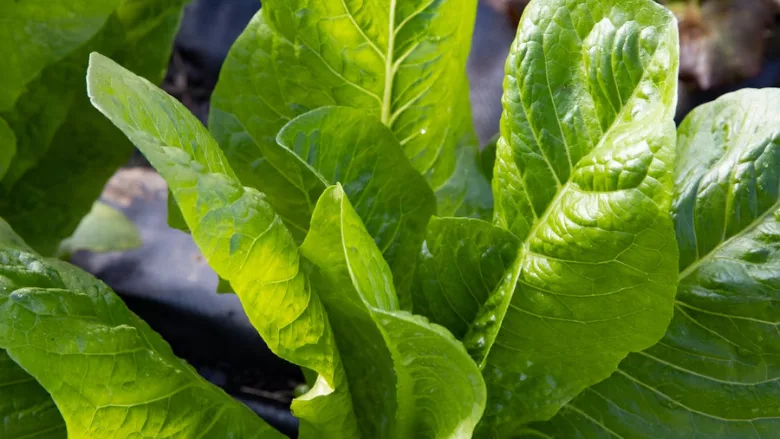
Image credit: Mark Stebnicki via Pexels
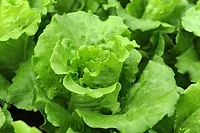
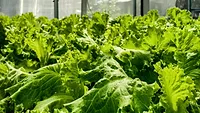
A new peer-reviewed study suggests that half of Escherichia coli O157:H7 illnesses contracted from romaine lettuce consumption are caused by untreated irrigation water applied to crops via overhead spray. The study offers actionable interventions that would be the most impactful in reducing the risk of E. coli contamination of leafy greens.
E. coli is a significant microbial risk to leafy greens safety, having caused seven outbreaks between 2015 and 2021 alone—six of which were multistate—resulting in 4,274 confirmed illnesses, 766 hospitalizations, and 11 deaths. The number of E. coli outbreaks linked to leafy greens in the U.S. has increased between 1996 and 2016, with E. coli O157:H7 emerging as the leading source.
To investigate points of pre- and postharvest E. coli O157:H7 contamination along the fresh-cut romaine lettuce production and consumption chain, the researchers developed a quantitative microbial risk assessment (QMRA) model that accounts for the pathogen’s exposure and spread throughout the farm-to-fork continuum. The model was adapted from several different QMRAs for leafy greens, and leverages a novel equation at the preharvest stage. The new QMRA—which can be accessed here—has been made publicly available as a decision support tool for managing risk factors of E. coli O157 contamination in the U.S.
The model simulated E. coli O157:H7 counts on fresh-cut romaine from farm to fork, providing insight into the influence of various pre- and postharvest factors on microbial food safety risk. Results showed that 52 percent of romaine lettuce E. coli O157:H7 outbreaks occur due to contaminated, untreated overhead irrigation water. This risk can be reduced by as much as 96 percent through water treatments or by switching to furrow or drip irrigation, which reduce the probability that water directly touches the lettuce leaves, say the researchers.
In postharvest stages, maintaining the romaine cold chain is crucial to preventing high numbers of illnesses during E. coli outbreaks.
However, the model showed that interventions like consumer washing, cattle vaccination, and temperature reduction at retail, were considerably less effective at reducing the number of illness cases.
The researchers acknowledged knowledge gaps in their model, including the microbial quality of irrigation waters, as well as the effectiveness of preharvest surface water treatments and postharvest wash processes. Still, the researchers believe their QMRA will be a useful tool in the development of sustainable food safety strategies along the supply chain.
The study was authored by Ece Bulut, Ph.D.; Sarah I. Murphy, Ph.D.; Renata Ivanek, D.V.M.; and Martin Wiedmann, Ph.D. of Cornell University; Laura K. Strawn, Ph.D. with Virginia Tech; and Michelle D. Danyluk, Ph.D. with the University of Florida. Their work was supported by a U.S. Department of Agriculture National Institute of Food and Agriculture (USDA-NIFA) grant. Read the full study in Scientific Reports.
Looking for quick answers on food safety topics?
Try Ask FSM, our new smart AI search tool.
Ask FSM →