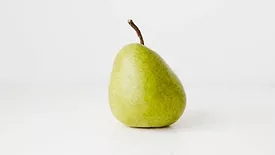
A recently completed study funded by the Center for Produce Safety (CPS) has provided new insights into Listeria monocytogenes growth, survival, and inactivation on pears during packing and in storage, and characterized microbial communities of yeasts, molds, and lactic acid bacteria.
Using a newly developed quantitative microbial risk assessment (QMRA) model, researchers have identified interventions along the U.S. romaine lettuce supply chain that would most effectively reduce E. coli contamination. The QMRA is publicly available for use.
Virginia Tech researchers in the College of Agriculture and Life Sciences are examining how fresh pears change during storage, and how such knowledge can be used to keep food safety risks low over time.