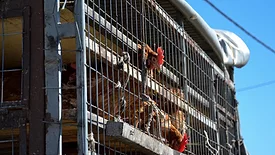
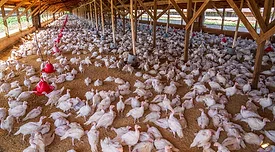
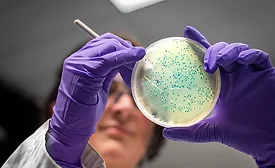
The Sensor4Food research project will develop five photonic sensing technologies intended to identify pathogenic contamination, animal disease, and meat quality issues at critical points in poultry production, possibly supporting a digital “poultry passport” to link information about poultry production, transport, welfare, and processing.
A review led by researchers at the University of Nebraska–Lincoln found that high-pressure processing (HPP) can reduce foodborne pathogens in raw chicken and described pressures and holding times that significantly influenced microbial inactivation.
The BioShield VXL High Flow is a 12-inch V-bank air filter designed to provide MERV 16 filtration efficiency while maintaining high airflow in poultry and swine facilities, developed to help reduce airborne pathogen transmission.
The newly announced Stand-Up funding program is the latest in a series of Trump Administration actions, including a Presidential Executive Order and the Ranchers First initiative, to expand regional processing capacity and cut “red tape” at the federal inspection level.
The researchers concluded that integrating multiple sampling matrices and detection methods could improve understanding of Campylobacter occurrence in commercial broiler production and support preharvest surveillance.
The amendments to European food hygiene regulations would provide food business operators with greater flexibility in the storage of fresh meat from domestic ungulates (i.e., cattle, sheep, pigs) before freezing, based on a recent EFSA scientific opinion.
USDA and University of Arkansas researchers concluded that the plant-derived antimicrobial compound could possibly offer a natural disinfection solution for controlling S. Infantis biofilms on plastic and stainless steel surfaces in poultry and food processing facilities.
The order, aimed at expanding market access for U.S. meat producers, focuses on growing existing state inspection programs and state–federal agreements. It also calls for “sharpening inspection to focus on core food safety” and removing “overly prescriptive” USDA-FSIS requirements.
In August 28 social media posts, President Trump and USDA Secretary Rollins alluded to plans to give ranchers and farmers the ability to process their own meats and other efforts to cut “red tape.” Industry groups said these actions would jeopardize food safety and consumer confidence.
A new web portal allows small and very small establishments regulated by USDA-FSIS to submit appeals outsideof the Public Health Information System, supporting efforts to improve service and reduce regulatory burden for small meat and poultry processors.
 RSS
RSS