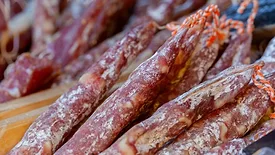
In response to a petition submitted by the Meat Institute (formerly NAMI), USDA-FSIS has deleted an “unnecessary and confusing” reference to Moisture Protein Ratio from the “Jerky” entry in the FSIS Food Standards and Labeling Policy Book.
A UK Government report calls attention to the increasing volume of illegally imported meat and dairy to Great Britain, which is often unsafe and unhygienic, posing foodborne illness and zoonotic disease risks. It recommends a coordinated approach to tackling illicit imports.
The turkey industry advocacy group has issued a request for research proposals that will help define microbiologically independent lots of raw ground turkey, informing best practices that enhance food safety and regulatory compliance.
Following years of line speed waiver extensions and worker safety trials under modernized swine/poultry slaughter inspection pilot programs, the American Protein Processing Act would lift line speed limits in pork and poultry processing facilities that meet food safety criteria set by USDA.
In response to a petition submitted by Cargill, FDA has amended existing regulations to provide for the use of hydrogen peroxide in food production, including meat and poultry, as an antimicrobial agent, oxidizing and reducing agent, and bleaching agent, and to remove sulfur dioxide.
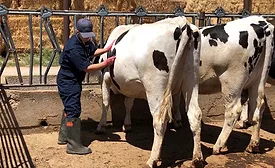
Penn State researchers have demonstrated the potential for Salmonella Dublin to spread among cattle, the environment, and people—necessitating a “One Health” response. Based on their analysis, rising antibiotic resistance is also a concern.
Boar’s Head is reopening its Jarratt, Virginia plant that produced the deli meats behind a fatal listeriosis outbreak in 2024; however, inspections of the facility are being taken over by UDSA-FSIS directly, instead of relying on a state cooperative agreement.
USDA-FSIS has proposed a rule that would remove mandatory mandibular lymph node incision and viscera palpation requirements in swine slaughter establishments.
A study from the University of Florida College of Veterinary Medicine suggests that commensal Escherichia coli strains could be utilized to mitigate antibiotic-resistant nontyphoidal Salmonella Heidelberg, ultimately improving food safety.