Food Safety
search
Ask Food Safety AI
cart
facebook twitter linkedin
  • Sign In
  • Create Account
  • Sign Out
  • My Account
Food Safety
  • NEWS
    • Latest News
    • White Papers
  • PRODUCTS
  • TOPICS
    • Contamination Control
    • Food Types
    • Management
    • Process Control
    • Regulatory
    • Sanitation
    • Supply Chain
    • Testing and Analysis
  • PODCAST
  • EXCLUSIVES
    • Food Safety Five Newsreel
    • eBooks
    • FSM Distinguished Service Award
    • Interactive Product Spotlights
    • Videos
  • BUYER'S GUIDE
  • MORE
    • ENEWSLETTER >
      • Archive Issues
      • Subscribe to eNews
    • Store
    • Sponsor Insights
    • ASK FSM AI
  • WEBINARS
  • FOOD SAFETY SUMMIT
  • EMAG
    • eMagazine
    • Archive Issues
    • Editorial Advisory Board
    • Contact
    • Advertise
  • SIGN UP!
NewsContamination ControlFood TypeTesting & AnalysisMicrobiologicalMicrobiologicalSampling/Sample PrepMeat/Poultry

Study Finds Low Campylobacter Prevalence on Retail Chicken Meat, But Suggests Surveillance Gaps Exist
By Food Safety Magazine Editorial Team
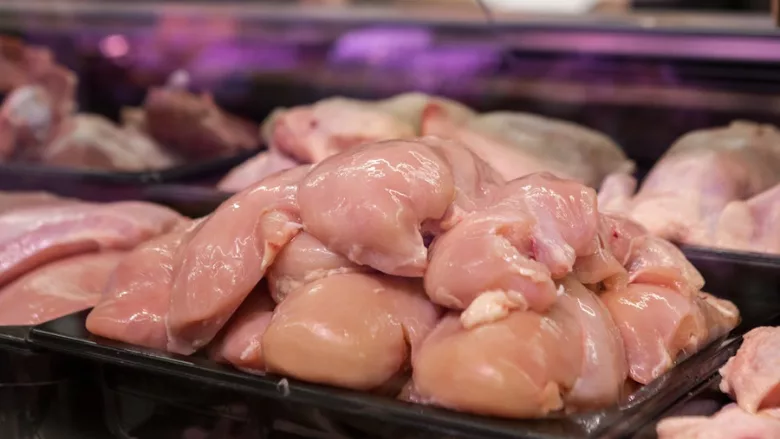
raw chicken breast on display at store
Image credit: Julia Filirovska via Pexels
October 17, 2025

Sampling and testing conducted by Pennsylvania State University researchers demonstrated a low overall prevalence of Campylobacter on retail chicken meat; however, recovered C. jejuni strains did not match known poultry-associated genotypes, suggesting the need for sensitive detection methods and expanded genomic surveillance.

According to the study, Campylobacter has remained the leading bacterial cause of foodborne illness in the U.S. since 2014, with chicken—the most consumed meat in the U.S.—identified as the primary source of human infection. To better understand contamination levels, the researchers sampled and tested 209 skinless, boneless chicken breasts collected from seven grocery stores in State College, Pennsylvania, between October 2023 and July 2024. The meat samples were processed in at least eight states, as determined by packaging labels.

Using both culture-based enrichment and viability qualitative polymerase chain reaction (qPCR) methods, researchers found a low overall prevalence of Campylobacter, in just 1.9 percent of samples. Enrichments of 15 (7.2 percent) chicken breast samples produced visible colonies.

Whole genome sequencing (WGS) confirmed four isolates confirmed as Campylobacter jejuni. These isolates originated from chicken processed in Pennsylvania, Illinois, Virginia, and Delaware, and represented novel sequence types (STs), none of which were assigned to known clonal complexes.

Notably, direct plating and viability qPCR failed to detect Campylobacter in any sample, suggesting contamination levels were below the detection thresholds. Enrichment, which can detect as few as 12 cells per 325 grams (g), proved more sensitive than direct plating, with a threshold of 60 colony forming units (CFU)/325 g, and viability qPCR, at 3,200–5,000 cells/325 g. However, enrichment is susceptible to interference from competing microbes, requiring the incorporation of selective supplements to improve Campylobacter recovery.

The study also highlighted limitations in current surveillance. The recovered C. jejuni strains did not match common poultry-associated genotypes, indicating that existing databases may not fully reflect the diversity of Campylobacter in poultry environments. Additionally, antimicrobial resistance (AMR) genes associated with ampicillin and tetracycline were found in three isolates, though none showed resistance to fluoroquinolones or macrolides.

While the prevalence was low, the findings underscore the importance of sensitive detection methods and expanded genomic surveillance to better characterize Campylobacter contamination and inform risk assessments. Future research should compare enrichment media to optimize recovery from complex matrices like chicken rinses.

The study, published in the Journal of Food Protection, was conducted by researchers within the Pennsylvania Sate University Department of Food Science and One Health Microbiome Center. The work was supported in part by the U.S. Department of Agriculture’s National Institute of Food and Agriculture (USDA-NIFA) and USDA’s Hatch Appropriations.

Looking for quick answers on food safety topics?
Try Ask FSM, our new smart AI search tool.
Ask FSM →


KEYWORDS: Campylobacter PCR penn state university study WGS

Share This Story

Fsm purple logo 200x200

The Food Safety Magazine editorial team comprises Bailee Henderson, Digital Editor ✉; Adrienne Blume, M.A., Editorial Director; and Stacy Atchison, Publisher.

Recommended Content

JOIN TODAY
to unlock your recommendations.

Already have an account? Sign In

  • people holding baby chicks

    Serovar Differences Matter: Utility of Deep Serotyping in Broiler Production and Processing

    This article discusses the significance of Salmonella in...
    Testing & Analysis
    By: Nikki Shariat Ph.D.
  • woman washing hands

    Building a Culture of Hygiene in the Food Processing Plant

    Everyone entering a food processing facility needs to...
    Facilities
    By: Richard F. Stier, M.S.
  • graphical representation of earth over dirt

    Climate Change and Emerging Risks to Food Safety: Building Climate Resilience

    This article examines the multifaceted threats to food...
    Risk Assessment
    By: Maria Cristina Tirado Ph.D., D.V.M. and Shamini Albert Raj M.A.
Manage My Account
  • eMagazine Subscription
  • Subscribe to eNewsletter
  • Manage My Preferences
  • Website Registration
  • Subscription Customer Service

More Videos

Sponsored Content

Sponsored Content is a special paid section where industry companies provide high quality, objective, non-commercial content around topics of interest to the Food Safety Magazine audience. All Sponsored Content is supplied by the advertising company and any opinions expressed in this article are those of the author and not necessarily reflect the views of Food Safety Magazine or its parent company, BNP Media. Interested in participating in our Sponsored Content section? Contact your local rep!

close
  • Salmonella bacteria
    Sponsored byThermoFisher

    Food Microbiology Testing Methods: Salmonella species

  • a diagram explaining indicator organisms
    Sponsored byHygiena

    How Proactive Listeria Testing Helps Prevent Six- and Seven-Figure Recalls

  • woman grocery shopping
    Sponsored byCorbion

    Designing Safety Into Every Bite: Proactive Risk Mitigation for Refrigerated Foods

Popular Stories

NRTE breaded stuffed chicken

USDA Indefinitely Delays Enforcement of Salmonella as Adulterant in Raw Breaded, Stuffed Chicken

non-conforming product

How to Handle Non-Conforming Product

spoonfuls of food ingredients

FDA’s Developing Rule to Tighten GRAS Oversight Moves to White House

Events

December 11, 2025

How to Develop and Implement an Effective Food Defense Strategy

Live: December 11, 2025 at 2:00 pm EDT: From this webinar, attendees will learn common areas where companies encounter challenges in their food defense strategies and how to address them.

May 11, 2026

The Food Safety Summit

Stay informed on the latest food safety trends, innovations, emerging challenges, and expert analysis. Leave the Summit with actionable insights ready to drive measurable improvements in your organization. Do not miss this opportunity to learn from experts about contamination control, food safety culture, regulations, sanitation, supply chain traceability, and so much more.

View All

Products

Global Food Safety Microbial Interventions and Molecular Advancements

Global Food Safety Microbial Interventions and Molecular Advancements

See More Products

Related Articles

  • prawns on a plate

    UK Study Finds Low Presence of Salmonella on Retail Food, but High Genetic Diversity

    See More
  • Prevalence of Campylobacter Contamination in Raw Chicken and Chicken Liver at Retail

    See More
  • beef for sale

    South Korean Study Finds Listeria Solely on Retail Beef Samples, Not on Farm

    See More

Related Products

See More Products
  • 9781498721776.jpg

    Handbook of Food Processing: Food Safety, Quality, and Manufacturing Processes

  • 9781138198463.jpg

    Food Safety Management Programs: Applications, Best Practices, and Compliance

  • Food-Forensics-3D.jpg

    Food Forensics Handbook Practice, Instrumentation, Case Studies

See More Products

Related Directories

  • On Target Packaging

    On Target Packaging is a production/maintenance servicer for combination and check weighers. We do not sell or process food, but provide service/repairs, and equipment for the food industry
  • OneVision Corp.

    We develop, manufacture, sell and support can seam inspection and weighing systems to food and beverage canners, can makers, and specialty manufacturers (oil filter, aerosol cans, composite cans). Founded in 1994, we've installed and support more than 350 can seam inspection systems around the world.
×

Never miss the latest news and trends driving the food safety industry

eNewsletter | Website | eMagazine

JOIN TODAY!
  • RESOURCES
    • Advertise
    • Contact Us
    • Directories
    • Store
    • Want More
  • SIGN UP TODAY
    • Create Account
    • eMagazine
    • eNewsletter
    • Customer Service
    • Manage Preferences
  • SERVICES
    • Marketing Services
    • Reprints
    • Market Research
    • List Rental
    • Survey/Respondent Access
  • STAY CONNECTED
    • LinkedIn
    • Facebook
    • Instagram
    • X (Twitter)
  • PRIVACY
    • PRIVACY POLICY
    • TERMS & CONDITIONS
    • DO NOT SELL MY PERSONAL INFORMATION
    • PRIVACY REQUEST
    • ACCESSIBILITY

Copyright ©2025. All Rights Reserved BNP Media.

Design, CMS, Hosting & Web Development :: ePublishing