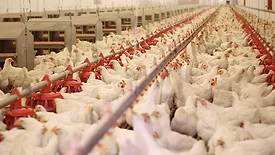
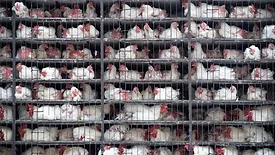
Oxford University researchers found that the expansion of dense, industrial chicken farming created conditions that enabled Campylobacter strains to spread, mix, and acquire traits that could improve their survival in poultry production environments.
A new study found high levels of multidrug resistance and biofilm formation among Enterococcus spp. isolated from retail meat, market workers, and consumers. Genetic similarities among E. faecalis and E. faecium isolates from different sources suggested potential cross-transmission at the food–human
interface, although the researchers emphasized that direct transmission was not established.
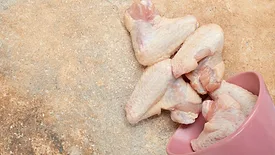
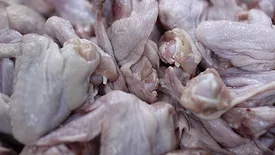
Hydrogen peroxide treatment, followed by catalase enzyme application to remove residual peroxide, significantly reduced Salmonella Typhimurium and Listeria monocytogenes on raw chicken wings while preserving the meat's overall color quality, although more research is needed on the effect on other organoleptic properties.
While New World screwworm (NWS) itself does not pose a food safety risk in edible meat or poultry products, residues from veterinary drugs used to treat and prevent infestations of NWS are potential chemical hazards.
Transport cages are recognized as a potential source of cross-contamination in poultry slaughterhouses. The optimal washing water temperature and detergent concentration completely eliminated detectable Salmonella while greatly reducing indicator organisms. The identified parameters may improve food safety and operational efficiency.
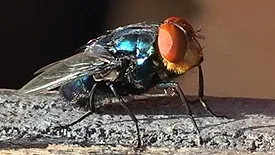
In this bonus episode of Food Safety Matters, we speak to Elanco Poultry Food Safety’s Dr. Alissa Welsher about why fly pressures increase during warmer months, the risks flies can pose within poultry operations, and how producers can proactively address flies through integrated pest management (IPM) strategies.
Effective July 20, to support risk surveillance, the agency will perform metals analysis on samples that are already collected for allergen verification.
Real-world data from meat processors show Clostridium perfringens is rarely detected in fully cooked meat and poultry products and remains uncommon even when deviations from USDA-FSIS Appendix B parameters are reported, challenging assumptions underlying regulatory limits for growth during stabilization.
As the agency continues to delay enforcement of Salmonella verification testing for not-ready-to-eat, breaded and stuffed chicken products, Consumer Reports is asking for evidence to support USDA-FSIS’ assertion that currently available test methods are not suitable, which contradicts the agency’s previous stance.
 RSS
RSS

.webp?height=168&t=1691503719&width=275 "FoodSafetyMattersFinal-900x550-(002).jpg")